Best Treadmills for Heavy People 2026: True 400 lb Picks
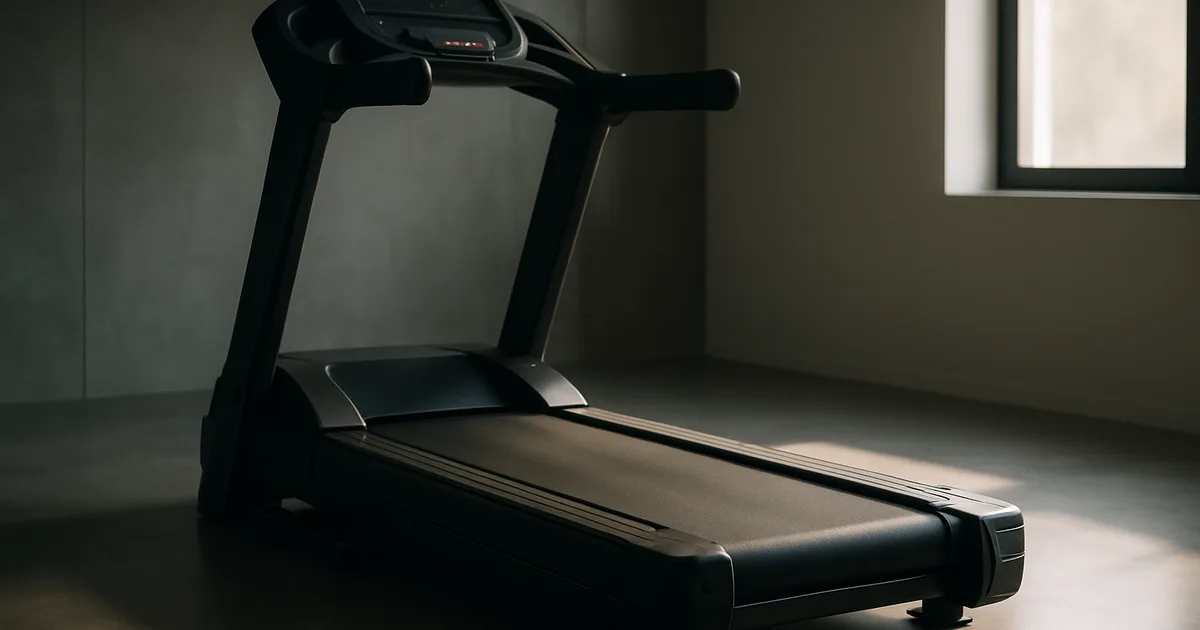
Quick answer: the best treadmill for heavy people in 2026 is the NordicTrack Commercial 1750, a verified 400 lb machine with a 4.25 CHP motor at $2,499, with regular sales around $500 off. The buy-once value pick is the Sole F80, rated to 350 lb with a lifetime warranty on frame, motor, and deck, coverage the 1750 doesn't match.
Here's the physics most treadmill listings ignore. Studies on running biomechanics show ground reaction forces hit two to three times body weight per stride. At 300 lb, every footfall can load the deck with 600 to 900 lb of force. That's the number your treadmill actually has to survive, and it's why a flimsy 300 lb-rated frame and a commercial-grade one are entirely different machines wearing the same sticker.
So this guide reads past the sticker: frame construction, deck thickness, roller diameter, continuous horsepower, warranty terms, and the safety record, cross-checked against reviewers who tested these exact machines at 315 and 340 lb. One of the biggest names in budget fitness failed the safety check this year, and that story leads.
Comparison Table
| Treadmill | Best For | Capacity | Standout Numbers | Ballpark |
|---|---|---|---|---|
| NordicTrack Commercial 1750 | Best overall | 400 lb | 4.25 CHP, -3% decline, 16" screen | $2,499, sales ~$500 off |
| Sole F80 | Buy-once value | 350 lb | Lifetime frame, motor, and deck; 53.8 dB | same bracket as the 1750 |
| Sole F85 | Runners up to 375 lb | 375 lb | 4.0 HP, 22" x 60" deck, steel Z-frame | similarly priced to the 1750 |
| WELLFIT 400 lb | Budget 400 lb walkers | 400 lb | 4.0 HP, 15% auto incline, adjustable handlebar | budget tier, check listing |
| CURSOR FITNESS | Small spaces | 400 lb | Under 45 dB, 3,500-hour motor rating, folds to 4.5" | budget tier, check listing |
How This Guide Was Built
Four checks, run in July 2026, no sponsored placements. One, convergence analysis: across the six independent expert sources I cross-checked for this class, the NordicTrack 1750 took top honours in four, including best treadmill overall from two separate test teams, and one reviewer who says he has never seen a year where it doesn't come out on top. Two, load-verified owner and tester reports, like the reviewer who ran the Sole F80 for six straight weeks at 315 lb and another who tested the 1750 with a 340 lb colleague for three weeks. Three, the CPSC federal safety database. Four, live Amazon availability.
Honest scope: I haven't personally load-tested these five. When I do, those sections get my own photos and measurements, clearly labelled. Until then, every capacity figure is the manufacturer's, cross-checked against people who actually put weight on the deck, and every trust judgment is sourced.
The Safety Story Every Heavier Walker Should Read
In April 2026, the CPSC warned consumers to stop using Sperax walking pads and treadmills immediately. The agency had logged 201 reports of uncontrollable speed changes and abrupt stops, at least 66 injuries including a concussion, and 573 overheating and fire incidents. Sperax refused to agree to a recall, so there's no refund, just a federal warning and a model label near the power switch to check.
Why it leads this guide specifically: an abrupt stop throws you forward at full momentum, and ground reaction forces scale with body mass. The heavier the walker, the higher the stakes of a machine that lies about what it can handle. Sperax sold cheap machines with confident capacity claims for two years before the reports piled up.
The contrast worth knowing: in January 2026, Johnson Health Tech recalled about 47,000 Matrix and Vision treadmills over a power-cord fire risk after 27 overheating reports and zero injuries, mailing every owner a free locking cord. That's what a real company does with a real problem. Every brand below sits on that side of the line.
The Warranty Tells the Truth
Here's an analysis no spec table shows you: read the warranty as an engineering confession, because it's the manufacturer betting money on its own build under load.
Sole guarantees the F80's frame, motor, and deck for life. The deck is the part your bodyweight hammers two to three times over with every stride, and Sole covers it forever. NordicTrack guarantees the 1750's motor for life but its frame for 10 years. Both are strong machines, but the warranties tell you where each company's confidence lives. Young budget brands typically offer one year on everything, which, at 350 lb of ground reaction force per step, is also a confession.
The second economic truth: subscriptions. The 1750 is built around iFit at $15 a month solo or $39 for a family plan. Over a treadmill's seven-to-ten-year life, the family plan alone runs $3,276 to $4,680, potentially more than the machine. It works fine without it, and the Soles never ask. Factor the meter into the price, not just the sticker.
NordicTrack Commercial 1750: Best Treadmill for Heavy People Overall
The verdict: the benchmark. One of the few residential treadmills with a verified 400 lb capacity, and the test record to back it.
The NordicTrack Commercial 1750 pairs its 400 lb rating with a 4.25 CHP motor, a lifetime motor warranty with 10-year frame coverage, and some of the softest cushioning on the market, a genuine gift to knees and hips carrying extra load. One reviewer stress-tested it with a 340 lb colleague for three weeks and reported zero deck flex and no motor lag. The -3% decline to 12% incline range varies training without impact, a 16-inch pivoting screen runs iFit's trainer-controlled workouts, and it still folds with one finger despite weighing 311.5 lb. Price is $2,499, with typical sales around $500 off.
Owner consensus: hardware love is nearly universal; the recurring gripes are the iFit upsell and the reasonable question of how a big touchscreen ages over a decade.
The catch: premium money, and the subscription math above. The machine works fully in manual mode without paying a cent monthly.
Who it's actually for: the heavier runner or walker who wants the deepest engineering margin in a home machine, plus trainer-led motivation. Check the 1750's current price on Amazon.
NordicTrack
NordicTrack Commercial 1750
The benchmark. One of the few residential treadmills with a verified 400 lb capacity, and the test record to back it.
Sole F80: Best Buy-Once Value
The verdict: the machine whose warranty page reads like a dare. Lifetime frame, lifetime motor, lifetime deck.
The Sole F80 carries a 350 lb capacity on a frame one reviewer tested at 315 lb for six straight weeks, through HIIT and sustained 6 to 7 mph running, with no motor lag, belt slip, or wobble. The 3.5 HP motor drives a 22 by 60 inch belt over the Cushion Flex deck that cuts joint impact by up to 40% versus asphalt, all at a measured 53.8 dB, barely louder than a fridge. One engineering detail worth knowing: its 2.36-inch rollers are notably larger than the 1750's 1.9-inch ones, and bigger rollers mean less belt and bearing wear over thousands of heavy miles. Priced in the same bracket as the 1750, with no subscription ever, and the free Sole+ app plus streaming apps built in.
Owner consensus: the definition of buy-once; the recurring gripe is assembly, a genuine two-person job at 274 lb.
The catch: the interface is simpler than NordicTrack's, and speed changes respond a touch slower than Horizon's dials.
Who it's actually for: the 220 to 300 lb walker or runner buying one machine for the next decade with zero monthly fees. See the F80's price on Amazon.
Sole
Sole F80
The machine whose warranty page reads like a dare. Lifetime frame, lifetime motor, lifetime deck.
Sole F85: Best for Runners up to 375 lb
The verdict: the F80's bigger sibling, built for people who want to genuinely run, not just walk, at higher body weights.
The Sole F85 upgrades to a 4.0 HP commercial-grade motor in a powder-coated steel Z-frame that reviewers describe as simply refusing to wobble under users up to 375 lb. The 22 by 60 inch Cushion Flex deck gives a full running stride with the same 40% impact reduction, the touchscreen streams Netflix and friends with no fee, and expert testers call it one of the most durable foldable treadmills on the market. Similarly priced to the 1750.
Owner consensus: Sole's durability reputation at full volume; the gripes are the beastly assembly and a frame that wants a permanent address.
The catch: you're paying for motor headroom that only pays off if you'll use running speeds. Walkers should save with the F80 or the WELLFIT.
Who it's actually for: the 250 to 375 lb runner, and multi-user households wanting one machine that survives everyone. Check the F85's price on Amazon.
Sole
Sole F85
The F80's bigger sibling, built for people who want to genuinely run, not just walk, at higher body weights.
WELLFIT 400 lb Treadmill: Best Budget 400 lb Walker
The verdict: the accessible 400 lb machine, designed around walking bodies instead of marketing renders.
The WELLFIT 400 lb treadmill runs a 4.0 HP motor under a 400 lb rated frame, with a 0 to 15% auto incline for burning serious calories at gentle speeds and a handlebar that adjusts for users from 5'2" to 6'4". Quick-access controls sit on the handlebar itself, which matters when you'd rather not lean mid-stride.
Owner consensus: strong early reviews on stability and incline value; the honest note is that WellFit is a newer brand still earning its long-term record, though its machines have been collecting expert awards this year.
The catch: the 18 by 43 inch belt is walking-and-light-jogging territory, not running territory, and one-year-class warranties mean the return window is your friend.
Who it's actually for: the 280 to 400 lb walker who wants incline training without premium pricing. See the WELLFIT's listing on Amazon.
WELLFIT
WELLFIT 400 lb Treadmill
The accessible 400 lb machine, designed around walking bodies instead of marketing renders.
CURSOR FITNESS: Best 400 lb Machine for Small Spaces
The verdict: the apartment-friendly heavyweight. A 400 lb rating that folds flat to 4.5 inches.
The CURSOR FITNESS treadmill pairs its 400 lb capacity with a 3.5 HP brushless motor that runs under 45 dB and carries a 3,500-hour use-life rating, a durability number most compact machines won't publish. Three manual incline settings (2%, 16%, 20%) jump straight into high-burn hill walking, it ships 90% pre-assembled, and it folds completely flat to slide under a bed.
Owner consensus: loved for the fold and the quiet; the gripe is manual incline, which means stepping off to change grade.
The catch: the 42.5 by 16.2 inch belt suits walkers and moderate joggers only, and the brand is mid-tier, so buy with the return window in mind.
Who it's actually for: the heavier walker in an apartment where the machine can't be furniture. Check the CURSOR's listing on Amazon.
CURSOR
CURSOR FITNESS
The apartment-friendly heavyweight. A 400 lb rating that folds flat to 4.5 inches.
Which One Should You Buy?
Sixty-second decision guide by weight and goal. Under 300 lb and buying for a decade with no fees: the F80. Running at 250 to 375 lb: the F85. The deepest margin, softest deck, and trainer-led motivation: the 1750, ideally on a $500-off sale. Walking-focused at 280 to 400 lb on a budget: the WELLFIT. Same weights, tiny apartment: the CURSOR. And if your real goal is desk steps rather than workouts, my walking pad guide for heavy people covers the compact route for a tenth of the money.
The Specs That Actually Protect You
The buffer first: pick a rating at least 50 lb above your body weight, and experts suggest staying 10 to 15% below the stated max, because a machine cruising under its limit runs cooler, lasts longer, and never stutters when you plant your foot.
Then the components behind the sticker. Continuous horsepower of 3.0 CHP or more, since sustained load is what overheats weak motors. A welded steel frame over a bolted one as you pass 300 lb, and deck thickness closer to one inch. Roller diameter, the spec nobody advertises: bigger rollers (like the F80's 2.36 inches) reduce belt and bearing wear, which compounds fastest under heavy mileage. A belt at least 20 inches wide for a broader stride. Real cushioning, because impact scales with mass and your joints collect the difference. And a warranty measured in lifetimes, which remains the clearest signal a company believes its own capacity claim.
Then maintain the margin you paid for: belt lubrication on the early side of the schedule, a quality mat to absorb vibration and protect the floor, and an occasional bolt check. Walking is the most sustainable calorie burner there is at any size, and the FitFixLife calorie calculator will show you exactly what your sessions earn.
Bottom Line
Buy the NordicTrack 1750 for the deepest margin, the Sole F80 for the fee-free decade, and whatever you choose, apply the buffer rule without exception.
The sticker is a claim. The warranty is a confession. The frame is the truth. Shop in that order.
Update log: July 14, 2026 - v2 rewrite: added warranty-as-confession analysis, subscription cost-of-ownership math, roller engineering data, verified pricing, and owner consensus per pick. Original publication: July 2026.
Frequently Asked Questions
The NordicTrack Commercial 1750 is the verified 400 lb benchmark, with the WELLFIT and CURSOR FITNESS covering the budget and small-space ends at the same rating.
From established brands with commercial-grade components, generally yes. From young brands, treat the sticker as unverified until owner reports at real weights back it up. The Sperax warning is this year's case study in why.
At least 50 lb, and ideally stay 10 to 15% below the stated max. At 340 lb, a 400 lb machine is your true minimum, not a luxury.
Yes, it runs fully in manual mode. But price the subscription honestly if you want it: $15 to $39 monthly is $3,276 to $4,680 over the machine's life, which is why the fee-free Soles win the pure value math.
Start walking, add incline before speed. Ground reaction forces run two to three times body weight when running, so incline walking delivers the calorie burn at a fraction of the joint load.
Yes. More mass means more belt friction and vibration, so lubricate early and often and use a mat. It's five minutes a month protecting a four-figure machine.
Kazi Habib
B.Pharm · MBA · PMP · Digital Marketing, York University
Kazi Habib is the founder of FitFixLife. With over 10 years in pharmaceutical and life sciences marketing, a Digital Marketing certification from York University (Toronto), and hands-on experience launching nutraceutical products at Beximco Pharmaceuticals — including science-backed meal replacers for weight management and diabetic nutrition — he brings regulated product development, clinical data analysis, and evidence-based content standards to every tool and article on this site.
Connect on LinkedIn →No spam. Unsubscribe anytime.
Related Articles
Best Treadmills Under $1,000 in 2026: 5 Picks That Last
The best treadmills under $1,000 in 2026: Horizon T101, Sole F63 and more. Lifetime warranties, no subscriptions, and the safety checks that matter.
Best Walking Pads for Heavy People: True 300 lb+ Picks 2026
The best walking pads for heavy people in 2026. Genuine 300 lb and 400 lb capacity picks, the headroom rule, and capacity claims to skip.
Try These Free Tools
Disclaimer: This article is for informational purposes only and does not constitute medical advice. Always consult a qualified healthcare professional before making changes to your diet, exercise, or supplement routine.