Creatine vs Other Supplements: The Hierarchy 2026
⚕️ Medical Disclaimer
This article is for informational purposes only and does not constitute medical advice. The content is not intended to diagnose, treat, cure, or prevent any disease. Always consult a qualified healthcare provider before starting or changing any supplements or nutrition strategies. Individual results may vary. See our full disclaimer for more information.
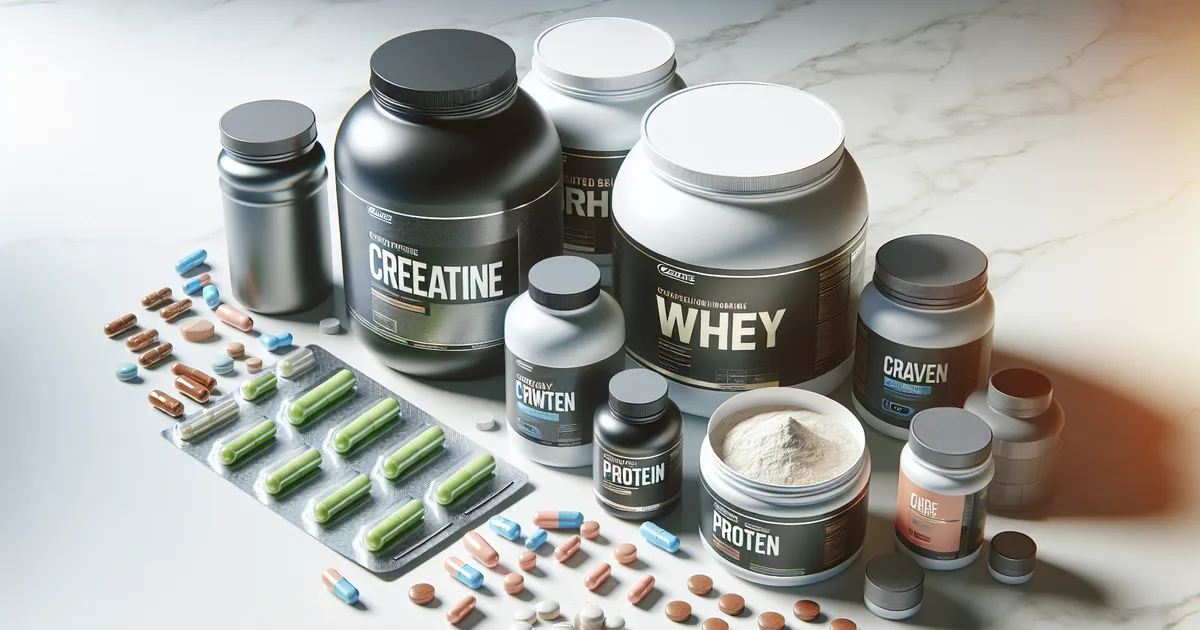
Creatine monohydrate sits in the top three sports supplements by evidence quality, alongside whey protein and caffeine. The International Society of Sports Nutrition position stand by Kreider et al. 2017 in Journal of the International Society of Sports Nutrition (PMID 28615996) concludes that creatine "is the most effective ergogenic nutritional supplement currently available to athletes" with respect to high-intensity exercise capacity and lean body mass during training, and is safe for long-term use. The earlier Kreider 2003 review in Molecular and Cellular Biochemistry (PMID 12701815) covers 300 studies showing roughly 70% reported statistically significant performance improvements. Most other supplements deliver smaller effect sizes, weaker evidence, or both.
TL;DR
- Tier 1 evidence supplements: creatine monohydrate, whey or equivalent protein, caffeine. Add these first.
- Tier 2 (specific use case evidence): electrolytes (heat/sweat/Ramadan), fish oil (cardiometabolic, inflammation), vitamin D (deficiency states, latitude above 40 degrees), magnesium glycinate (sleep, deficiency).
- Tier 3 (modest or context-dependent evidence): beta-alanine, citrulline, ashwagandha, collagen.
- Tier 4 (skip): BCAAs alone (redundant if total protein is adequate), most fat burners, testosterone boosters, exotic ergogenics.
- Creatine's place: cheapest per dose, strongest evidence, applies to almost every training population.
- Halal certification matters more for some supplements than others. Pure creatine monohydrate powder is simpler.
- Pharmacist take: most users overspend on supplements and underspend on the basics. A monthly budget of $30-50 covers Tier 1 thoroughly.
Why trust this review
I am Kazi Habib, B.Pharm, MBA, PMP, with 10+ years across pharmaceutical sciences and life-sciences marketing. I have evaluated supplement formulations for industry clients and for my own use across roughly 15 years of training.
The supplement hierarchy framework
Most consumers approach supplements with a "buy the entire shelf" mindset that wastes money and confuses biochemistry. A better framework is hierarchical: rank supplements by evidence quality, effect size, and applicability to your specific goals, then buy from the top of the list until budget runs out.
| Tier | Evidence quality | Examples | Who needs it |
|---|---|---|---|
| 1 | Strong, multi-RCT | Creatine, whey/protein powder, caffeine | Almost everyone training |
| 2 | Specific-use evidence | Electrolytes, fish oil, vitamin D, magnesium | Context-dependent |
| 3 | Modest evidence | Beta-alanine, citrulline, ashwagandha, collagen | Specific goals |
| 4 | Weak or no evidence | BCAAs alone, fat burners, T-boosters | Almost nobody |
Tier 1: Creatine, protein, caffeine
Creatine monohydrate
What it does. Increases muscle phosphocreatine stores, which fuels short bursts of high-intensity exercise. Improves strength, power, lean mass gains during resistance training, and high-intensity exercise capacity.
Effective dose. 3-5 g per day, every day. No loading phase required; saturation takes 3-4 weeks at 3-5 g/day or 5-7 days at 20 g/day split into 4 doses.
Halal considerations. Creatine monohydrate as a raw material is synthetic and inherently halal. The complication arises from flavorings, carrier ingredients, and capsule sources in finished products. Plain unflavored creatine monohydrate powder is the cleanest halal pick.
Why creatine first. Cheapest Tier 1 supplement per dose. Strongest evidence base. Applies to nearly every training context.
Whey or equivalent protein
What it does. Provides supplemental protein when dietary protein intake is below the optimal range (1.6-2.2 g per kg body weight per day) for training adaptation.
Effective dose. 20-40 g per serving, 1-3 servings per day depending on dietary baseline.
Caffeine
What it does. Improves endurance performance, reduces perceived exertion, supports power output in short-duration activities. The most well-studied ergogenic aid after creatine.
Effective dose. 200-400 mg pre-training for a typical 70-80 kg adult. Above 6 mg per kg, side effects outweigh performance benefit.
Pharmacist note on caffeine. Caffeine interacts with several medications: some antibiotics (ciprofloxacin), oral contraceptives, certain SSRIs. Pregnant women should limit caffeine to under 200 mg per day.
Calculate your protein and calorie targets first
Supplements amplify the basics. Get your daily targets in under 60 seconds.
Open the Macro CalculatorTier 2: Context-specific evidence
Electrolytes (sodium, potassium, magnesium). Athletes training in heat, anyone losing significant sweat volume (over 1 liter per session), workers in physically demanding hot environments, Muslims fasting Ramadan in summer months. Sodium replacement at 300-700 mg per hour of exercise in heat is supported by the American College of Sports Medicine position on hydration.
Fish oil (EPA + DHA). 1-3 g combined EPA + DHA per day. Quality matters significantly; IFOS-certified or USP-verified fish oil has third-party testing for purity. Pharmacist note: fish oil can interact with anticoagulants at high doses (over 3 g/day).
Vitamin D. 1000-2000 IU per day for maintenance in most adults. Adults living above 40 degrees latitude (most of Canada) during winter months are higher-risk for deficiency.
Magnesium glycinate. Adults with documented magnesium intake below RDA, people with sleep latency or quality issues, certain medication users.
Tier 3: Modest evidence
- Beta-alanine. Improves performance in 1-4 minute high-intensity efforts. 3-6 g per day. Causes harmless paresthesia at full doses.
- Citrulline malate. Modest evidence for muscle pumps and reduced soreness at 6-8 g per day pre-training.
- Ashwagandha. Some evidence for cortisol reduction, sleep quality, and modest testosterone effects in stressed populations. Effect sizes are modest.
- Collagen peptides. Some evidence for joint comfort, skin elasticity, and possibly tendon/ligament support at 10-15 g per day with vitamin C.
Tier 4: Skip or deprioritize
- BCAAs alone. Redundant if you consume adequate total protein. Whole protein contains BCAAs plus the other essential amino acids needed for muscle protein synthesis.
- Fat burners. Most have minimal or no efficacy beyond caffeine (which is already covered in Tier 1).
- Testosterone boosters. Tribulus terrestris, D-aspartic acid, fenugreek, deer antler velvet have minimal evidence for meaningful testosterone elevation in healthy adults.
- Exotic ergogenics. Each year brings new breakthrough supplements with thin evidence and viral marketing. Wait for at least 3-5 independent replications.
The pharmacist take: drug interactions
- Creatine. Generally well-tolerated. Caution with NSAIDs at high doses. Caution in pre-existing kidney disease.
- Caffeine. Multiple medication interactions including some antibiotics (ciprofloxacin), some antidepressants (fluvoxamine), and oral contraceptives.
- Fish oil. Anticoagulation interaction at doses above 3 g/day with warfarin, apixaban, rivaroxaban.
- Magnesium. Can cause loose stools at high doses. Caution with kidney disease and certain medications (some antibiotics, bisphosphonates, levothyroxine - separate by 2 hours).
- Ashwagandha. May interact with thyroid medication, immunosuppressants, sedatives, and benzodiazepines. Avoid in pregnancy.
Cost-per-effective-dose analysis
| Supplement | Effective daily dose | Monthly cost (CAD) |
|---|---|---|
| Creatine monohydrate | 5 g | $4-7 |
| Whey protein | 30-60 g | $20-40 |
| Caffeine (pill) | 200-400 mg | $3-5 |
| Fish oil | 1-3 g EPA+DHA | $10-20 |
| Vitamin D | 1000-2000 IU | $3-5 |
| Magnesium glycinate | 200-400 mg elemental | $15-25 |
Tier 1 monthly cost: $27-52 CAD covers creatine, protein, and caffeine thoroughly. Total reasonable supplement budget: $60-100 CAD per month for a thoughtfully selected stack. By comparison, the typical "pre-workout + post-workout + BCAAs + fat burner + multivitamin + greens powder" stack often runs $200-300 CAD per month with much lower evidence-per-dollar ratio.
Top Tier 1 picks
Thorne
Creatine Monohydrate
NSF Certified for Sport, pharmaceutical-grade Creapure source. 5 g per scoop. Best-in-class purity. Plain unflavored powder is halal-friendly default.
Naked Nutrition
Halal Whey Protein
HFA UK-certified halal whey. 25 g protein per scoop with complete amino acid profile. Cleanest halal whey on the market.
⚕️ Medical Disclaimer
This article is for informational purposes only and does not constitute medical advice. The content is not intended to diagnose, treat, cure, or prevent any disease. Always consult a qualified healthcare provider before starting or changing any supplements or nutrition strategies. Individual results may vary. See our full disclaimer for more information.
Frequently Asked Questions
For training-focused individuals seeking strength, power, or muscle gain, yes. The evidence base, effect size, cost, and safety profile rank creatine first in the sports supplement hierarchy. For non-training contexts (general health, sleep, immunity), other supplements (vitamin D, magnesium, fish oil) may be more relevant.
Yes. Creatine has no meaningful interactions with whey protein, caffeine, electrolytes, fish oil, vitamin D, or magnesium. The supplement stacking cautions in the industry are mostly marketing-driven; the actual interactions for Tier 1-2 supplements are minimal for healthy adults.
Most active adults with reasonable diets do not need a multivitamin. Targeted single-nutrient supplementation (vitamin D for latitude/season, magnesium for sleep/deficiency, fish oil for low fish intake) is usually more effective than a generic multivitamin.
No. Continuous daily creatine use is safe per the ISSN position stand (up to 30 g/day for 5 years tested). Cycling is a fitness folklore practice with no physiological rationale. Saturation drops within 4-6 weeks of stopping creatine; cycling means weeks of suboptimal muscle creatine for no benefit.
Some initial water retention is normal (1-3 lbs) as muscle cells uptake creatine plus associated water. This is intramuscular water, not subcutaneous bloat. Long-term, creatine supports lean mass gains which add real tissue weight; the scale moves up but body composition improves.
Pure creatine monohydrate as a chemical compound is halal. The finished product may have halal complications from flavorings or capsule sources. Unflavored creatine monohydrate powder is the cleanest halal pick.
Pre-workouts are typically caffeine plus other ingredients. For the caffeine component, plain caffeine pills are cheaper and cleaner. Pre-workouts add convenience and the placebo-positive ritual of mixing a drink before training; whether the additional cost is justified depends on individual preference.
BCAAs alone. They are redundant if you eat enough total protein. The fitness industry markets BCAAs heavily because they have low manufacturing cost and high margin, not because they outperform whole protein for muscle protein synthesis.
Bottom line
Creatine sits at the top of the sports supplement hierarchy because the evidence is strongest, the effect size is real, the cost is low, and the applicability is broad across training populations. Whey protein and caffeine round out Tier 1. Most people should fill their supplement budget with these three before adding anything else. Tier 2 (electrolytes, fish oil, vitamin D, magnesium) is context-specific and adds value when the use case fits. Tier 3 and 4 supplements are mostly optional or skippable.
For your specific training context, calculate calories and macros at the FitFixLife calculator before optimizing the supplement layer.
Kazi Habib
B.Pharm · MBA · PMP · Digital Marketing, York University
Kazi Habib is the founder of FitFixLife. With over 10 years in pharmaceutical and life sciences marketing, a Digital Marketing certification from York University (Toronto), and hands-on experience launching nutraceutical products at Beximco Pharmaceuticals — including science-backed meal replacers for weight management and diabetic nutrition — he brings regulated product development, clinical data analysis, and evidence-based content standards to every tool and article on this site.
Connect on LinkedIn →No spam. Unsubscribe anytime.
Try These Free Tools
Disclaimer: This article is for informational purposes only and does not constitute medical advice. Always consult a qualified healthcare professional before making changes to your diet, exercise, or supplement routine.