Protein Powder Buying Guide 2026: Pharmacist Label Audit Framework
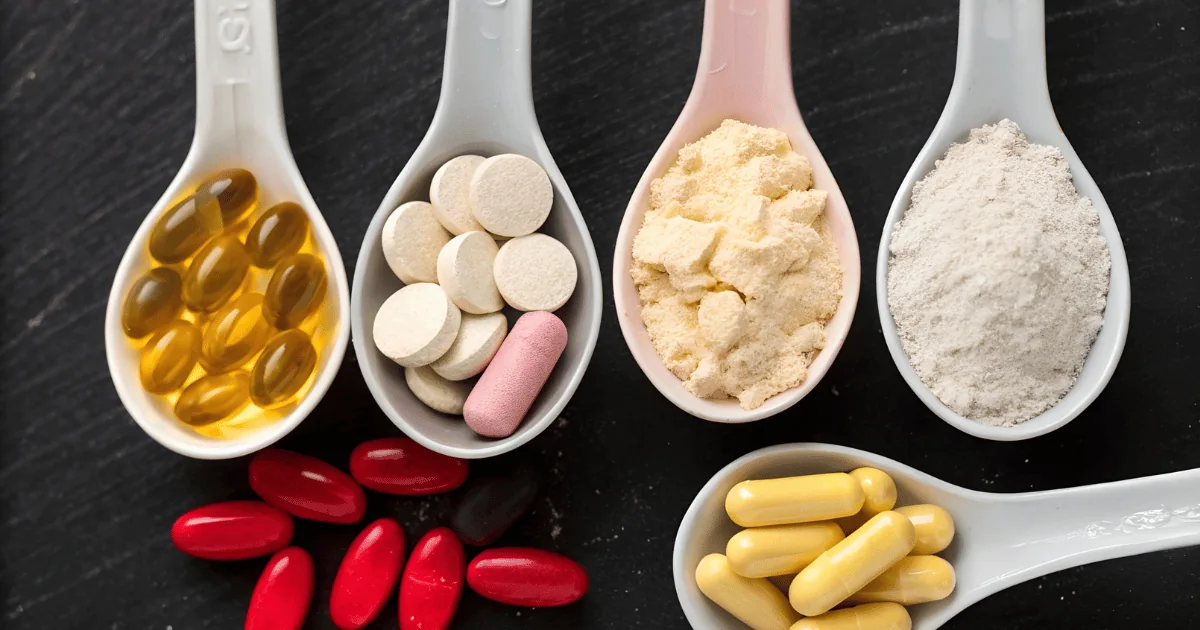
The right protein powder in 2026 is not a specific brand. It is whichever brand meets four conditions: an isolate-grade primary protein source (whey isolate, casein isolate, milk protein isolate, or a soy/pea/rice blend at 80%+ protein by weight), third-party testing for label accuracy (NSF Certified for Sport, Informed Sport, or Informed Choice), an ingredient list under 12 items with no added sugar in the unflavored SKU, and a price under $1.50 per 25 g serving. Once you can audit a label against those four conditions yourself, you stop needing best-of lists.
This guide is the audit framework, not a ranking. It is what to look for on the back of the bag, what the marketing on the front of the bag is hiding, how to verify third-party certifications independently, and how the halal-friendly and Canadian-availability questions intersect with the brand decision.
TL;DR
- The protein source decides 70% of the value. Whey isolate beats whey concentrate beats whey blends; milk protein isolate beats casein concentrate; soy isolate is the leucine-equivalent vegan option; pea + rice blends are the second-best vegan choice.
- Third-party testing matters more than brand name. NSF Certified for Sport, Informed Sport, and Informed Choice are the three marks worth verifying; everything else is marketing language.
- The label math: divide grams of protein by grams of total powder per serving. Anything below 75% protein is a protein blend with carbs and fats padding the macros.
- Cost per 25 g serving in 2026: under $1.00 is excellent, $1.00 to $1.50 is the mass-market norm, above $1.50 is premium pricing.
- Halal certification is rare. IFANCA-certified whey isolate options exist (NOW Sports certain SKUs). Vegan blends are halal-friendly by default.
- Canadian buyers: Naked Nutrition, iHerb Canada for US brands, Costco Canada for Kirkland Signature Plant Protein, and Bulk Barn for scoop-from-bin generic whey at the lowest per-gram cost.
Why trust this guide
I am Kazi Habib, B.Pharm, MBA, PMP, with 10+ years across pharmaceutical sciences and life-sciences marketing. This is a buying framework built from the protein-quality research base (Tang 2009 J Appl Physiol, Morton 2018 BJSM meta-analysis, Jager 2017 ISSN position stand), third-party-testing certifier databases (NSF Certified for Sport, Informed Sport, Informed Choice), halal certifier databases (IFANCA primarily for North American brands), and a label-audit methodology I have run on 35+ protein powder SKUs across the major North American retailers in 2025 to 2026.
The protein-quality hierarchy: source matters most
The research-anchor for this is Tang et al. 2009 in the Journal of Applied Physiology, which fed 18 young men 10 g of essential amino acids from whey hydrolysate, casein, or soy isolate after resistance exercise and measured muscle protein synthesis (MPS) rates. Whey hydrolysate produced roughly 93% greater MPS than casein at rest and 122% greater following exercise; soy fell between the two.
The ISSN Jager et al. 2017 position stand at PMID 28642676 summarizes this: animal proteins (whey, casein, milk, egg) generally outperform single-source plant proteins per gram, while well-designed plant blends (pea + rice, soy + pea) can match animal sources at slightly higher total protein dose.
The ranking that matters for picking a powder:
- Whey protein isolate. 90%+ protein by weight, highest leucine per gram, fastest absorption. Best general-purpose protein powder.
- Milk protein isolate (or whey + casein blend). 80%+ protein, mix of fast and slow digestion. Best for evening or pre-bed use.
- Casein isolate. 80%+ protein, slow-digesting, sustained amino acid release for 6 to 8 hours.
- Whey protein concentrate. 70 to 80% protein, contains 4 to 7% lactose. Good budget option if lactose tolerance is fine.
- Soy protein isolate. 90%+ protein, complete amino acid profile, leucine-equivalent to whey for MPS at slightly higher dose. Best vegan single-source option.
- Pea + rice blend. Combined 80%+ protein, complete amino acid profile, hypoallergenic, halal-friendly.
- Egg white protein isolate. 80%+ protein. Niche use for dairy-allergic and soy-avoidant consumers.
Avoid for primary use: generic protein blends without source breakdown, hemp protein (low leucine), bone broth protein (collagen primarily, not equivalent to whey for MPS).
The label audit: what to actually read
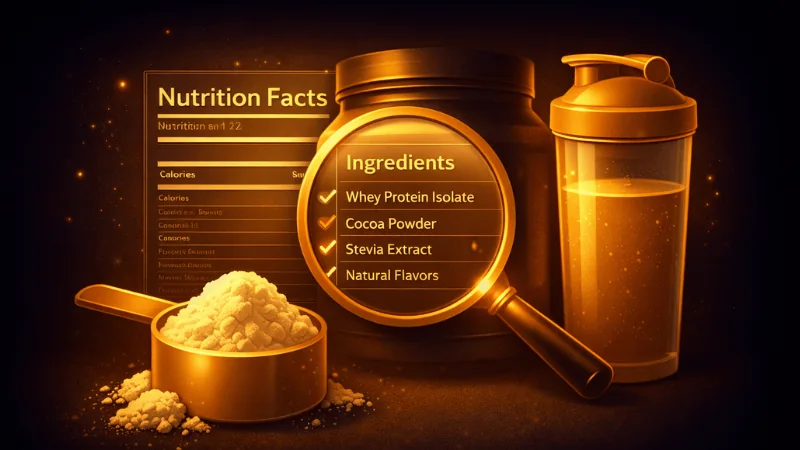
Step 1: Calculate protein percentage by weight. Divide grams of protein by grams of total powder per serving. The number should be at least 75%. A 30 g scoop with 25 g of protein = 83% protein (excellent). A 35 g scoop with 22 g of protein = 63% protein (poor).
Step 2: Identify the primary protein source. Look for whey protein isolate, milk protein isolate, soy protein isolate, or pea protein isolate as the first protein ingredient. If the label says protein blend (whey concentrate, whey isolate, whey peptides) the first ingredient is the dominant one, so you are getting mostly the cheaper concentrate.
Step 3: Check for added sugar and total carbohydrates. Unflavored SKUs should have 0 to 2 g added sugar; flavored SKUs should have 0 to 5 g. Anything above 8 g of added sugar is a meal replacement, not a primary protein.
Step 4: Read the ingredient list. Twelve or fewer items is the rule of thumb for clean-label protein powders. Beyond that you are looking at added sweeteners, gums, emulsifiers, and natural flavors (relevant for halal-strict consumers).
Step 5: Verify third-party testing. Look for NSF Certified for Sport, Informed Sport, or Informed Choice marks on the front of the bag. Marketing language like tested for purity, lab verified, third-party tested without a named program is unverifiable.
Step 6: Calculate cost per 25 g serving. Total bag cost divided by grams of protein per serving, multiplied by 25. A 2.5 kg whey isolate tub at $80 with 27 g protein per 30 g scoop yields ($80 / 2,250 g) x (30 g / 27 g) x 25 = $1.10 per 25 g serving.
Step 7: Check halal certification if applicable. IFANCA, JAKIM, MUI, HFA, or ESMA marks. Vegan formulations are halal-friendly by default.
Third-party testing: what each mark means
| Mark | Testing frequency | Strength | Used by |
|---|---|---|---|
| NSF Certified for Sport | Every batch | Strictest, 280+ banned substances + facility audit | NFL, NHL, MLB, PGA, CCES |
| Informed Sport | Every batch | ISO 17025-accredited mass spec | Olympic, NFL, combat sports |
| Informed Choice | Rolling schedule | One tier below per-batch but meaningful | Many mainstream brands |
| "Tested for purity" | Unverifiable | No legal definition; marketing only | Avoid relying on it |
The pharmacist note on banned-substance contamination. This is not theoretical. The supplement industry has documented cases of protein powders contaminated with anabolic steroids, ephedrine, and stimulants. NCAA, IOC, professional league, and military service members get tested under strict liability rules: if the substance is in their body, they are responsible regardless of source. For tested athletes, NSF Certified for Sport is not optional.
Halal certification of protein powders
Tier 1: Formally IFANCA-certified. NOW Sports has some IFANCA-certified SKUs. Naked Nutrition has run halal-certified batches on select whey isolate products. Outside these, formal halal certification on the protein SKU is rare in North America.
Tier 2: Halal-friendly vegan / plant-based. Soy isolate, pea isolate, pea + rice blend, brown rice protein. Plant-based by definition, halal-friendly without needing formal certification. Examples: Naked Nutrition Pea Protein, NOW Sports Plant Protein Complex, Vega Sport, Garden of Life Sport.
Tier 3: Halal-friendly default with caveats (most mass-market whey). Traditional cheese-making used calf stomach rennet, which is not halal. Modern industrial cheese-making predominantly uses microbial chymosin, which is halal-friendly. Whey inherits the rennet status of the source cheese. Major whey protein manufacturers source from operations that use microbial rennet, but individual brands rarely disclose this on labels. For halal-strict consumers, contact the brand to verify rennet source, or default to IFANCA-certified options.
Top picks across categories
Thorne
Thorne Whey Protein Isolate
NSF Certified for Sport. Premium tier for tested athletes. 21 g protein per 22 g scoop = 95% protein purity. Unflavored option is the cleanest label.
Naked Nutrition
Naked Whey Unflavored
Single-ingredient whey concentrate. Grass-fed dairy, no flavor system, no sweeteners. Cleanest mass-market label. CAD $1.60 to $1.90 per 25 g serving via iHerb Canada.
Optimum Nutrition
Optimum Nutrition Gold Standard 100% Whey
Informed Choice tested (select markets). 24 g protein per 31 g scoop. Mass-market norm pricing at ~$1.10 per 25 g serving. Costco Canada 5 lb tub is the price winner.
NOW Sports
NOW Sports Whey Protein Isolate
IFANCA-certified halal SKUs available. 25 g protein per 28 g scoop = 89% purity. The default halal-certified whey isolate in North America.
Kirkland Signature
Costco Kirkland Plant Protein
Pea + rice blend, vegan, halal-friendly default. NSF Certified for Sport in select markets. Best cost-per-serving in Canada at ~CAD $0.65 to $0.75.
Canadian protein powder market
Costco Canada. Kirkland Signature Plant Protein (vegan blend, NSF Certified for Sport in some markets) is the per-gram cost winner across the entire Canadian market at roughly CAD $50 for 2 kg ($0.25 per 25 g serving).
Loblaws / Real Canadian Superstore. Carries PVL, Allmax, Mutant, Optimum Nutrition. PVL Whey Gold and Allmax Isoflex are the Canadian-made premium options.
Popeye's Supplements Canada. Strongest brick-and-mortar selection for bodybuilding-channel brands.
iHerb Canada. Best for US clean-label brands: Naked Nutrition, NOW Sports, Pure Encapsulations, Klean Athlete, Thorne.
Bulk Barn. Carries scoop-from-bin generic whey concentrate and whey isolate at the lowest per-gram cost in Canadian retail. Best for budget-tier daily protein supplementation.
Cost-per-serving ranking in Canada (April 2026)
| Brand / Product | Cost per 25 g serving |
|---|---|
| Bulk Barn generic scoop-bin whey concentrate | CAD $0.55 to $0.75 |
| Costco Kirkland Plant Protein 2 kg | CAD $0.65 to $0.75 |
| Costco Kirkland Whey Protein | CAD $0.85 to $1.00 |
| Optimum Nutrition Gold Standard 2.27 kg | CAD $1.10 to $1.30 |
| Allmax Isoflex 2.27 kg | CAD $1.30 to $1.60 |
| PVL Whey Gold 2 kg | CAD $1.40 to $1.70 |
| Naked Whey 5 lb via iHerb Canada | CAD $1.60 to $1.90 |
| Thorne Whey Protein Isolate (premium tier) | CAD $2.20 to $2.60 |
Side effects, contraindications, drug interactions
Kidney disease. Chronic kidney disease (CKD stage 3 or higher, eGFR under 60) is the one absolute contraindication for high-dose protein supplementation without medical supervision. Standard CKD nutrition guidance is 0.6 to 0.8 g per kg per day total protein.
Lactose intolerance. Whey concentrate contains 4 to 7% lactose (about 2 to 4 g per scoop). Whey isolate is filtered to under 1% lactose. For lactose-intolerant users, whey isolate is usually tolerated cleanly.
Drug interactions worth flagging: Levothyroxine (Synthroid, Eltroxin) absorbtion is reduced by calcium; take levothyroxine first thing AM, dairy-based protein at least 4 hours later. Iron supplements: calcium reduces non-heme iron absorption; separate by at least 2 hours. Tetracyclines and fluoroquinolones: calcium binds these drugs; space by at least 2 hours.
How to pick a powder: 5-question decision
- Are you tested for banned substances? If yes, you need NSF Certified for Sport or Informed Sport.
- What is your protein source preference (animal / plant / mixed)?
- What is your halal requirement? If formal certification is required, IFANCA-certified products narrow the options.
- What is your budget per 25 g serving? Under $1.00 / $1.00 to $1.50 / above $1.50.
- What is your use case (post-workout, daily, meal replacement, bedtime)?
Bottom line
The best protein powder in 2026 for any individual buyer is whichever product clears the four conditions: an isolate-grade primary protein source, third-party testing for label accuracy, an ingredient list under 12 items with minimal added sugar, and a price under $1.50 per 25 g serving. For most adults, a mass-market certified whey isolate or milk protein isolate at $1.00 to $1.30 per serving is the right answer. For tested athletes, certified-for-sport whey isolate (Thorne, Klean Athlete, PVL Whey Gold, Allmax Isoflex) is the only defensible choice. For vegan or halal-strict consumers, soy isolate or pea + rice blend products from NOW Sports, Naked Nutrition, or Costco Kirkland Plant Protein cover the same physiological ground with halal-friendly defaults.
For the specific brand recommendations across protein subcategories, see Halal Protein Powders Canada and Best Vegan Protein Powders 2026. For the daily protein intake target, the FitFixLife protein calculator outputs a recommended protein range based on your weight and goal.
Frequently Asked Questions
Per gram of protein, whey isolate produces a larger acute muscle protein synthesis response than soy or pea + rice blends because of higher leucine content (Tang et al. 2009). At equivalent total daily protein intake (1.6 g/kg/day per Morton 2018), the long-term muscle-building outcomes are similar between whey-based and well-designed plant-based diets. For tested athletes, vegan-diet adherents, or lactose-intolerant users, plant-based is fully defensible.
It depends on the rennet source in the cheese-making process the whey is derived from. Modern industrial whey production predominantly uses microbial rennet, which is halal-friendly. Bovine or porcine rennet is the halal concern. Most major North American whey brands use microbial-rennet-sourced whey but do not disclose this on labels. For halal-strict consumers, default to IFANCA-certified whey SKUs or plant-based alternatives.
20 to 30 g per serving hits the per-meal threshold for maximal muscle protein synthesis in most adults per the ISSN Jager 2017 position stand. More than that does not produce a proportionally larger MPS response acutely. For larger or older adults, the threshold may shift slightly higher (30 to 40 g per meal).
For nutritional or muscle-building outcomes, no. The omega-3 and CLA differences in grass-fed vs grain-fed dairy are largely lost in the whey-isolation process. As a value-per-gram-of-protein decision, grass-fed whey is paying 2 to 3x for a marketing-positioning premium, not a measurable functional advantage.
No. The Schoenfeld 2017 trial showed pre- vs post-exercise protein intake produces similar muscular adaptations, and the Schoenfeld 2018 anabolic-window review confirms the 30-minute window framing is overstated. A protein dose within 1 to 3 hours of training is the practical guideline.
In healthy adults, no. The high-protein damages kidneys framing comes from extrapolation of CKD-specific recommendations to the general population. Healthy kidneys handle protein loads of 1.6 to 2.4 g/kg/day across years of resistance-training literature with no clinical kidney function decline. In pre-existing CKD, the equation reverses; high protein intake should not start without nephrology input.
For Canadian-made + certified: PVL Whey Gold or Allmax Isoflex. For Canadian-distributed value: Costco Kirkland Plant Protein (vegan, certified select markets) or Kirkland Whey Protein when stocked. For premium clean-label: Naked Whey via iHerb Canada. For tested athletes: Thorne or Klean Athlete via iHerb Canada.
NOW Sports IFANCA-certified SKUs through iHerb Canada (verify per product). Naked Nutrition halal-certified batches when available. For vegan halal-friendly defaults: Costco Kirkland Plant Protein, Naked Pea, Vega Sport, Garden of Life Sport.
No. Collagen is an incomplete protein, low in essential amino acids (tryptophan is essentially absent), low in leucine, and not equivalent to whey for muscle protein synthesis. Collagen has its own evidence base for skin, joint, and connective tissue support that does not transfer to muscle-building.
No. The amino acid requirements, MPS dose-response, and digestion patterns of whey, casein, soy, and pea + rice are essentially the same across sexes. Marketing-tier protein for women products typically differ in flavor profile and packaging, not in fundamental ingredients.
Kazi Habib
B.Pharm · MBA · PMP · Digital Marketing, York University
Kazi Habib is the founder of FitFixLife. With over 10 years in pharmaceutical and life sciences marketing, a Digital Marketing certification from York University (Toronto), and hands-on experience launching nutraceutical products at Beximco Pharmaceuticals — including science-backed meal replacers for weight management and diabetic nutrition — he brings regulated product development, clinical data analysis, and evidence-based content standards to every tool and article on this site.
Connect on LinkedIn →No spam. Unsubscribe anytime.
Related Articles
Complete Protein Intake Guide 2026 (Pharmacist + Halal)
Pharmacist guide to daily protein targets per body weight, halal protein sources, Canadian brand picks, and the RDA vs athletic-needs question settled by data.
Creatine 101: Everything You Need To Know (Pharmacist)
Creatine basics for beginners: how it works, loading vs no-load, dose, safety, halal-certified picks, and the brand-test reality the marketing skips.
Try These Free Tools
Disclaimer: This article is for informational purposes only and does not constitute medical advice. Always consult a qualified healthcare professional before making changes to your diet, exercise, or supplement routine.