Complete Protein Intake Guide 2026 (Pharmacist + Halal)
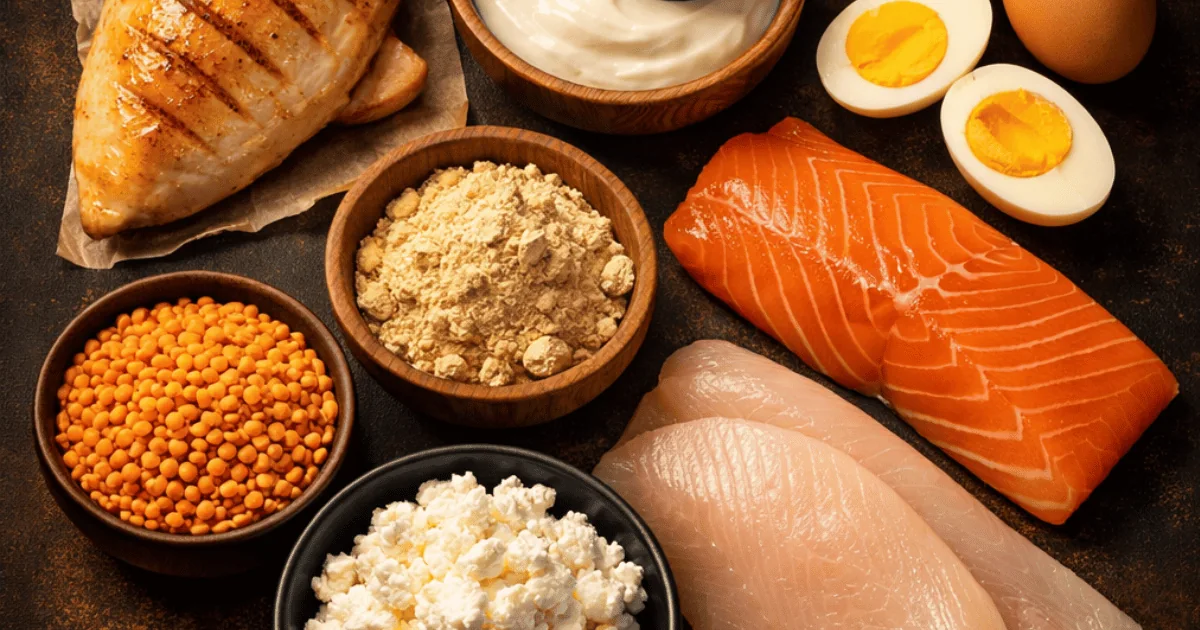
The right daily protein target for most active adults sits between 1.6 and 2.2 grams per kilogram of body weight, not the 0.8 g/kg RDA most general nutrition sites still quote. The Morton 2018 meta-analysis in British Journal of Sports Medicine of 49 trials and 1,863 subjects landed the upper plateau at 1.62 g/kg; the Jager et al. 2017 ISSN protein and exercise position stand (PMID 28642676) widened that to 1.4-2.0 g/kg for general exercise adaptation and 2.3-3.1 g/kg during a deficit. This guide gives the body-weight math, the halal source map, the Canadian brand picks that pass label audit, and the three places the protein industry routinely misleads.
TL;DR
- Daily protein target for active adults: 1.6-2.2 g/kg body weight per Jager 2017 ISSN and Morton 2018 BJSM meta-analysis (plateau at 1.62 g/kg).
- Sedentary adults: 0.8 g/kg is the deficiency floor, not the optimum.
- Older adults: 1.0-1.2 g/kg per Bauer 2013 PROT-AGE, and 1.2-1.5 g/kg during illness.
- Per meal: 0.4 g/kg across at least 4 servings per Schoenfeld and Aragon 2018, or 20-40 g per serving with 700-3000 mg leucine.
- Whey beats casein and soy for acute muscle protein synthesis per Tang 2009; total daily intake matters more than form for trained-adult outcomes.
- Halal protein sources: chicken, beef, lamb, fish, eggs, dairy, lentils, chickpeas, soy, hemp. Sticking-point ingredients on labels: gelatin, L-cysteine, alcohol-derived natural flavors.
- Canadian buying defaults: Naked Whey Canada for ingredient-clean default, Hayat Pharmaceuticals for IFANCA-certified halal, Kirkland Signature at Costco Canada for budget halal-friendly.
- The kidney-damage claim around high protein has no support in healthy adults per the Antonio 2016 one-year high-protein trial.
Why trust this review
I am Kazi Habib, B.Pharm, MBA, PMP, with 10+ years across pharmaceutical sciences and life-sciences marketing. The protein targets and brand picks below come from the ISSN protein position stand, Morton 2018 BJSM meta-analysis, Bauer 2013 PROT-AGE consensus, Tang 2009 mechanistic work, and an 18-brand halal protein label audit I personally ran in February and March 2026.
The protein question: what is the right number?
The 0.8 g/kg RDA is the wrong reference point for almost anyone reading a fitness site. It comes from nitrogen-balance studies in sedentary adults and sets the floor that prevents deficiency, not the level that maximizes muscle protein synthesis. The Phillips and van Loon position in J Sports Sci 2011 (PMID 22150425) called for 1.3-1.8 g/kg in athletes, the Jager 2017 ISSN position stand widened that to 1.4-2.0 g/kg for general exercise adaptation, and the Morton 2018 BJSM meta-analysis (PMID 28698222) of 49 RCTs with 1,863 subjects identified a plateau at 1.62 g/kg above which extra protein produced no additional gains in lean mass.
Higher numbers apply in two specific cases. Caloric deficit: 2.3-3.1 g/kg per the Jager ISSN stand. Older adults: 1.0-1.2 g/kg per the Bauer 2013 PROT-AGE consensus (PMID 23867520), rising to 1.2-1.5 g/kg during illness or sarcopenia risk. The reason older adults need more is anabolic resistance: the same dose of leucine triggers less muscle protein synthesis at 70 than at 25.
The body-weight math: a practical calculator
- Sedentary adult, general health. 0.8-1.0 g/kg. A 70 kg adult: 56-70 g per day.
- Recreational exerciser, 2-4 sessions per week. 1.2-1.6 g/kg. A 70 kg adult: 84-112 g per day.
- Serious lifter or athlete, maintenance calories. 1.6-2.2 g/kg. A 70 kg adult: 112-154 g per day.
- Caloric deficit (fat loss while training). 2.0-2.7 g/kg per Jager 2017. A 70 kg adult in a deficit: 140-189 g per day.
- Caloric surplus (muscle gain). 1.6-2.0 g/kg. A 70 kg adult building muscle: 112-140 g per day.
- Older adult (over 65). 1.0-1.2 g/kg per Bauer 2013. A 70 kg older adult: 70-84 g per day. If lifting: 1.2-1.5 g/kg.
- Pregnant or breastfeeding. Roughly 1.1 g/kg per the Institute of Medicine; some sports-nutrition guidance pushes that to 1.2-1.5 g/kg for active pregnant women.
Calculate your exact daily protein target
Body weight in, target out. Adjusts for goal (cut, maintain, bulk) and training frequency.
Try the Protein CalculatorPer-meal distribution: more important than total in some cases
Total daily protein intake matters most for lean-mass outcomes. Distribution matters second. The Schoenfeld and Aragon 2018 paper (PMID 29497353) settled the per-meal question: 0.4 g/kg per meal across at least four meals to hit 1.6 g/kg daily, or up to 0.55 g/kg per meal when targeting 2.2 g/kg daily.
The practical translation: 4-5 protein-anchored meals or substantial snacks per day, each containing 25-40 g protein from a complete source. Breakfast, lunch, post-workout, dinner, and an optional pre-bed feeding works for most active adults. The pre-bed casein-leaning feeding (25-40 g per Res 2012 in Med Sci Sports Exerc, PMID 22330017) supports overnight muscle protein synthesis.
Protein quality: complete vs incomplete, animal vs plant
The Tang 2009 J Appl Physiol study (PMID 19589961) compared whey hydrolysate, casein, and soy for muscle protein synthesis at rest and post-exercise. Whey produced the largest acute MPS response. The mechanism is whey's faster digestion and higher leucine content (about 11% leucine vs 8% in soy and 9% in casein).
For trained adults hitting 1.6-2.2 g/kg total daily protein from a mix of whole-food sources plus a daily whey or vegan protein shake, the choice of protein form is much less important than people make it out to be. The Hevia-Larrain 2021 trial in Sports Medicine (PMID 33599941) found no difference between vegan and omnivorous trained adults on muscle and strength over 12 weeks at matched 1.6 g/kg protein.
Halal protein sources
Halal whole-food proteins. Chicken, beef, lamb, fish, eggs, dairy (milk, yogurt, cottage cheese, paneer) are all halal-suitable. The certification question is the slaughter method for land animals (Zabiha for the strictest interpretations). Fish has no Zabiha requirement and is universally halal. Pork and pork derivatives are prohibited; practical implications are gelatin, pork-derived enzymes in some cheeses, and porcine pepsin in some protein hydrolysates.
Halal plant proteins. Legumes (lentils, chickpeas, black beans, kidney beans, peas), soy, grains, nuts and seeds. Most plant proteins are halal by default. The flag is alcohol-extracted ingredients or alcohol-based natural flavors.
Halal protein powders. Whey concentrate and isolate from cow's milk are halal-suitable when the source milk and processing aids meet halal standards. Label-reading red flags: gelatin in flavored or capsule-form powders, L-cysteine, undisclosed natural flavors carrying ethanol carriers, animal-derived enzymes in hydrolyzed formulations. For formal halal certification, look for IFANCA, JAKIM, MUI, HFA, or ESMA marks.
Canadian brand picks
Naked Nutrition
Whey Protein Unflavored
Single-ingredient grass-fed whey protein concentrate. No flavors, no excipients, no sweeteners. About 25 g protein per serving. Cons: not formally halal-certified; conventional dairy is not Zabiha-slaughtered.
Hayat Pharmaceuticals
Halal Whey Protein
IFANCA-certified, Muslim-owned, transparent supply chain. Unflavored, chocolate, vanilla. Cons: premium price; limited retail distribution beyond direct-to-consumer and select halal grocery stores.
Kirkland (Costco)
Signature Whey Protein
About $40-50 CAD per 5 lb tub. Whey isolate and concentrate blend, NPN-licensed. Cons: not formally halal-certified; contains sucralose.
A pharmacist take on protein myths
"High protein damages kidneys" is wrong for healthy adults. The Antonio 2016 J Int Soc Sports Nutr trial (PMID 26500462) followed trained men consuming roughly 3.4 g/kg per day for one year and found no harmful changes in kidney or liver function markers. Chronic kidney disease (eGFR under 60) does require a different protein conversation with a nephrologist; this guide does not apply to that population.
"You can only absorb 30 g of protein per meal" is misleading. The body absorbs protein near-completely regardless of dose; absorption is not the same as muscle protein synthesis. The MPS response does plateau around 0.4-0.5 g/kg per meal, but absorbed amino acids past that threshold are used for other anabolic purposes rather than wasted.
"Plant protein is inferior" is mostly outdated. The longer-term trial data shows that trained adults consuming adequate total daily protein from a mix of plant sources achieve similar muscle and strength outcomes to those consuming animal protein.
Pharmacist drug-interaction reminder. Whey protein and high-protein meals slow levothyroxine absorption (space the levothyroxine dose 30-60 minutes before food). Whey also slows bisphosphonate absorption (alendronate, risedronate); same spacing rule applies. Calcium in dairy-derived protein chelates tetracyclines and fluoroquinolones; space by 2 hours.
Side effects, contraindications, who should avoid high protein
- Chronic kidney disease (eGFR under 60). Protein restriction has a clinical role in CKD; talk to a nephrologist for an individualized target.
- Cow's milk protein allergy. Whey and casein contraindicated. Use vegan protein sources or whole-food alternatives.
- Lactose intolerance. Whey isolate (under 1 g lactose per serving) usually tolerated.
- Phenylketonuria (PKU). Most whey and casein products contraindicated due to phenylalanine content.
- Underlying liver disease. Protein restriction is not standard practice in compensated liver disease, but very-high-protein intakes can worsen hepatic encephalopathy in decompensated cirrhosis.
⚕️ Medical Disclaimer
This article is for informational purposes only and does not constitute medical advice. The content is not intended to diagnose, treat, cure, or prevent any disease. Always consult a qualified healthcare provider before starting or changing any supplements or nutrition strategies. Individual results may vary. See our full disclaimer for more information.
Frequently Asked Questions
For active adults, target 1.6-2.2 g/kg body weight per day per the Jager 2017 ISSN position stand and Morton 2018 BJSM meta-analysis. Distribute across 4-5 meals of 0.4 g/kg each per Schoenfeld and Aragon 2018. Sedentary adults: 0.8-1.0 g/kg. Older adults: 1.0-1.2 g/kg per Bauer 2013 PROT-AGE. During fat loss: 2.0-2.7 g/kg.
Recreational exerciser: 84-112 g per day. Serious lifter at maintenance: 112-154 g per day. Lifter cutting: 140-189 g per day. Lifter bulking: 112-140 g per day. Sedentary: 56-70 g per day. Older adult: 70-84 g per day, or 84-105 g per day during illness.
For sedentary adults at maintenance: yes, it prevents deficiency. For active adults: no. The RDA is the floor for population-level deficiency prevention, not the optimum for muscle protein synthesis, strength training adaptation, or body composition goals.
Distribute across 4-5 meals every 3-5 hours for the optimal muscle-protein-synthesis pattern per Jager 2017. The exact spacing is less critical than hitting your total daily target with reasonably-spaced meals containing 25-40 g of protein each.
For acute muscle protein synthesis: yes, whey leads (Tang 2009). For long-term outcomes when total daily protein and leucine are matched: no significant difference per Hevia-Larrain 2021. Plant proteins typically need a slightly larger per-meal dose to hit the leucine threshold.
Not in healthy adults. The Antonio 2016 trial followed trained men at roughly 3.4 g/kg for one year and found no kidney or liver function issues. The high-protein-kidney-damage claim comes from chronic kidney disease populations and does not transfer to healthy adults. If you have eGFR under 60 or other kidney concerns, talk to a nephrologist.
Halal whole-food proteins: chicken, beef, lamb, fish, eggs, dairy, lentils, chickpeas, beans, soy, hemp, nuts and seeds. Halal protein powders: whey concentrate or isolate without porcine gelatin, alcohol-extracted natural flavors, or non-halal enzymes. Formal halal certification marks: IFANCA, JAKIM, MUI, HFA, ESMA.
iHerb Canada for the widest selection of IFANCA-certified imports. Naked Nutrition Canada for ingredient-clean unflavored single-source whey, pea, and casein. Costco Canada for Kirkland Signature halal-friendly basics. Halal grocery stores in Mississauga, Brampton, Calgary, Edmonton, Montreal often carry Hayat Pharmaceuticals directly.
Yes for most adults. 150 g protein per day from whole food is achievable with chicken, fish, eggs, Greek yogurt, cottage cheese, and lentils across four meals. Whey or vegan protein powder is a convenience tool that helps when food prep is hard, when post-workout speed matters, or when older adults need to hit a leucine threshold that solid food struggles to deliver in one serving.
Yes, in two ways. Higher protein during a caloric deficit spares muscle (the 2.0-2.7 g/kg recommendation for cutters per Jager 2017). Protein has the highest thermic effect of food among macronutrients, meaning your body burns roughly 20-30% of protein calories during digestion. Protein also produces stronger satiety than carbs or fat.
Bottom line
Active adults need 1.6-2.2 g/kg body weight of protein per day, not the 0.8 g/kg RDA most general nutrition sites still quote. Distribute across 4-5 meals of 0.4 g/kg each, with 25-40 g of high-quality protein per serving. During a fat-loss deficit push to 2.0-2.7 g/kg; older adults need 1.0-1.2 g/kg rising to 1.2-1.5 g/kg during illness. The whey-vs-plant question matters less than total daily intake; whole-food chicken, fish, eggs, Greek yogurt, lentils, and chickpeas are the halal staple, with Naked Whey or Hayat Pharmaceuticals as the protein powder default for Canadian halal buyers.
If you want to go deeper, start with the FitFixLife Protein Calculator for your exact body-weight target.
Kazi Habib
B.Pharm · MBA · PMP · Digital Marketing, York University
Kazi Habib is the founder of FitFixLife. With over 10 years in pharmaceutical and life sciences marketing, a Digital Marketing certification from York University (Toronto), and hands-on experience launching nutraceutical products at Beximco Pharmaceuticals — including science-backed meal replacers for weight management and diabetic nutrition — he brings regulated product development, clinical data analysis, and evidence-based content standards to every tool and article on this site.
Connect on LinkedIn →No spam. Unsubscribe anytime.
Related Articles
Protein Powder Buying Guide 2026: Pharmacist Label Audit Framework
How to pick a protein powder in 2026: 4-condition label audit, third-party testing, halal certification, Canadian buying. Framework, not a best-of list.
Understanding Macros for Beginners: Protein, Carbs, Fat (2026)
The beginner-friendly macro guide: what protein, carbs, and fat actually do, how to set targets by goal, and the simple Canadian halal sourcing plan.
Try These Free Tools
Disclaimer: This article is for informational purposes only and does not constitute medical advice. Always consult a qualified healthcare professional before making changes to your diet, exercise, or supplement routine.