Complete Halal Supplement Guide: How to Check Any Supplement
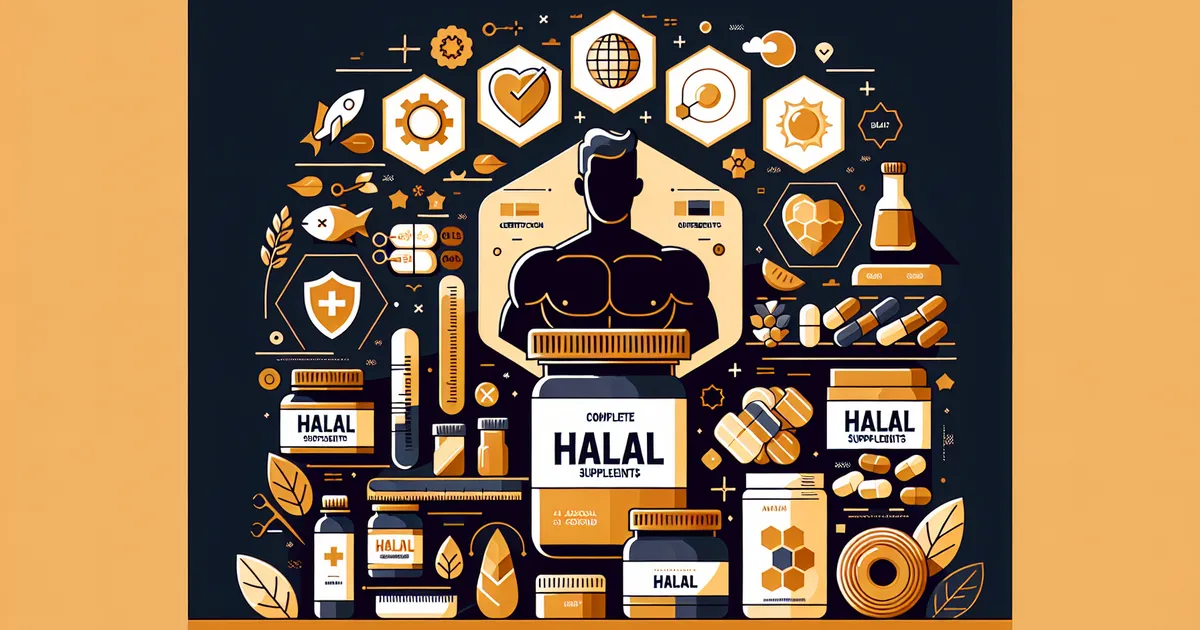
You want to take supplements. You train hard, you care about your health, and you know that the right protein powder, creatine, or multivitamin could make a real difference. But you are also a Muslim consumer, and that means you need to answer a question that most fitness guides completely ignore: is this supplement actually halal?
The supplement industry is not designed with halal compliance in mind. Labels are confusing. Ingredient lists are full of E-numbers and chemical names that tell you nothing about their animal or plant origin. Capsules that look identical on the outside can be made from pork gelatin, bovine gelatin, or plant-based HPMC — and the only way to know is to read the fine print that most people skip. Ingredients like stearic acid, magnesium stearate, and L-cysteine can come from animal sources including pork fat, but they can also come from plants. The label almost never tells you which one.
This guide exists to solve that problem permanently. It is the most comprehensive halal supplement resource we have ever created — a complete database of every ingredient you need to watch for, every certification body you can trust, and a step-by-step system for checking any supplement in under five minutes. Whether you are buying protein powder, creatine, pre-workout, collagen, or a basic multivitamin, the process is the same. Learn it once and you will never have to wonder again.
For clarity throughout this guide, we use the term haram (non-halal) to describe ingredients or products that are not permissible under Islamic dietary law. After this first mention, we will simply use "non-halal" for readability.
TL;DR — The Halal Supplement Cheat Sheet
- Safest formats: Unflavored powders with single-ingredient formulas
- Biggest red flags: Gelatin capsules (E441), carmine (E120), shellac (E904), porcine enzymes (pepsin, lipase)
- Hidden risks: Magnesium stearate, stearic acid, L-cysteine, BCAAs, taurine, and L-carnitine can all be animal-sourced
- Trusted certifications: IFANCA, ISWA, HFA, JAKIM, MUI, IFANCC
- When in doubt: Email the manufacturer — we provide the exact template below
The Complete Non-Halal Ingredients List
This is the reference table you will come back to every time you pick up a new supplement. Every ingredient below has the potential to be non-halal depending on its source. Some — like pork gelatin and carmine — are always non-halal. Others — like stearic acid and taurine — depend entirely on whether the manufacturer sourced them from animals or synthesized them in a lab. Print this list, bookmark this page, or screenshot the table. It is your first line of defense.
| Ingredient / E-Number | What It Is | Found In | Halal Status |
|---|---|---|---|
| E120 — Carmine | Red coloring from crushed cochineal insects | Flavored powders, gummies, capsule coatings | Always non-halal |
| E441 — Pork Gelatin | Protein from porcine skin/bones used as a gelling agent | Capsule shells, gummies, softgels | Always non-halal |
| E422 — Glycerol (Animal) | Humectant derived from animal fats (can also be plant-based) | Softgel capsules, liquid supplements | Check source |
| E904 — Shellac | Resinous coating secreted by lac insects | Tablet coatings, time-release capsules | Non-halal (majority view) |
| E470a / E470b — Fatty Acid Salts | Anti-caking/emulsifying agents from animal or plant fat | Powdered supplements, tablet coatings | Check source |
| E542 — Bone Phosphate | Anti-caking agent derived from animal bones | Powdered supplements, dry mixes | Non-halal unless certified |
| Taurine | Amino acid — can be synthetic or animal-derived (bile) | Pre-workouts, energy drinks, amino blends | Check source (synthetic = halal) |
| L-Carnitine | Compound often derived from animal tissue or synthesized | Fat burners, pre-workouts, amino blends | Check source (synthetic = halal) |
| L-Cysteine | Amino acid — sourced from duck feathers, human hair, or fermentation | Amino acid supplements, NAC products | Check source (fermented = halal) |
| BCAAs (Branched-Chain Amino Acids) | Leucine, isoleucine, valine — frequently animal-sourced via hydrolysis | BCAA powders, intra-workout drinks, amino blends | Check source (fermented/plant = halal) |
| Pepsin | Digestive enzyme extracted from porcine stomach lining | Digestive enzyme blends, protein supplements | Non-halal (porcine source) |
| Lipase | Fat-digesting enzyme — can be porcine, bovine, or microbial | Digestive supplements, enzyme blends | Check source (microbial = halal) |
| Rennet | Enzyme used in whey processing — animal or microbial origin | Whey protein powders, casein products | Check source (microbial/vegetable = halal) |
| Stearic Acid / Magnesium Stearate | Lubricant/flow agent — from animal fat or vegetable oil | Tablets, capsules, compressed powders | Check source (vegetable = halal) |
| Alcohol-Based Flavoring / Extraction | Ethanol used as solvent in flavor compounds or herbal extracts | Flavored powders, liquid extracts, tinctures | Scholarly debate (trace amounts) |
The key takeaway from this table: ingredients labeled with a specific E-number or chemical name do not tell you the source. Stearic acid from coconut oil is halal. Stearic acid from pork fat is not. The chemical is identical in both cases. This is why source verification — not just ingredient identification — is essential.
Halal Certification Bodies You Can Trust
A legitimate halal certification logo is the single fastest way to verify a supplement. These organizations conduct ingredient audits, facility inspections, supply-chain verification, and ongoing compliance monitoring. When you see their logo on a product, it means a qualified team has verified every ingredient, every processing aid, and every piece of equipment in contact with the product. Here are the major certification bodies recognized internationally.
IFANCA — Islamic Food and Nutrition Council of America
The leading halal certification body in North America. IFANCA certifies food, supplements, pharmaceuticals, and cosmetics. Their crescent-M logo is one of the most recognized halal symbols in the United States and Canada. They verify ingredient sourcing, processing methods, and facility cleanliness. IFANCA certification is accepted by most Muslim consumers worldwide.
ISWA — Islamic Society of the Washington Area
A respected US-based halal certification authority. ISWA certifies food products and supplements and is recognized by many international halal bodies. Their certification involves ingredient review, facility inspection, and regular re-certification audits.
HFA — Halal Food Authority (United Kingdom)
The primary halal certification body in the United Kingdom. HFA certifies food, supplements, and cosmetics for the European market. Their certification is widely accepted across Europe, the Middle East, and Southeast Asia. HFA-certified products meet strict ingredient sourcing and cross-contamination standards.
JAKIM — Department of Islamic Development Malaysia
The Malaysian government's halal certification authority and one of the most rigorous in the world. JAKIM certification is the gold standard for the Southeast Asian market and is recognized by virtually every Muslim-majority country. Their process includes laboratory testing, facility audits, and supply-chain traceability checks. If a supplement carries a JAKIM logo, the verification behind it is extensive.
MUI — Indonesian Ulema Council (Majelis Ulama Indonesia)
Indonesia's national halal authority, operating under the BPJPH (Halal Product Assurance Agency). Given that Indonesia has the world's largest Muslim population, MUI certification is one of the most commercially significant halal logos globally. Their certification covers food, pharmaceuticals, and cosmetics. MUI and JAKIM maintain mutual recognition agreements.
IFANCC — Islamic Food and Nutrition Council of Canada
Canada's primary halal certification body, working closely with IFANCA. IFANCC certifies food and supplement products sold in the Canadian market. Their certification is recognized across North America and has mutual recognition with several international bodies.
Important note on fake certification: Some manufacturers use generic halal symbols or self-declare halal status without undergoing formal audit. A genuine certification logo should include the name of the certifying body and often a certificate number that you can verify on the organization's website. If a logo looks unfamiliar, search for it online before trusting it.
Browse the Halal Supplements Directory
Our central hub for halal-checked supplements across every category
Or compare by category
The 5-Minute Halal Check: How to Verify Any Supplement
This is the system you will use for every supplement you ever buy. It takes five minutes or less, and it works for protein powders, creatine, pre-workouts, collagen, multivitamins, or anything else. Memorize these five steps and you will never have to guess again.
Step 1: Look for a Certification Logo on the Front Label
Before you even flip the container over, check the front label and packaging for a halal certification logo. Look for IFANCA, ISWA, HFA, JAKIM, MUI, or IFANCC. If you see a recognized logo, you are done — the product has been independently verified. If not, move to step two.
Step 2: Flip to "Other Ingredients" and Scan for Red Flags
Turn the container over and find the "Other Ingredients" or "Non-Medicinal Ingredients" section below the Supplement Facts panel. Scan for: gelatin, carmine (or cochineal), shellac, stearic acid, magnesium stearate, pepsin, lipase, L-cysteine, and any ingredient described as "animal-derived." Cross-reference anything suspicious against the ingredients table above.
Step 3: Check the Capsule Type
If the product is in capsule form, find the capsule material in the Other Ingredients section. Safe options include: "vegetable capsule," "hypromellose," "HPMC," or "pullulan." If it says "gelatin capsule" without specifying halal-certified bovine gelatin, treat it as non-halal. Gummy supplements almost always contain gelatin — avoid them unless they explicitly state pectin-based or gelatin-free.
Step 4: Google "[Brand Name] Halal"
A quick search for the brand name plus "halal" often reveals manufacturer statements, FAQ pages, or community discussions. Many reputable brands have addressed halal status on their websites or in customer service responses. Some brands — like Transparent Labs and Nutricost — have publicly stated that their products contain no animal-derived ingredients. This step takes 30 seconds and can save you from sending an email.
Step 5: When in Doubt, Email the Manufacturer
If you cannot verify the halal status through the label or a web search, email the manufacturer directly. Reputable companies respond within a few business days. Use this template:
Email Template — Copy and Send
Subject: Halal Status Inquiry — [Product Name]
Dear [Brand Name] Team,
I am interested in purchasing [Product Name] but need to verify its halal compliance before I can do so. Could you please confirm the following:
- Are any animal-derived ingredients used in this product, including in capsule shells, coatings, flavoring agents, or processing aids?
- If animal-derived ingredients are present, what is the specific source (porcine, bovine, marine, etc.)?
- Does this product carry halal certification from a recognized body? If so, which one?
- Are the amino acids or enzymes in this product derived from fermentation (plant-based) or animal hydrolysis?
I appreciate your transparency and look forward to your response.
Best regards,
[Your Name]
Most manufacturers will respond within 2 to 5 business days. If a company refuses to answer or gives vague responses, that is itself useful information — choose a brand that is transparent about their sourcing.
Category-by-Category Halal Guide
We have created detailed halal guides for each major supplement category. Each guide covers the specific non-halal risks for that supplement type, verified halal-friendly products, and category-specific tips. Click through to the category that matters to you.
Protein Powder
Rennet sourcing, whey processing, plant-based alternatives
Creatine
Synthetic production, capsule shells, flavoring agents
Pre-Workout
Taurine sources, amino acid origins, artificial colors
Collagen
Bovine vs. marine sources, gelatin processing, halal slaughter
BCAAs
Fermentation vs. hydrolysis, duck feather sourcing, plant alternatives
Quick Reference: Safest Supplement Types for Halal Consumers
Not all supplements are equally risky. Some formats and categories are almost always halal by default, while others require careful scrutiny. Here is a practical breakdown of what to reach for and what to avoid.
Generally Halal — Low Risk
- Pure creatine monohydrate powder — Synthesized from sarcosine and cyanamide with no animal involvement. Stick to unflavored for zero risk. Compare creatine products →
- Plant-based protein powder — Pea, rice, hemp, and soy protein isolates are plant-derived and halal by nature. No rennet, no animal enzymes, no gelatin. Compare protein powders →
- Marine collagen — Sourced from fish skin and scales. Fish is halal in all major schools of Islamic jurisprudence, making marine collagen the safest collagen choice. Compare collagen products →
- Electrolyte powder — Typically a blend of mineral salts (sodium, potassium, magnesium) with no animal-derived ingredients. Check flavored versions for carmine. Compare electrolyte products →
- Greens powder (plant-based) — Dehydrated vegetable and fruit blends. Halal by default as long as no animal enzymes or probiotics are added from non-halal dairy sources. Compare greens powders →
Higher Risk — Always Verify
- Gelatin capsules — The most common non-halal ingredient in supplements. Most gelatin is porcine or non-halal bovine. Always check for vegetable capsule alternatives.
- Gummy supplements of any kind — Almost all gummies use gelatin as the binding agent. Pectin-based gummies exist but are rare. Avoid gummies unless explicitly labeled gelatin-free.
- Anything with carmine (E120) or shellac (E904) — Insect-derived ingredients found in colored or coated supplements. Non-halal according to the majority scholarly opinion.
- BCAA and amino acid blends — Frequently sourced from animal hydrolysis (duck feathers, animal hair). Only halal if fermented from plant sugars. Compare BCAA products →
- Bovine collagen (unless halal-certified) — Bovine collagen is only halal if the cattle were slaughtered according to Islamic guidelines. Without halal certification, the slaughter method is unknown. Choose marine collagen instead.
- Softgel capsules (fish oil, vitamin D, etc.) — Softgels use glycerol and gelatin in the shell. Non-halal unless the product specifies halal-certified bovine gelatin or a plant-based alternative. Compare fish oil products →
The pattern is simple: unflavored powders with short ingredient lists are almost always safe. The more a product is processed, flavored, colored, encapsulated, or coated, the more verification you need to do. When you have a choice between a capsule and a powder version of the same supplement, choose the powder.
⚕️ Medical Disclaimer
This article is for informational purposes only and does not constitute medical advice. The content is not intended to diagnose, treat, cure, or prevent any disease. Always consult a qualified healthcare provider before starting or changing any supplements or nutrition strategies. Individual results may vary. See our full disclaimer for more information.
Frequently Asked Questions
Use the 5-Minute Halal Check: (1) Look for a halal certification logo from a recognized body like IFANCA, ISWA, HFA, JAKIM, or MUI. (2) Read the Other Ingredients section for red flags like gelatin, carmine, shellac, or stearic acid. (3) Check the capsule type — vegetable capsule or HPMC is safe, gelatin capsule needs verification. (4) Search for the brand name plus halal online for manufacturer statements. (5) If still unsure, email the manufacturer directly and ask about the source of all animal-derived ingredients.
Gelatin derived from pork (porcine gelatin) is always non-halal. Gelatin from beef (bovine gelatin) is only halal if the animal was slaughtered according to Islamic guidelines and the gelatin is certified halal. Fish gelatin is generally considered halal. If a label simply says gelatin without specifying the source, treat it as non-halal to be safe. The best option is to choose supplements with vegetable capsules (HPMC or hypromellose) instead.
Yes, the country of manufacture does not determine halal status. What matters is the ingredients, processing aids, and manufacturing practices. A supplement made in the United States, Canada, or Germany can be perfectly halal if it uses no animal-derived ingredients or only halal-certified animal ingredients. Brands like Thorne, Transparent Labs, and Nutricost produce supplements in non-Muslim countries that are halal-friendly by composition. Look at the ingredient list and certification, not the country of origin.
Halal-certified means the product has been formally inspected, tested, and approved by a recognized halal certification body like IFANCA or JAKIM. The manufacturer pays for regular audits of their facility, ingredients, and processes. Halal-friendly means the product contains no obviously non-halal ingredients based on label analysis, but has not undergone formal certification. Many high-quality supplements are halal-friendly by composition even without certification. Halal-certified provides the highest assurance, but halal-friendly products with clean labels are generally acceptable for most Muslim consumers.
Whey protein itself is derived from milk, which is halal. However, the processing of whey can involve rennet (an enzyme traditionally from calf stomach) to separate curds from whey during cheese production. Microbial rennet or vegetable rennet is halal, but animal rennet requires halal slaughter of the source animal. Additionally, whey protein products may contain non-halal additives like gelatin, carmine coloring, or animal-derived flavorings. Check our halal protein powder guide for verified products, or choose plant-based protein to eliminate the rennet concern entirely.
BCAAs and amino acids can be produced from multiple sources, and not all of them are halal. Some manufacturers extract amino acids from duck feathers, human hair, or animal tissue through hydrolysis. Others use fermentation of plant-based sugars, which is halal. The source is rarely disclosed on the label, which is why verification matters. Look for products that specify fermented or plant-sourced BCAAs. Check our detailed BCAA halal guide for specific product recommendations.
This is a topic where scholarly opinions vary. Some flavoring compounds and herbal extracts use ethanol (alcohol) as a solvent during processing. The amount remaining in the final product is typically negligible — well under 0.1 percent. Some scholars and certification bodies permit ingredients processed with alcohol if the final product contains no intoxicating amount. Others take a stricter position and consider any alcohol involvement non-halal. If you follow a strict interpretation, choose unflavored supplement powders to avoid the question entirely.
Only trust logos from recognized certification bodies. Legitimate organizations include IFANCA, ISWA, HFA, JAKIM, MUI, and IFANCC. Unfortunately, some manufacturers use generic halal symbols or self-declare halal status without undergoing formal certification. A genuine halal certification logo should include the name of the certifying body and often a certificate number. You can verify most certifications by visiting the certifying body's website and searching their database of approved products. When in doubt, contact the certification body directly.
The Bottom Line
Being a Muslim who takes supplements should not feel like a research project every time you walk into a store. The reality is that most supplements can be verified quickly once you know what to look for. The non-halal ingredients list is finite and learnable. The certification bodies are identifiable and trustworthy. And the 5-Minute Halal Check works for every single product in every single category.
The safest strategy is straightforward: choose unflavored powders, avoid gelatin capsules and gummies, scan for the red-flag ingredients, and look for recognized halal certification. When certification is not available, a clean label with no animal-derived ingredients is the next best thing. And when you are genuinely unsure, the email template above gives you a professional way to get a definitive answer from the manufacturer.
This guide is the starting point. For product-specific recommendations, explore our category guides: halal protein powders, halal creatine, halal pre-workout, halal collagen, and halal BCAAs. For side-by-side product comparisons with halal status indicators, visit our Halal Supplements Directory.
Your faith and your fitness goals are not in conflict. With the right information, you can build the supplement stack you need while staying fully compliant with your dietary values. Bookmark this page, share it with anyone who needs it, and use it as your reference every time you evaluate a new product.
Disclaimer: This article is for informational purposes only and does not constitute medical, nutritional, or religious advice. Halal rulings can vary between scholars, schools of thought, and certification bodies. FitFixLife is not a halal certification body, an Islamic authority, or a religious advisory organization. The ingredient analysis and product assessments in this guide are based on publicly available label information and manufacturer statements. Always consult with a qualified Islamic authority if you have specific questions about the permissibility of a product. Consult a healthcare professional before starting any supplement regimen.
Kazi Habib
B.Pharm · MBA · PMP · Digital Marketing, York University
Kazi Habib is the founder of FitFixLife. With over 10 years in pharmaceutical and life sciences marketing, a Digital Marketing certification from York University (Toronto), and hands-on experience launching nutraceutical products at Beximco Pharmaceuticals — including science-backed meal replacers for weight management and diabetic nutrition — he brings regulated product development, clinical data analysis, and evidence-based content standards to every tool and article on this site.
Connect on LinkedIn →No spam. Unsubscribe anytime.
Related Articles
Best Halal Protein Powders in Canada 2026 — Expert Compared
We reviewed every major protein powder in Canada for halal compliance. Bodylogix is the only IFANCC-certified option. See our full halal protein powder comparison and buying guide.
Halal Creatine Guide: Is Creatine Halal?
Pure creatine monohydrate is synthetically made and halal by default. But flavored versions and capsule forms can introduce non-halal ingredients. Full halal creatine guide with certification bodies, E-numbers, and top picks.
Is Collagen Halal? Why Most Collagen Supplements Are NOT (And Which Are)
Most collagen supplements are non-halal — porcine gelatin and non-zabiha bovine dominate the market. Learn which collagen sources are safe for Muslims, how to verify halal status, and our top picks.
Try These Free Tools
Disclaimer: This article is for informational purposes only and does not constitute medical advice. Always consult a qualified healthcare professional before making changes to your diet, exercise, or supplement routine.