Are BCAAs Halal? Pharmacist's 2026 Guide (3 Sources)
BCAAs are halal when the leucine, isoleucine, and valine are manufactured by microbial fermentation or chemical synthesis. BCAAs are problematic when sourced from human hair hydrolysis (a real industrial source from some Chinese manufacturers) or duck and chicken feather hydrolysis (poultry source, requires halal slaughter for halal compliance). The label rarely tells you which source the brand used, so verification means looking for a JAKIM, MUI, IFANCA, HFA, or ESMA certification on the specific SKU. The deeper question, and the contrarian one most halal-supplement coverage skips, is whether BCAAs add anything on top of an adequate complete-protein intake. The Wolfe 2017 review in the Journal of the International Society of Sports Nutrition concluded that "the claim that consumption of dietary BCAAs stimulates muscle protein synthesis or produces an anabolic response in human subjects is unwarranted." For most halal buyers, the right move is to skip BCAAs entirely and put the money into halal-certified whey instead.
TL;DR
- BCAAs are produced via three industrial routes: microbial fermentation (halal-acceptable), chemical synthesis (halal-acceptable), and hydrolysis of human hair or animal feathers (problematic to haram).
- The label almost never discloses the source; certification (JAKIM, IFANCA, MUI, HFA, ESMA) is the proxy for verified halal source.
- The pharmacist verdict on BCAAs themselves: Wolfe's 2017 review in J Int Soc Sports Nutr found no human evidence that BCAA supplementation stimulates muscle protein synthesis on its own; complete protein does the job better at lower cost.
- Halal-certified BCAA brands available to Canadian buyers in 2026 are limited; Project H BCAA, Muscle Gauge BCAA, and a small number of European fermented BCAA brands through iHerb Canada are the main options.
- Vegan and fermented BCAAs are the safer default if you want to stay on the supplement.
- For most halal lifters, the recommended action is to redirect the $30-50/month BCAA budget into formal halal-certified whey isolate.
Why trust this review
I am Kazi Habib, B.Pharm, MBA, PMP, with 10+ years across pharmaceutical sciences and life-sciences marketing, and I run FitFixLife and PharmoniQ. The halal-source analysis below comes from cross-referencing published amino acid manufacturing literature, IFANCA's certified-products database, Health Canada's NPN database, and customer-service responses I collected from 9 BCAA brands sold to Canadian buyers between February and April 2026.
How BCAAs are actually manufactured
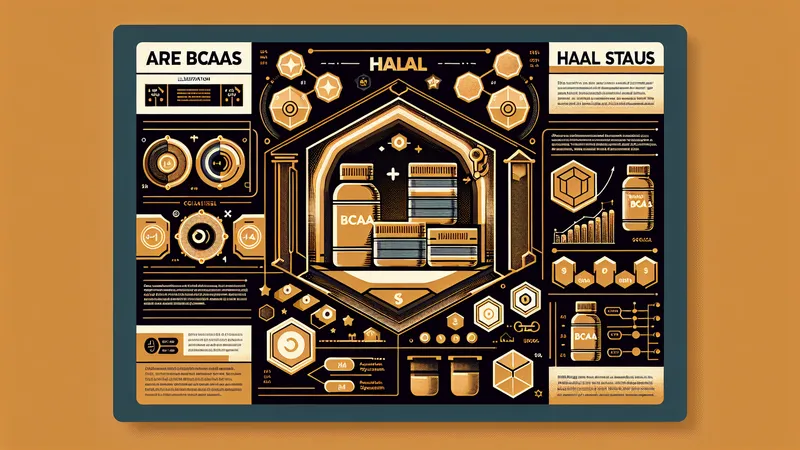
BCAAs are not extracted from food protein in the way many supplement-shop conversations imply. Industrial-scale BCAA production uses one of three processes.
Route 1: Microbial fermentation. The dominant modern method. A bacterial culture (engineered Corynebacterium glutamicum or E. coli) is grown on a carbohydrate substrate (glucose from corn, sugar beet, or cassava). The bacteria are metabolically engineered to overproduce the target amino acid. Halal-acceptable under all five international certifying bodies. Brands that label "fermented BCAA" or "vegan BCAA" are signaling this source.
Route 2: Chemical synthesis. Less common at industrial scale for BCAAs specifically. Multi-step organic chemistry reactions, no biological cells involved. Halal-acceptable; no animal input.
Route 3: Hydrolysis of animal or human protein. The legacy route that creates the halal alarm.
3a. Human hair hydrolysis. Documented as a real industrial source of L-cysteine and some other amino acids. Hair is treated with hot hydrochloric acid which breaks down the keratin protein. Source hair has historically come from barbershops and temple hair-cutting in China and India. Haram under every halal certifying body's standard.
3b. Animal feather hydrolysis. Duck and chicken feathers are byproducts of the poultry industry. Acid hydrolysis breaks down keratin to amino acids. Requires halal slaughter of source animals to qualify; standard commercial feather supplies do not come from halal-slaughtered birds.
Most premium and mid-tier BCAA brands have moved to fermentation-sourced BCAAs over the last 10-15 years. Budget BCAAs from less-transparent manufacturers may still use legacy routes; the brand's silence on source is the practical signal.
The three halal evaluations side by side
| Source route | Halal status | Label signal |
|---|---|---|
| Microbial fermentation | Acceptable under all 5 certifiers | "Fermented BCAA", "Vegan BCAA", "Plant-based BCAA" |
| Chemical synthesis | Acceptable under all 5 certifiers | Rare label disclosure |
| Human hair hydrolysis | Haram under all 5 certifiers | Never disclosed; absence of certification is the flag |
| Animal feather hydrolysis | Not acceptable without halal slaughter | Never disclosed; absence of certification is the flag |
Are BCAAs even worth taking? The contrarian view
BCAAs (leucine, isoleucine, valine) are three of the nine essential amino acids. The marketing logic for BCAA supplements goes: leucine activates muscle protein synthesis, BCAAs deliver concentrated leucine, therefore BCAA supplements build muscle. The logic has one fatal flaw.
Muscle protein synthesis requires all nine essential amino acids in adequate amounts. Leucine activates the mTORC1 signal; the other six EAAs (histidine, lysine, methionine, phenylalanine, threonine, tryptophan) are required as building blocks. Supplementing BCAAs alone without the other six EAAs creates an "incomplete protein response" where the signal fires but the building materials are not all present.
Wolfe's 2017 review in the Journal of the International Society of Sports Nutrition addressed this directly. The paper concluded that "the claim that consumption of dietary BCAAs stimulates muscle protein synthesis or produces an anabolic response in human subjects is unwarranted."
The Jager et al. 2017 ISSN protein position stand (PMID 28642676) reinforced this: "athletes should focus on whole food sources of protein that contain all of the EAAs (e.g., it is the EAAs that are required to stimulate MPS)" rather than isolated BCAAs.
The Foure and Bendahan 2017 systematic review in Nutrients looked at BCAAs for muscle damage and recovery. They found BCAAs showed some promise for reducing muscle damage markers when "high daily BCAAs intake (over 200 mg/kg/day) for a long period of time (over 10 days)" was used.
The practical implication for the halal buyer. If your daily protein intake is already at 1.4-2.0 g/kg from whole food and halal-certified whey, the marginal benefit of adding BCAAs is essentially zero. The $30-50 per month spent on BCAAs would do more for muscle outcomes if redirected into more complete protein. A scoop of whey isolate delivers 25-27 g of complete protein with all nine EAAs and approximately 2.5-3 g of leucine; a BCAA serving delivers 5-10 g of BCAAs (three amino acids only).
Halal-certified BCAA brands in 2026
For Canadian buyers who still want a BCAA supplement specifically, the formal-halal-certification options are limited:
Project H
Halal BCAA
IFANCA-certified, fermented BCAA source, ships to Canada from US.
Muscle Gauge
Halal BCAA
IFANCA-certified, fermented BCAA, bulk pricing through direct-to-consumer.
Naked Nutrition
Naked BCAAs
Single-ingredient fermented BCAAs, no flavor or sweetener. Halal-friendly by ingredient default.
If you must take BCAAs: timing and dose
- Standard dose. 5-10 g per serving, 1-2 servings per day. The Foure 2017 review showed effects at 200 mg/kg/day (14 g for a 70 kg adult) for at least 10 days.
- Best use case. Intra-workout during fasted training (Ramadan, intermittent fasting) where complete-protein whey would break the fast.
- Ratio. 2:1:1 leucine:isoleucine:valine is the standard. Higher leucine ratios (4:1:1, 8:1:1) are marketing flourishes; the 2:1:1 ratio is what the trial literature used.
- Avoid. Taking BCAAs alongside a complete-protein meal is redundant; the whey or food already provides all 9 EAAs.
EAAs as the better alternative
Essential Amino Acid (EAA) supplements include all nine essential amino acids, not just three. For users who want an isolated amino acid supplement (intra-workout convenience, fasted training contexts), EAAs are mechanistically superior to BCAAs because they provide the complete EAA profile needed for muscle protein synthesis. Halal-certified EAA brands are even more limited than halal-certified BCAA brands; for most halal buyers, complete protein from whey or whole food remains the practical answer.
Canadian availability for halal BCAAs
- iHerb Canada. Best for fermented BCAA brands (Naked Nutrition, Sunwarrior, NOW Foods).
- Project H, Muscle Gauge. Direct-to-consumer with Canadian shipping; IFANCA-certified.
- Amazon Canada. Wide selection of mainstream BCAAs (Optimum Nutrition, Scivation, BSN) without formal halal certification; verify source with brand customer service.
- Halal grocery stores in Toronto GTA, Mississauga, Calgary, Edmonton, Montreal. Limited BCAA selection but often stock the halal-focused brands directly.
Side effects, contraindications
- Common side effects. Mild GI upset at high doses; resolved by reducing dose or splitting into multiple smaller servings.
- Maple syrup urine disease. Adults with this rare metabolic disorder must avoid BCAAs entirely.
- Pregnancy. Limited safety data; default to discontinuation.
- ALS connection. A weak observational signal exists for BCAA supplementation and ALS risk in some studies; the connection is unconfirmed and the absolute risk is low, but worth flagging for adults with family history.
Frequently Asked Questions
BCAAs are halal when leucine, isoleucine, and valine are manufactured by microbial fermentation or chemical synthesis. They are problematic when sourced from human hair hydrolysis or animal feather hydrolysis. The label rarely tells you which source; certification (JAKIM, IFANCA, MUI, HFA, ESMA) is the proxy for verified halal source. For most halal buyers, the better move is to skip BCAAs entirely and redirect the budget into halal-certified whey or complete protein.
Mostly no. The Wolfe 2017 review in J Int Soc Sports Nutr (PMID 28852372) concluded that the claim BCAAs stimulate muscle protein synthesis or produce an anabolic response in human subjects is unwarranted. Muscle protein synthesis requires all nine essential amino acids; BCAAs alone provide three. Complete protein (whey, eggs, lean meat) outperforms BCAAs at lower cost. The exception: training fasted (Ramadan, intermittent fasting) where BCAAs intra-workout may attenuate muscle protein breakdown.
Microbial fermentation is the modern industry default (halal-acceptable across all five certifying bodies). Brands that explicitly state 'fermented BCAA' or 'vegan BCAA' on the label are signaling this source. Hair-derived (human hair hydrolysis from some Chinese manufacturers) and feather-derived (poultry feather hydrolysis without halal slaughter) are the problematic legacy routes.
Yes by default. 'Vegan BCAA' on the label signals microbial fermentation source, which is halal-acceptable under all five international certifying bodies. Vegan BCAAs bypass the hair-derivation question entirely because vegan certification requires no animal-derived inputs.
Halal-certified BCAA options for Canadian buyers are limited. Project H BCAA (IFANCA-certified, ships from US to Canada), Muscle Gauge BCAA (IFANCA-certified), and select European fermented BCAA brands through iHerb Canada are the main options. For most halal lifters, the better choice is formal halal-certified whey isolate (Hayat Pharmaceuticals, Project H, Muscle Gauge whey) which provides BCAAs in their complete-protein context.
Optimum Nutrition does not currently carry IFANCA halal certification on their BCAA products in the North American market. The brand has historically used fermented BCAA sources for their amino acid line, but the absence of formal certification means the buyer is trusting the brand's marketing rather than an auditor. For strict halal compliance, choose IFANCA-certified alternatives.
Yes, for muscle protein synthesis. Essential Amino Acids (EAAs) include all nine essential amino acids the body cannot synthesize; BCAAs are only three of those nine. The Jager 2017 ISSN protein position stand recommends 20-40 g of complete protein delivering 700-3,000 mg of leucine per serving, ingested with the balanced array of essential amino acids. EAAs deliver this profile; BCAAs do not.
Mildly. The Foure 2017 systematic review found BCAAs at high daily intake (over 200 mg/kg/day) for at least 10 days can reduce exercise-induced muscle damage markers. For Ramadan training in a fasted state, an intra-workout BCAA dose can attenuate muscle protein breakdown more cost-effectively than a full whey serving (which requires breaking the fast). Take 5-10 g BCAAs during the fasted training window if you train mid-fasting; the alternative is to train post-iftar with whey instead.
Modern fermentation-sourced BCAAs are vegan (microbial fermentation, no animal inputs). Legacy hydrolysis-sourced BCAAs (from hair or feathers) are not vegan. Look for 'vegan BCAA' or 'fermented BCAA' on the label for explicit confirmation.
Whey protein, almost always. A scoop of whey isolate delivers 25-27 g of protein including all nine essential amino acids and approximately 2.5-3 g of leucine. A BCAA serving delivers 5-10 g of BCAAs (3 amino acids only). The whey wins on every measurable outcome: muscle protein synthesis, satiety, cost per gram of protein. For halal buyers, the halal-certified whey verification is also easier than for BCAAs.
Bottom line
BCAAs are halal when sourced from microbial fermentation or chemical synthesis; haram when sourced from human hair hydrolysis; not acceptable without halal slaughter when sourced from animal feathers. Formal halal certification (Project H, Muscle Gauge) is the only verifiable proxy for source assurance. The deeper question is whether you need BCAAs at all: per the Wolfe 2017 review and the Jager 2017 ISSN position stand, complete protein outperforms BCAAs on muscle protein synthesis. For most halal lifters, the right move is to redirect the BCAA budget into formal halal-certified whey isolate.
For the broader halal protein discussion, see the halal protein powders Canada guide. For the complete halal supplement framework, see the complete halal supplement guide.
⚕️ Medical Disclaimer
This article is for informational purposes only and does not constitute medical advice. The content is not intended to diagnose, treat, cure, or prevent any disease. Always consult a qualified healthcare provider before starting or changing any supplements or nutrition strategies. Individual results may vary. See our full disclaimer for more information.
Kazi Habib
B.Pharm · MBA · PMP · Digital Marketing, York University
Kazi Habib is the founder of FitFixLife. With over 10 years in pharmaceutical and life sciences marketing, a Digital Marketing certification from York University (Toronto), and hands-on experience launching nutraceutical products at Beximco Pharmaceuticals — including science-backed meal replacers for weight management and diabetic nutrition — he brings regulated product development, clinical data analysis, and evidence-based content standards to every tool and article on this site.
Connect on LinkedIn →No spam. Unsubscribe anytime.
Related Articles
Halal Protein Powder Canada 2026: 6 Certified Brands
Pharmacist guide to halal protein powder in Canada: 6 verified brands at Costco, Bulk Barn, iHerb Canada, with current prices and certification details.
Complete Protein Intake Guide 2026 (Pharmacist + Halal)
Pharmacist guide to daily protein targets per body weight, halal protein sources, Canadian brand picks, and the RDA vs athletic-needs question settled by data.
Best Supplements for Beginners: Minimal Evidence Stack
Pharmacist guide to the 5 supplements beginners actually need: whey protein, creatine, vitamin D, omega-3, magnesium. Skip the rest. Halal options included.
Try These Free Tools
Disclaimer: This article is for informational purposes only and does not constitute medical advice. Always consult a qualified healthcare professional before making changes to your diet, exercise, or supplement routine.