Best Supplements for Beginners: Minimal Evidence Stack
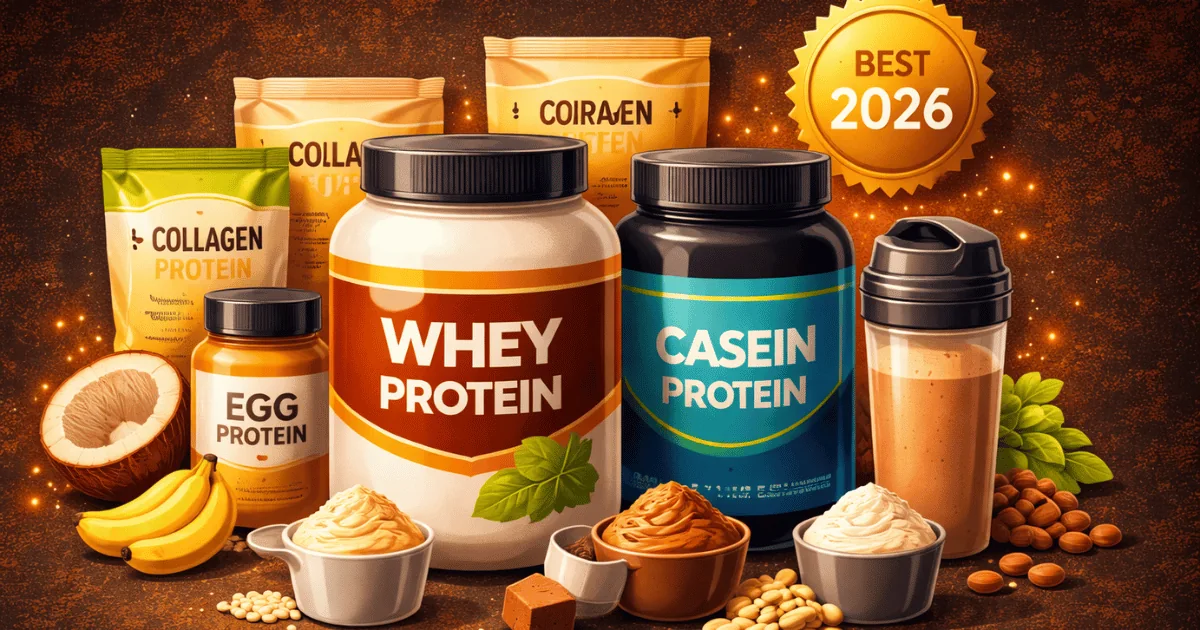
The minimal evidence-based supplement stack for a beginner is five products: whey protein (or pea/rice blend if vegan) to hit the daily protein target, creatine monohydrate 3 to 5 g daily, vitamin D3 1,000 to 2,000 IU daily, an omega-3 fish oil with 1 to 2 g combined EPA plus DHA, and magnesium glycinate or citrate 200 to 400 mg elemental in the evening. Total monthly cost in Canadian dollars: roughly $50 to $90 depending on brand selection. Every other supplement category (BCAAs, glutamine, fat burners, testosterone boosters, greens powders, mass gainers) is either redundant, weakly supported in trial evidence, or marketing dressed up as performance.
TL;DR
- The five supplements with strong evidence for beginners: whey or vegan protein, creatine monohydrate, vitamin D3, omega-3 fish oil, magnesium glycinate/citrate.
- Whey protein: 20 to 40 g per serving to hit the daily target (roughly 1.6 g/kg body weight per Morton 2018).
- Creatine monohydrate: 3 to 5 g daily, taken any time. The Kreider 2017 ISSN position stand confirms safety up to 30 g/day for 5 years.
- Vitamin D3: 1,000 to 2,000 IU daily; 4,000 to 5,000 IU under physician guidance for deficiency. The Martineau 2017 BMJ meta-analysis showed reduced respiratory infection risk.
- Omega-3 fish oil: 1 to 2 g combined EPA + DHA daily. IFOS-certified products (Nordic Naturals, Carlson Labs).
- Magnesium glycinate or citrate: 200 to 400 mg elemental in the evening. The Rosanoff 2012 review documented 48% of US adults consume less than the magnesium RDA.
- Skip: BCAAs, glutamine, fat burners, testosterone boosters, greens powders, mass gainers.
Why trust this guide
I am Kazi Habib, B.Pharm, MBA, PMP. The supplement stack, dosing, and brand recommendations below come from the ISSN position stands, peer-reviewed meta-analyses on PubMed (Morton 2018 protein, Kreider 2017 creatine, Martineau 2017 vitamin D, Abdelhamid 2018 omega-3, Rosanoff 2012 magnesium), Health Canada Dietary Reference Intakes, the IFANCA halal certification database, and an SKU-by-SKU price-and-label audit across 18 single-ingredient supplements at Costco Canada, iHerb Canada, Naked Nutrition Canada, halal grocery retailers in Mississauga and Brampton, and Bulk Barn between January and April 2026.
The five-supplement stack
1. Protein powder (whey or vegan)
The Morton et al. 2018 meta-analysis (49 RCTs, 1,863 participants) confirmed that protein supplementation augments resistance training gains in lean mass and strength up to roughly 1.62 g/kg body weight per day.
Dosing: Total daily protein at 1.6 g/kg body weight for muscle gain or maintenance. Typical shake: 25 to 40 g per serving, 1 to 2 servings per day. Deeper guide: best protein powder 2026 buying guide and halal protein powders Canada.
2. Creatine monohydrate
The Kreider et al. 2017 ISSN creatine position stand confirms 5 to 15% increase in resistance training volume tolerance, 1 to 2 kg of lean mass gain over 12 weeks. Safety documented up to 30 g/day for 5 years.
Dosing: 3 to 5 g daily, taken at any consistent time. Loading phase is not required. Deeper guide: creatine 101 and halal creatine guide.
3. Vitamin D3
The Martineau et al. 2017 individual-patient meta-analysis (25 RCTs, 11,321 participants) showed vitamin D supplementation reduced the risk of acute respiratory tract infection. At northern latitudes (most of Canada is above 49 degrees north), endogenous vitamin D synthesis from sunlight is negligible from October through March.
- General adult: 1,000 to 2,000 IU daily.
- Documented deficiency: 4,000 to 5,000 IU daily under physician guidance.
- Test annually if possible. A serum 25(OH)D blood test costs $25 to $50 in most Canadian provinces.
4. Omega-3 fish oil
The Abdelhamid et al. 2018 Cochrane systematic review (79 RCTs, over 112,000 participants) found that increased intake of long-chain omega-3 had a small but reliable effect on cardiovascular outcomes.
Dosing: 1 to 2 g of combined EPA + DHA daily. Quality matters enormously for fish oil. Look for IFOS (International Fish Oil Standards) 5-star certification.
5. Magnesium glycinate or citrate
The Rosanoff 2012 review documented that 48% of US adults consume less than the magnesium RDA from food.
Dosing: 200 to 400 mg elemental magnesium in the evening (sleep support, recovery). Deeper guide: magnesium glycinate vs citrate vs oxide.

Top picks for the beginner stack
Hayat Pharmaceuticals
Hayat Pharmaceuticals Whey Protein Isolate
IFANCA-certified halal whey. The default certified halal whey in North America. Available at major halal grocery retailers in Mississauga, Brampton, Calgary, Edmonton, Montreal.
Bulk Supplements
Bulk Supplements Creatine Monohydrate
Single-ingredient pure creatine monohydrate. 500 g for $25 to $40 CAD (100 to 167 servings). The cheapest most-effective supplement in fitness.
NOW Foods
NOW Foods Vitamin D3 (lichen-derived or 5,000 IU)
Vegetable softgels available; lichen-source D3 SKU is vegan and reliably halal-safe. Verify the specific lot for capsule material.
Nordic Naturals
Nordic Naturals Ultimate Omega
IFOS 5-star certified. Fish gelatin softgels (halal-friendly by default since fish does not require ritual slaughter). The gold standard for fish oil purity.
NOW Foods
NOW Foods Magnesium Glycinate
HPMC vegetable capsules (no gelatin). Verified vegetable-source magnesium stearate. 200 mg elemental magnesium per dose.
Total monthly cost of the beginner stack
| Supplement | Mid-tier monthly (CAD) | Budget monthly (CAD) |
|---|---|---|
| Whey protein | $45 to $105 | $15 to $42 (Kirkland) |
| Creatine monohydrate | $5 to $10 | $3 to $6 |
| Vitamin D3 1,000 to 2,000 IU | $1.50 to $5 | $1 to $1.50 |
| Omega-3 fish oil | $30 to $45 | $4.50 to $9 |
| Magnesium glycinate | $12 to $18 | $12 to $18 |
| Total | $93 to $183 | $35.50 to $76.50 |
The long list of supplements to skip
- BCAAs. Redundant if total daily protein intake reaches 1.6 g/kg body weight.
- Glutamine. Trial evidence at supplemental doses is weak.
- Fat burners. Caffeine has a small thermogenic effect; the other ingredients add marginally or nothing.
- Testosterone boosters (tribulus, D-aspartic acid, fenugreek). Weak clinical evidence at OTC doses.
- Greens powders (AG1, Bloom, Athletic Greens). Expensive multivitamins with marketing language.
- Mass gainers. Whey + maltodextrin + dextrose at 5x the cost of buying components separately.
- Pre-workout (commercial multi-ingredient). Most are 80% caffeine with under-dosed everything else.
- Collagen powders. Some evidence for skin/joints at 10 to 15 g daily; not a beginner essential.
- ZMA. Adds no benefit over taking magnesium glycinate alone.
- HMB. Mixed evidence in healthy training populations.
- Nitric oxide / pump products. Buy bulk citrulline malate at 6 to 8 g instead.
- Detox / cleanse supplements. No physiological basis. The liver and kidneys handle detoxification.
- Probiotics (general gut health framing). Stronger evidence for specific clinical scenarios; most beginners can skip.
Pharmacist note: drug interactions
- Warfarin + vitamin K (some greens powders). Vitamin K reduces warfarin efficacy. Coordinate with prescriber on consistent intake.
- Thyroid medication + calcium/iron. Take levothyroxine on an empty stomach 30 to 60 minutes before any calcium-containing food or supplement.
- Statins + grapefruit-flavored anything. Grapefruit inhibits CYP3A4 and increases statin blood levels.
- High-dose omega-3 + anticoagulants. Modest additive bleeding risk at 3+ g/day combined EPA/DHA.
- Creatine + statins. Generally clean interaction. Both can mildly elevate serum creatinine; this is a lab-value flag rather than a clinical problem.
- Magnesium + certain antibiotics (tetracyclines, fluoroquinolones). Calcium and magnesium bind these drugs. Space by at least 2 hours.
Bottom line
The five supplements with strong evidence for beginners are whey or vegan protein, creatine monohydrate, vitamin D3, omega-3 fish oil, and magnesium glycinate or citrate. Total monthly cost in Canada is roughly $50 to $90 for budget picks (Costco Kirkland tier) or $90 to $180 for mid-tier brands. Every other supplement category (BCAAs, glutamine, fat burners, testosterone boosters, greens powders, mass gainers) is either redundant if total protein is adequate, weakly supported in trial evidence, or marketing dressed up as performance.
Halal-conscious beginners should default to Hayat IFANCA whey, bulk creatine monohydrate, vitamin D3 from lichen or verified-lanolin source, Nordic Naturals or comparable IFOS-certified fish oil, and magnesium glycinate in HPMC capsules. For broader label-reading skills, see how to read supplement labels. For Canadian-specific halal picks, see the complete halal supplement guide.
Frequently Asked Questions
Five supplements with strong evidence: whey or vegan protein (to hit the daily target), creatine monohydrate (3 to 5 g daily), vitamin D3 (1,000 to 2,000 IU daily), omega-3 fish oil (1 to 2 g combined EPA + DHA daily), and magnesium glycinate or citrate (200 to 400 mg elemental in the evening). Total monthly cost in Canada: roughly $50 to $90 for budget picks, $90 to $180 for mid-tier brands.
You need to hit your daily protein target (roughly 1.6 g per kg of body weight per day for muscle gain). Protein powder is a convenient tool to close the gap between whole-food intake and that target. If you consistently hit your target from whole food (eggs, meat, fish, dairy, lentils), you do not strictly need protein powder.
Yes. The Kreider 2017 ISSN position stand documents safety up to 30 g per day for 5 years in healthy populations spanning infants to elderly. The supplemental dose for beginners (3 to 5 g daily) is well below any concern threshold. Side effects are minimal (mild GI distress at high single doses, minor water retention as muscle phosphocreatine saturates).
No. BCAAs are redundant if your total daily protein intake reaches 1.6 g per kg body weight. Whey, eggs, meat, and most plant proteins already contain leucine, isoleucine, and valine. The BCAA supplement category is mostly marketing.
Optional for most beginners with reasonably varied diets. A quality multivitamin (with good form choices: methylfolate vs folic acid, methylcobalamin vs cyanocobalamin, magnesium glycinate vs oxide) is cheap insurance for nutrient gaps but not essential. Specific deficiencies (vitamin D in northern climates, iron in premenopausal women) are better addressed with targeted single-ingredient supplements.
Most commercial pre-workouts are 80% caffeine with under-dosed everything else. For beginners, one cup of coffee plus daily creatine is enough. The four evidence-backed pre-workout ingredients (caffeine, beta-alanine, citrulline, creatine) bought separately cost half to a third of a commercial pre-workout.
Mostly no. Greens powders like AG1 are expensive multivitamins with marketing language. A quality multivitamin plus actual greens (frozen spinach, kale, broccoli) delivers more usable nutrition for a fraction of the cost.
Hayat IFANCA-certified whey, bulk creatine monohydrate (single-ingredient verified), vitamin D3 from lichen or verified-lanolin source in HPMC capsules, Nordic Naturals or comparable IFOS-certified fish oil (fish gelatin is halal-friendly by default), magnesium glycinate in HPMC capsules from NOW Foods or Doctor's Best.
If possible, yes. A serum 25(OH)D blood test costs $25 to $50 in most Canadian provinces (typically out-of-pocket). At northern latitudes (most of Canada), endogenous vitamin D synthesis is negligible from October through March, and roughly one in three Canadians has blood levels below the deficiency threshold.
Yes, with timing notes: creatine and protein can be taken any time of day. Vitamin D3 absorbs better with a fatty meal. Omega-3 fish oil with food reduces fishy burps. Magnesium glycinate in the evening for sleep support. If you take levothyroxine, separate calcium-containing supplements by 4 hours. If you take iron supplements, separate from calcium by 2 hours.
Kazi Habib
B.Pharm · MBA · PMP · Digital Marketing, York University
Kazi Habib is the founder of FitFixLife. With over 10 years in pharmaceutical and life sciences marketing, a Digital Marketing certification from York University (Toronto), and hands-on experience launching nutraceutical products at Beximco Pharmaceuticals — including science-backed meal replacers for weight management and diabetic nutrition — he brings regulated product development, clinical data analysis, and evidence-based content standards to every tool and article on this site.
Connect on LinkedIn →No spam. Unsubscribe anytime.
Related Articles
Creatine 101: Everything You Need To Know (Pharmacist)
Creatine basics for beginners: how it works, loading vs no-load, dose, safety, halal-certified picks, and the brand-test reality the marketing skips.
How to Read Supplement Labels: Pharmacist Walk-Through
Pharmacist guide to decoding Supplement Facts panels: % DV math, proprietary blends, hidden non-halal ingredients, NPN vs FDA rules, third-party seals.
Try These Free Tools
Disclaimer: This article is for informational purposes only and does not constitute medical advice. Always consult a qualified healthcare professional before making changes to your diet, exercise, or supplement routine.