How to Read Supplement Labels: Pharmacist Walk-Through
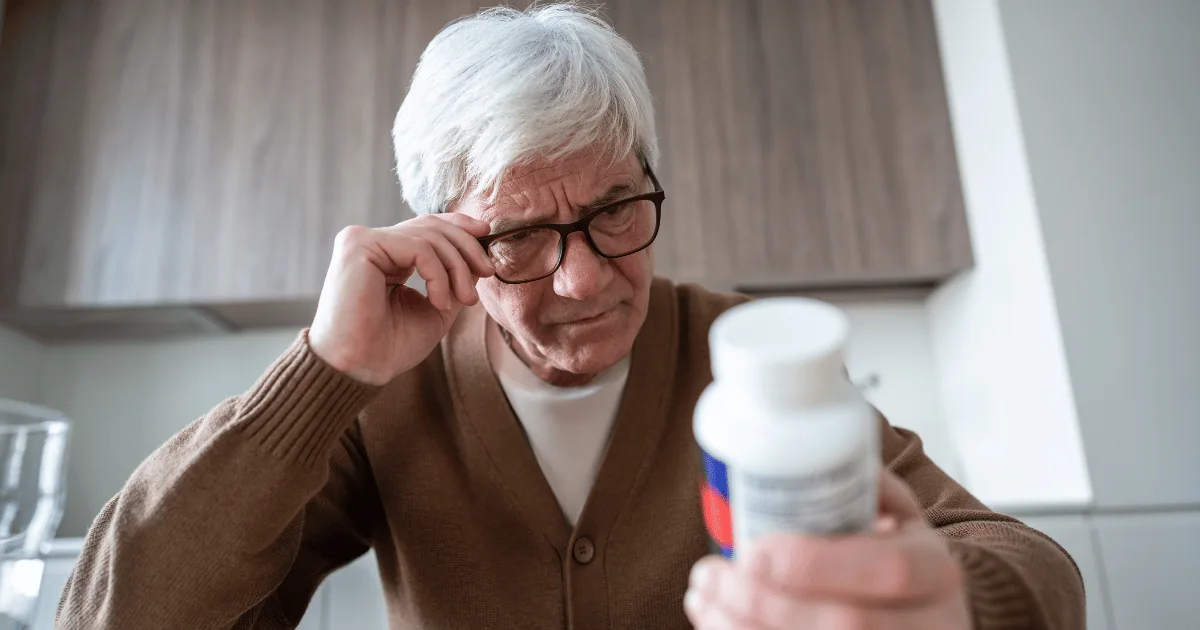
Supplement labels are designed to look informative and stay legally compliant while obscuring three things buyers actually care about: how much active ingredient is in each dose, where on the ingredient list the active sits, and which seemingly minor ingredients carry real concerns (non-halal carriers, hidden caffeine, undeclared pharmaceutical adulterants, banned-substance contamination). A 2024 JAMA Network Open audit of 30 weight-loss supplements found 25 had inaccurate labels and 7 contained hidden ingredients not declared anywhere on the bottle. The label is not always the truth.
TL;DR
- The Supplement Facts panel is the legally required block on every US supplement; the Canadian equivalent is the NPN label with the 8-digit Natural Product Number.
- Ingredients are listed in descending order by weight. The active ingredient is often buried below fillers, flow agents, and bulking compounds.
- Proprietary blend is a legal way to hide individual ingredient doses behind a single total. Assume the cheapest ingredient takes 80%+ of the dose.
- Percent Daily Value (% DV) is referenced to outdated nutrient ranges. 100% DV vitamin D is 800 IU, but research-supported intakes for adults often run 1,000 to 2,000 IU.
- Third-party seals worth trusting: NSF Certified for Sport, Informed Sport, USP Verified, IFOS (fish oil), ConsumerLab Approved, and halal marks (IFANCA, HFA, JAKIM, MUI, ESMA).
- Halal flags most consumers cannot identify: gelatin, magnesium stearate (often beef tallow-derived), glycerin (often pork-derived), L-cysteine (often hair-derived), denatured ethanol in natural flavors carriers.
- The Crawford 2024 JAMA Network Open audit found 25 of 30 weight-loss supplements had inaccurate labels.
Why trust this guide
I am Kazi Habib, B.Pharm, MBA, PMP. The label-decoding rules, regulatory context, and ingredient flags below come from my pharmacy training, Health Canada's Natural and Non-prescription Health Products Directorate (NNHPD) labeling guidance, US FDA Supplement Facts panel regulations (21 CFR 101.36), peer-reviewed supplement-label audits on PubMed (Crawford 2024, Cohen 2018, Geller 2015), and my own SKU-by-SKU label audit on 23 protein powders, multivitamins, and pre-workouts purchased from Costco Canada, iHerb Canada, halal grocery retailers in Mississauga and Brampton, and Bulk Barn between January and April 2026.
The Supplement Facts panel: what each line means
- Serving size and servings per container. Always check first. Smaller serving sizes that look impressive on amount-per-serving can be hiding dilution.
- Amount per serving. Listed in mg, mcg, IU, or g. Units matter: 1,000 mcg = 1 mg.
- Percent Daily Value (% DV). Reference to the US Daily Value, FDA-set general intake. Updated 2016 but still based on average adult requirements.
- Other Ingredients section. Everything not an active dietary ingredient: capsule shell, fillers, flow agents, sweeteners, colors. Where most halal red flags hide.
- Distributor or manufacturer name and address. Useful for cross-checking certification claims.

Halal-watchlist: ingredients to flag in Other Ingredients
| Entry | What it is | Halal flag |
|---|---|---|
| Gelatin | Capsule shell, beef or pork | Pork-derived if not specified |
| Magnesium stearate | Flow agent | Often beef tallow-derived; verify source |
| Stearic acid | Tablet binder | Same source issue as magnesium stearate |
| Glycerin / glycerol | Humectant in soft-gels | Often pork-derived; halal brands use plant glycerin |
| Vegetable capsule (HPMC) | Plant-based shell | Generally halal-safe |
| Carmine / cochineal | Red coloring | Insect-derived; non-halal per most bodies |
| L-cysteine | Amino acid in protein powders | Often human-hair-derived; halal = fermentation-derived |
| Natural flavors | Catch-all flavor term | Frequently contain denatured ethanol carriers |
| Lecithin (soy/sunflower) | Emulsifier | Soy and sunflower lecithin are halal-safe |
| Vitamin D3 (cholecalciferol) | Often lanolin-derived | Lanolin generally halal; lichen-D3 is vegan + reliable halal |
The single most overlooked halal flag is the magnesium stearate entry. It appears in 70 to 80% of mass-market tablet supplements. Without source verification, the default assumption is beef tallow derivation. IFANCA-certified products use vegetable-derived stearate or have verified the animal source.
Percent Daily Value: useful reference, imperfect target
| Nutrient | 100% DV | Research-supported range (adults) |
|---|---|---|
| Vitamin D | 800 IU (20 mcg) | 1,000 to 4,000 IU |
| Vitamin B12 | 2.4 mcg | 2.4 to 1,000 mcg |
| Iron | 18 mg | 8 mg men / 18 mg premenopausal women |
| Calcium | 1,300 mg | 1,000 to 1,200 mg total (diet + supplement) |
| Magnesium | 420 mg | 300 to 400 mg elemental from supplements |
| Zinc | 11 mg | 8 to 15 mg; long-term high doses lower copper |
Proprietary blends: how to read them honestly
A proprietary blend is a label tactic permitted by FDA regulation that lets a manufacturer disclose only the total weight of a multi-ingredient blend without disclosing how much of each ingredient is in the blend. This is legal. It is also almost always used to hide cheap ingredients carrying most of the blend weight.
- Ingredients are listed in descending order by weight within the blend.
- The total blend weight is disclosed; individual amounts are not. A 5,000 mg Energy Matrix blend with six ingredients tells you the total; not whether caffeine is 300 mg or 50 mg.
- Assume worst-case allocation. The cheapest ingredient (often caffeine, taurine, or maltodextrin) takes 50 to 80% of the blend weight.
Rule of thumb: if a pre-workout, fat burner, or performance supplement uses a proprietary blend instead of disclosing individual ingredient doses, the brand is hiding something. Brands that fully disclose ingredient doses (Transparent Labs, Legion, Naked Nutrition, Bulk Supplements) earn buyer trust for a reason.
US FDA vs Health Canada NPN
United States (FDA, DSHEA 1994). No FDA pre-approval required before market entry. Manufacturer is responsible for safety and labeling. FDA can act only after market entry. The Cohen 2018 piece in JAMA Network Open documents the regulatory gaps.
Canada (Health Canada, Natural Health Products Regulations 2004). Natural Health Products (NHPs) require a Natural Product Number (NPN) before sale. NPN issuance is a notification process based on submitted ingredient claims and safety data. The 8-digit NPN appears on the label; consumers can look up the product in the Licensed Natural Health Products Database (LNHPD) to verify approved health claims.
Practical for Canadian buyers: An NPN on the label means the product has been notified to Health Canada and the listed claims have been reviewed. It does not guarantee third-party testing or potency verification. A product sold in Canada without an NPN is technically non-compliant for sale as a Natural Health Product.
Third-party certification seals that matter
Seals that represent real third-party testing:
- NSF Certified for Sport. Tests every batch for label accuracy and over 270 banned substances on the WADA list.
- Informed Sport. Similar batch testing for banned substances.
- USP Verified. Tests for ingredient identity, potency, purity, and GMP.
- IFOS (International Fish Oil Standards). The 5-star rating is the gold standard for fish oil purity.
- ConsumerLab.com Approved. Independent testing organization.
Halal certification seals worth trusting: IFANCA (US), JAKIM (Malaysia), MUI (Indonesia), HFA (UK), ESMA (UAE).
Seals that are mostly marketing: Doctor formulated, lab tested without naming the lab, GMP certified (required of all legal supplements anyway), Made in USA, all-natural, clinically proven without naming the trial.
Drug-supplement interactions visible from labels
- Warfarin (Coumadin) + vitamin K. Check multivitamin labels for vitamin K content if a family member takes warfarin.
- Levothyroxine (Synthroid) + calcium or iron. Reduces absorption by 30 to 50%. Take levothyroxine on an empty stomach 30 to 60 minutes before any calcium-containing food.
- SSRIs / SNRIs + St John's wort. Increases risk of serotonin syndrome. Often hidden in mood support proprietary blends.
- Statins + grapefruit-flavored anything. Grapefruit inhibits CYP3A4 and increases statin blood levels.
- Anticoagulants + fish oil at high doses (3+ g EPA/DHA daily). Modest additive bleeding risk.
- Diabetes medications + chromium picolinate, berberine, gymnema. Modest additive blood-glucose-lowering effect.
The 7-step label-reading checklist
- Check serving size first.
- Read the active ingredients block. Look at the form (citrate vs oxide, methylcobalamin vs cyanocobalamin) and the dose vs research-supported range.
- Check for proprietary blends. Any blend that does not disclose individual ingredient doses means the manufacturer is hiding something.
- Read the Other Ingredients line carefully. Look for halal flags (gelatin, magnesium stearate, glycerin, L-cysteine, carmine, natural flavors).
- Look for third-party certification seals. NSF Certified for Sport, USP Verified, Informed Sport, IFOS. Halal: IFANCA, JAKIM, MUI, HFA, ESMA.
- Verify the NPN (Canada) or country-specific regulatory status.
- Check the manufacturer name and country of manufacture.
For deeper category-specific decoding, see halal protein powders Canada, halal creatine guide, and magnesium glycinate vs citrate vs oxide.
Bottom line
The Supplement Facts panel and the Other Ingredients line are legally required and structured to a format you can decode if you know what to look for. Serving size sets the dose math; the active ingredient block tells you what is in the bottle and at what dose; the Other Ingredients line is where most halal flags hide (magnesium stearate, gelatin, glycerin, L-cysteine, denatured ethanol in flavor carriers, carmine). Proprietary blends hide ingredient doses by design; avoid them when transparently-dosed alternatives exist. Third-party certification seals worth trusting are NSF Certified for Sport, Informed Sport, USP Verified, IFOS, ConsumerLab, and category-specific halal marks. Health Canada NPN status is necessary for legal Canadian sale but does not replace third-party testing.
If you want the pharmacist take on specific supplement categories with full label audits and Canadian retailer pricing, the complete halal supplement guide, halal protein powders Canada, and halal vitamin supplements guide cover the most common categories in depth.
Frequently Asked Questions
Percent Daily Value compares the supplement's amount of a nutrient to the FDA-set general-population daily reference. It is a label-reading shorthand, not a personalized target. Some nutrients have research-supported intakes above 100% DV (vitamin D commonly), some have lower optimal intakes than the DV (iron for postmenopausal adults). Use % DV as a reference, not a goal.
A proprietary blend is a label entry that discloses only the total weight of a multi-ingredient combination, hiding the individual ingredient doses. Brands use it to mask underdosing of expensive ingredients. Most evidence-based formulators (Transparent Labs, Legion, Naked Nutrition, Thorne, Bulk Supplements) fully disclose every dose. Avoid proprietary-blend products when transparently-dosed alternatives exist.
The Natural Product Number indicates the product has been notified to Health Canada and the listed health claims have been reviewed. It does not guarantee batch-by-batch potency, third-party testing, or proven efficacy. NPN is necessary for legal sale of Natural Health Products in Canada; it is not sufficient for quality assurance. Pair NPN with NSF, USP, IFOS, or category-specific third-party seals.
Supplement Facts is required on dietary supplements regulated under DSHEA in the US. Nutrition Facts is required on conventional food products. The panels follow different format rules. Both have ingredient lists in descending order by weight.
Caffeine can be hidden in energy blend proprietary blends, thermogenic blend entries, or under specific source names: green tea extract, yerba mate, guarana, kola nut, coffee fruit extract, theobroma cacao. If a product is marketed as energy-boosting and does not disclose caffeine content explicitly in mg, assume it contains caffeine.
Mostly no. The FDA has not defined natural for supplements. The word can appear on a product full of synthetic ingredients as long as one component is plant-derived. Look at the actual ingredient list, not the marketing word.
Magnesium stearate. It appears in 70 to 80% of mass-market tablet supplements and is most often beef tallow-derived without zabihah verification. Most consumers do not know to look for it, and most retailers cannot tell you whether the source is verified. IFANCA-certified brands and brands that explicitly state vegetable-source magnesium stearate have done the verification work.
Trust verified by third-party testing (NSF, USP, ConsumerLab, IFOS for fish oil). Trust less for products without third-party verification, especially in categories with documented label-accuracy problems (weight loss, sexual enhancement, athletic performance). The Crawford 2024 audit found 25 of 30 weight-loss supplements were misbranded.
No, but it correlates with form quality, ingredient sourcing, and third-party testing. The cheapest supplement in a category usually uses the cheapest ingredient forms (magnesium oxide, vitamin E dl-alpha, calcium carbonate, B12 cyanocobalamin) and often skips third-party testing. Diminishing returns above the mid-tier price band.
Different nutrients have very different effective dose ranges. B12 is active at micrograms (mcg); magnesium is active at hundreds of milligrams (mg); fish oil EPA/DHA is measured in grams. The units are nutrient-specific by convention. Always check the unit when comparing two products.
Kazi Habib
B.Pharm · MBA · PMP · Digital Marketing, York University
Kazi Habib is the founder of FitFixLife. With over 10 years in pharmaceutical and life sciences marketing, a Digital Marketing certification from York University (Toronto), and hands-on experience launching nutraceutical products at Beximco Pharmaceuticals — including science-backed meal replacers for weight management and diabetic nutrition — he brings regulated product development, clinical data analysis, and evidence-based content standards to every tool and article on this site.
Connect on LinkedIn →No spam. Unsubscribe anytime.
Related Articles
Best Supplements for Beginners: Minimal Evidence Stack
Pharmacist guide to the 5 supplements beginners actually need: whey protein, creatine, vitamin D, omega-3, magnesium. Skip the rest. Halal options included.
Creatine 101: Everything You Need To Know (Pharmacist)
Creatine basics for beginners: how it works, loading vs no-load, dose, safety, halal-certified picks, and the brand-test reality the marketing skips.
Try These Free Tools
Disclaimer: This article is for informational purposes only and does not constitute medical advice. Always consult a qualified healthcare professional before making changes to your diet, exercise, or supplement routine.