How to Build a Workout Plan That Actually Works
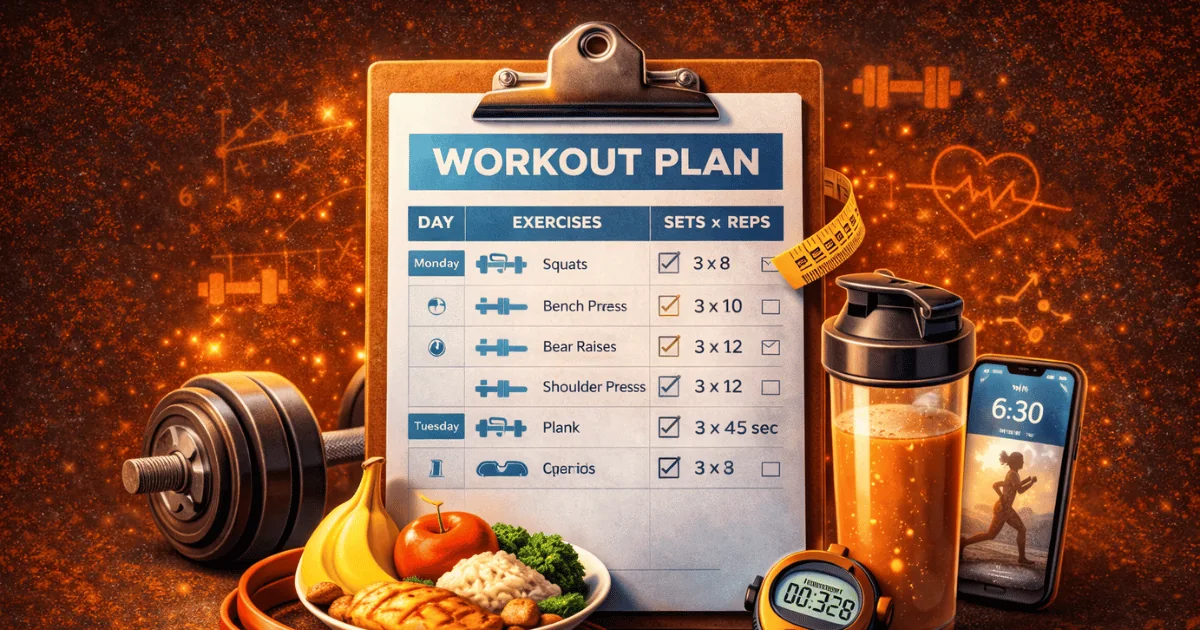
A well-designed workout plan is the difference between spinning your wheels in the gym and making consistent, measurable progress. The problem is that most people either follow random workouts they find online or copy what someone else is doing without understanding why. This guide walks you through how to build a training program from scratch based on your goals, experience level, and schedule. If you are brand new to lifting, our strength training guide covers the fundamentals first.
Step 1: Define Your Primary Goal
Every effective program starts with a clear objective. Trying to maximize strength, build muscle, lose fat, and improve endurance all at the same time is a recipe for mediocre results in everything. Pick one primary goal and let it dictate your training variables. You can still make progress in secondary areas, but your programming choices should favor your main target.
- Muscle growth (hypertrophy) — Focus on moderate loads (65-80% of 1RM), higher volume (10-20 sets per muscle group per week), and controlled tempos.
- Strength — Prioritize heavy compound lifts (80-95% of 1RM), lower rep ranges (1-5), and longer rest periods (3-5 minutes).
- Fat loss — Maintain training intensity to preserve muscle while relying on a calorie deficit and added cardio for the energy gap.
- General fitness — A balanced mix of resistance training and cardiovascular work, 3-4 days per week, with moderate intensity.
Step 2: Choose a Training Split
Your training split determines how you organize muscle groups across the week. The best split is the one you can consistently follow. Here are the most proven options:
Full Body (3 days/week)
Best for beginners and those with limited gym time. Hit every major muscle group each session. Allows high frequency per muscle with fewer total days in the gym. Example: Monday, Wednesday, Friday.
Upper/Lower (4 days/week)
A strong middle ground. Train upper body twice and lower body twice per week. Allows more volume per session than full body while keeping frequency high. Example: Upper Monday, Lower Tuesday, rest Wednesday, Upper Thursday, Lower Friday.
Push/Pull/Legs (5-6 days/week)
Ideal for intermediate to advanced lifters who want maximum volume. Separates pushing movements (chest, shoulders, triceps), pulling movements (back, biceps), and legs. Run the cycle twice per week for six training days.

Step 3: Select Your Exercises
Every workout should be built around compound movements first. Squats, deadlifts, bench press, overhead press, rows, and pull-ups should form the backbone of your program. These exercises recruit the most muscle mass, produce the strongest hormonal response, and give you the most bang for your training time. After your compounds, add isolation exercises to target specific areas that need extra work.
A solid general template for each session is two to three compound movements followed by two to three isolation or accessory exercises. For example, a push day might include barbell bench press, incline dumbbell press, overhead press, lateral raises, and tricep pushdowns.
Step 4: Set Volume and Intensity
Volume (total sets per muscle group per week) is the primary driver of muscle growth. Research consistently shows that 10-20 hard sets per muscle group per week is the sweet spot for most people. Start at the lower end and increase over time as you adapt. For strength goals, total volume can be lower, but the intensity (percentage of 1RM) should be higher.
- Beginners: 10-12 sets per muscle group per week
- Intermediates: 12-18 sets per muscle group per week
- Advanced: 16-20+ sets per muscle group per week
Step 5: Plan Progressive Overload
Without progressive overload, your body has no reason to adapt. Every week, aim to do slightly more than the week before. This can mean adding weight to the bar, performing an extra rep, adding a set, or reducing rest periods. The key is that something measurable improves over time. Keep a training log so you can track your numbers and verify that you are actually progressing, not just going through the motions. Knowing your one rep max helps you set precise training percentages.
Track your lifts and estimate your strength levels
Use our free 1RM calculator to program your training percentages
Try the 1RM CalculatorCommon Programming Mistakes
- Too much variety — Changing exercises every session prevents you from tracking progress. Stick with your core lifts for at least 4-6 weeks.
- Skipping deload weeks — Every 4-6 weeks, reduce volume or intensity by 40-50% to allow recovery. Fatigue accumulates and deloads help you come back stronger.
- Neglecting weak points — If your bench press is stuck, the answer might be more shoulder or tricep work, not more benching. Identify and address your limiting factors.
Frequently Asked Questions
Track key indicators over 4-8 week periods: strength increases (more weight or reps), body measurements, progress photos, and how you feel. Do not rely on the scale alone — body recomposition can improve your physique without weight change.
Beginners benefit most from full-body routines 3 times per week. This gives each muscle group more frequent stimulus while allowing adequate recovery. After 6-12 months of consistent training, transitioning to an upper/lower or push/pull/legs split can provide more volume per muscle group.
Kazi Habib
B.Pharm · MBA · PMP · Digital Marketing, York University
Kazi Habib is the founder of FitFixLife. With over 10 years in pharmaceutical and life sciences marketing, a Digital Marketing certification from York University (Toronto), and hands-on experience launching nutraceutical products at Beximco Pharmaceuticals — including science-backed meal replacers for weight management and diabetic nutrition — he brings regulated product development, clinical data analysis, and evidence-based content standards to every tool and article on this site.
Connect on LinkedIn →No spam. Unsubscribe anytime.
Related Articles
Progressive Overload Explained: The Key Principle Behind Muscle Growth
Progressive overload is the foundation of all training progress. Learn what it means, how to apply it, and the most effective methods for long-term muscle and strength gains.
Sleep and Recovery for Athletes: Why Rest Days Matter
Sleep is the most underrated performance enhancer. Learn how sleep affects muscle growth, fat loss, and athletic performance, plus practical tips to improve your rest.
Try These Free Tools
Disclaimer: This article is for informational purposes only and does not constitute medical advice. Always consult a qualified healthcare professional before making changes to your diet, exercise, or supplement routine.