Meal Prep for Fat Loss: The Halal Canadian Playbook (2026)
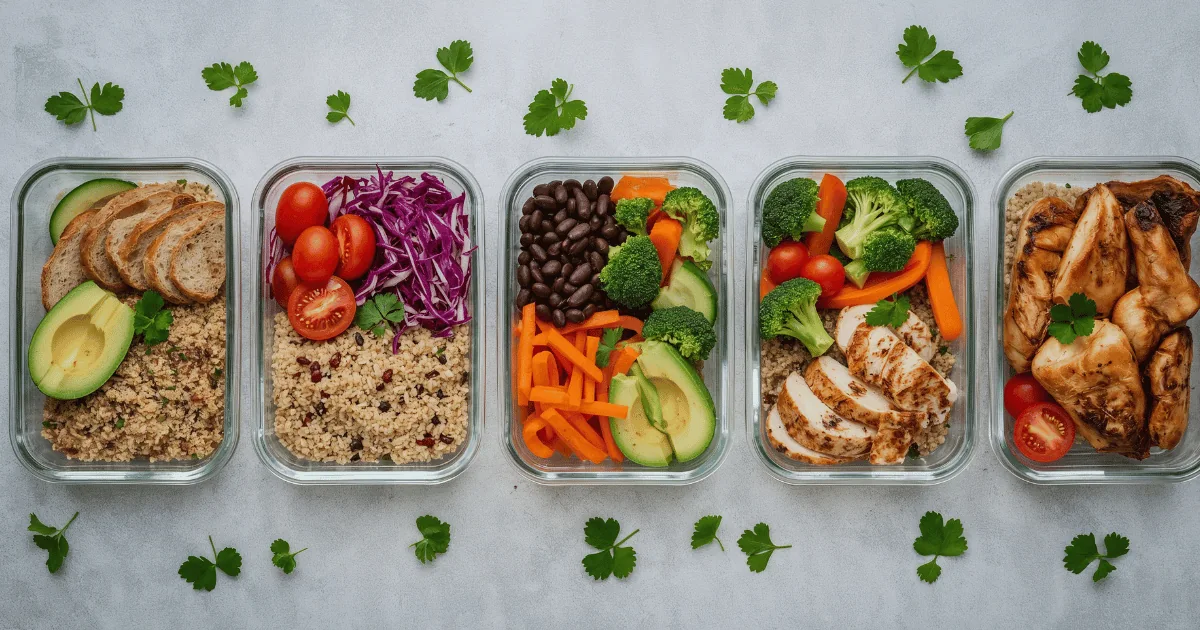
Meal prep wins on fat loss because it removes the decisions that derail the deficit. The Ducrot 2017 cross-sectional study of 40,554 French adults in IJBNPA found meal planners had higher diet quality scores and reduced odds of obesity (OR 0.79 for women, 0.81 for men) compared to non-planners. The mechanism is straightforward: a prepped meal eliminates the 5:30pm decision of "what should I eat" that defaults to takeout. The Leidy 2015 review in American Journal of Clinical Nutrition found that higher-protein diets (1.2-1.6 g per kg per day, distributed at 25-30 g protein per meal) produce meaningful benefits in appetite regulation and lean mass preservation during weight loss.
TL;DR
- Meal planning is associated with lower obesity risk (OR 0.79-0.81) per Ducrot 2017.
- Protein target: 1.6-2.2 g per kg per day, distributed 25-40 g per meal.
- Canadian halal weekly basket: $75-90 CAD covers 14-15 prepped meals at a 1,700-2,000 kcal target.
- Batch cook 3 proteins, 2 carbs, 3 vegetables on Sunday. Mix-and-match prevents flavor fatigue.
- Storage: 4 days refrigerator max for cooked proteins. Freeze portions 5-7 to avoid food waste.
- Halal sources in Canada: Adonis (ON/QC), Costco halal-certified chicken, Walmart Canada halal meat, Bulk Barn, local zabihah butchers.
Why trust this guide
I am Kazi Habib, B.Pharm, MBA, PMP, 10+ years across pharmaceutical sciences and life-sciences marketing, founder of FitFixLife and PharmoniQ. I have personally meal prepped for ~3 years across structured cuts, maintenance, and 4 Ramadan cycles. The templates below come from peer-reviewed nutrition literature plus repeated grocery basket cost-tracking at GTA-area Costco, Adonis, No Frills, Walmart Canada, and Bulk Barn from 2023-2026.
Why prep beats willpower
The single biggest reason fat loss attempts fail at week 4-6 is decision fatigue around food. After a long workday, the brain defaults to the path of least resistance: takeout, packaged snacks, or grazing. Meal prep removes the decision; the meal is already in the fridge, already portioned, already on plan.
The Ducrot 2017 study surveyed 40,554 French adults and found that 57% reported planning meals at least occasionally. Meal planners had significantly higher diet quality scores, greater food variety, and reduced odds of being overweight (OR 0.92 for women) or obese (OR 0.79 for women, 0.81 for men). The practical takeaway: the prep itself, the act of cooking and portioning on Sunday, is the intervention. The discipline happens once a week, not three times a day.
The protein math that drives the deficit
Protein is the macronutrient that determines whether a calorie deficit produces fat loss or muscle loss. The Leidy 2015 review in American Journal of Clinical Nutrition found that 1.2-1.6 g per kg per day (and up to 2.2 g/kg in aggressive cuts) preserves lean mass better than standard protein intakes and improves appetite regulation via cholecystokinin and PYY release.
Per-meal distribution matters: 25-40 g of protein per meal hits the muscle protein synthesis threshold more reliably than the same daily total in 1-2 large doses. For a 75 kg adult, 1.8 g/kg = 135 g protein/day; divided across 4 meals = 34 g per meal. The chicken breast, ground beef, eggs, and whey templates below all hit this threshold.
The Canadian halal weekly grocery basket ($75-90 CAD)
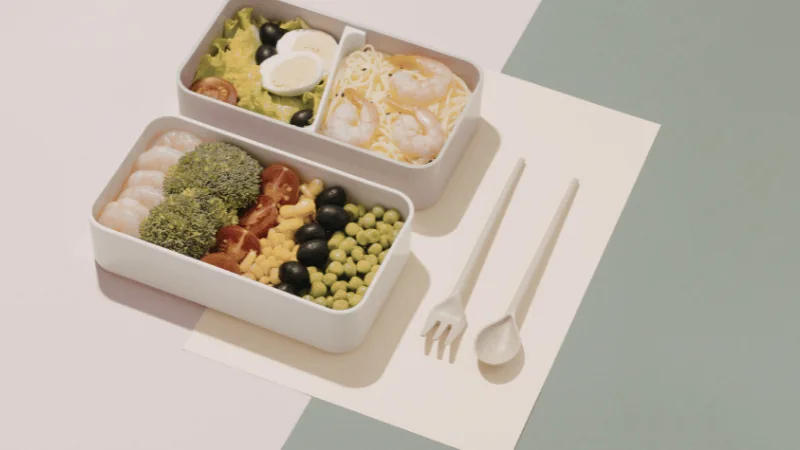
For a single adult targeting 1,700-2,000 kcal/day with 130-150 g protein/day, a 14-15 meal week costs $75-90 CAD at 2026 Canadian prices. Sourcing:
- Halal chicken breast (1.5 kg, $18-22 at Costco halal-certified or Adonis).
- Ground beef (1 kg lean, halal, $14-18 at Adonis or local zabihah butcher).
- Eggs (18-count flat, $7-8 at Costco; or 12-pack $4-5 at No Frills).
- Brown rice (2 kg, $8-10 at Costco or Bulk Barn) or potatoes (5 lb, $4-6).
- Vegetables: broccoli, spinach, peppers, onions (~$15-20).
- Greek yogurt (1 kg, $7-9), pantry: olive oil, spices, sauces (amortized $5-8/week).
The Sunday batch cook (90-120 minutes)
Three proteins, two carbs, three vegetables. Mix-and-match across the week to prevent flavor fatigue.
- Proteins (parallel cook): Sheet-pan chicken breast (oven 400F, 25 min); ground beef + onion skillet (10 min); 6-8 hard-boiled eggs (Instant Pot 5 min, ice bath).
- Carbs: Rice cooker brown rice (4 cups dry); roasted sweet potato or russet potato cubes (sheet pan alongside chicken).
- Vegetables: Roasted broccoli + peppers (third sheet pan); raw spinach for salads; chopped onions and tomatoes.
- Rotating sauces (5-6): chimichurri, harissa, tzatziki, peanut-soy, lemon-garlic, salsa verde. Each transforms the same protein-carb-veg base.
Storage and reheating realities
Cooked chicken, beef, and rice all hold for 4 days refrigerated maximum (Health Canada guideline). For days 5-7, freeze portions on Sunday and defrost in the fridge overnight Thursday. Glass containers (Pyrex, OXO from Costco, ~$30 CAD for 10) reheat in the microwave without leaching; replace plastic containers every 1-2 years.
The pharmacist take on meal timing and medication
Several medications interact with meal timing. Metformin needs food to reduce GI side effects; meal prep makes the pairing predictable. Levothyroxine needs an empty stomach 30-60 minutes before food; meal prep timing makes this consistent. Bisphosphonates need empty stomach with 30 minutes upright. Insulin and sulfonylureas need tight coordination with carb-containing meals; consistent meal prep produces consistent carb amounts, which is the underrated benefit for diabetes management.
Drug-supplement interactions: high-protein meals slow absorption of tetracycline and quinolone antibiotics; grapefruit interacts with many statins and calcium channel blockers; calcium supplements and thyroid medication should be 4 hours apart minimum.
Common mistakes to avoid
- Same exact meal 7 days. Flavor fatigue kills adherence by Wednesday. Use the 3-2-3 framework with rotating sauces.
- Under-portioning protein. A digital food scale ($15-25 at Canadian Tire) is the highest-ROI meal prep tool. Weigh proteins; eyeball carbs and vegetables.
- No backup for Fri/Sat/Sun. Either freeze portions 5-7 or pre-commit to a planned restaurant or family meal for the weekend.
- Skipping snack prep. Mid-afternoon hunger is when the office vending machine wins. Pre-portioned almonds, Greek yogurt cups, hard-boiled eggs, or protein bars defend.
- Not tracking weeks 1-3. The whole system fails if portions are wrong. Log everything in MyFitnessPal or Cronometer for the first 3 weeks; adjust portions based on actual totals.
Ramadan meal prep adjustments
The Sunday batch cook still works during Ramadan but adjust quantities for 2 meals per day (suhoor and iftar). Suhoor prep is the most underrated win because it removes a 4 AM decision when energy is lowest. The Aloui 2019 systematic review in Tunisie Medicale (PMID 31691936) confirmed intentional nutrition planning preserves body composition through Ramadan.
Bottom line
Most fat loss programs fail at the friction of food decisions, not the math of calories. Solve the friction and the math takes care of itself. Sunday afternoon, 90 minutes, $90 of groceries. That is the lever.
Calculate your maintenance calories at the FitFixLife calorie calculator. For the consistency framework that makes prep a habit, see how to stay consistent with fitness.
Frequently Asked Questions
Use the FitFixLife maintenance calorie calculator to estimate your maintenance, then subtract 15-25% for a sustainable deficit. For a 75 kg adult, this typically lands at 1,800-2,000 kcal per day. Aggressive deficits over 25% produce faster initial loss but worse adherence and more muscle loss.
1.6-2.2 g per kg body weight per day per the Leidy 2015 review in American Journal of Clinical Nutrition. Distribute across meals at 25-40 g per meal. The higher end (2.0-2.2 g/kg) is for aggressive cuts or already-lean individuals.
3-4 days fresh in the refrigerator, days 5-7 frozen on Sunday and defrosted Thursday or Friday. Cooked chicken, beef, and rice all hold for 4 days refrigerated maximum. Freezing extends safely for 2-3 months.
Substantially. A $90 CAD weekly grocery basket produces 15-21 meals at $4.30-6.00 per meal. Equivalent restaurant or takeout meals run $12-25 CAD each. The annual savings on lunches alone for an office worker is $2,000-4,000 CAD.
Glass (Pyrex or OXO at Costco, around $30 CAD for 10) for office and home reheating. Plastic (Rubbermaid) for commuting or budget. Avoid containers that warp in the dishwasher or microwave; replace plastic containers every 1-2 years.
3 proteins, 2 carbs, 3 vegetables, 5-6 rotating sauces. Same ingredients, different combinations. Chimichurri Monday, harissa Tuesday, tzatziki Wednesday transforms the same chicken-and-rice base into three different meals.
Yes, with adjustment. The Sunday batch cook still works but adjust quantities for 2 meals per day. Suhoor prep is the most underrated win because it removes a 4 AM decision when energy is lowest.
Halal chicken breast for cost and versatility (Costco halal-certified or Adonis). Ground beef for variety. Canned tuna or salmon for the no-cook days. Eggs for breakfast scale. Halal-certified whey protein (Naked Whey via iHerb Canada, around $70 CAD per 2.5 kg) for filling the gap.
Kazi Habib
B.Pharm · MBA · PMP · Digital Marketing, York University
Kazi Habib is the founder of FitFixLife. With over 10 years in pharmaceutical and life sciences marketing, a Digital Marketing certification from York University (Toronto), and hands-on experience launching nutraceutical products at Beximco Pharmaceuticals — including science-backed meal replacers for weight management and diabetic nutrition — he brings regulated product development, clinical data analysis, and evidence-based content standards to every tool and article on this site.
Connect on LinkedIn →No spam. Unsubscribe anytime.
Related Articles
How to Calculate Maintenance Calories (TDEE, Done Right)
Pharmacist guide to maintenance calories: Mifflin-St Jeor, Katch-McArdle, activity multipliers, NEAT, and the 14-day adjustment loop most calculators skip.
Understanding Macros for Beginners: Protein, Carbs, Fat (2026)
The beginner-friendly macro guide: what protein, carbs, and fat actually do, how to set targets by goal, and the simple Canadian halal sourcing plan.
Try These Free Tools
Disclaimer: This article is for informational purposes only and does not constitute medical advice. Always consult a qualified healthcare professional before making changes to your diet, exercise, or supplement routine.