Macros Explained: Beginner's Guide to Protein, Carbs & Fat
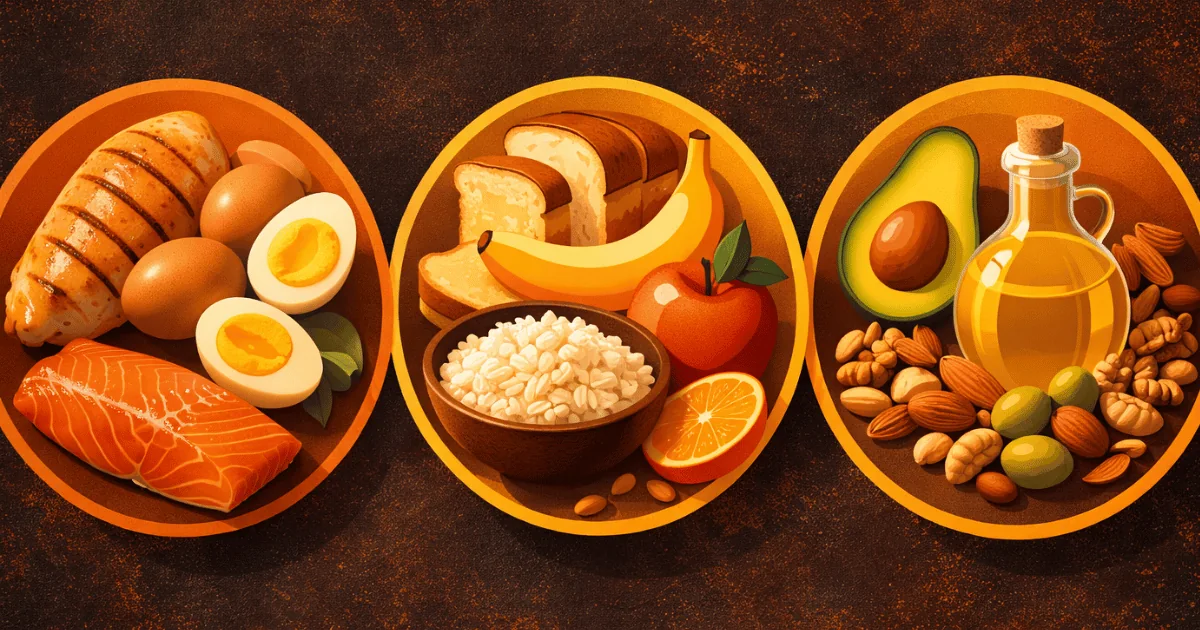
If you have ever searched for diet advice, you have almost certainly come across the term “macros.” Short for macronutrients, macros are the three categories of nutrients that provide your body with energy: protein, carbohydrates, and fat. Understanding how they work together is one of the most empowering nutrition skills you can develop. Before diving into macros, it helps to know your maintenance calories as a starting point.
What Are Macronutrients?
Macronutrients are the nutrients your body needs in large amounts to function. Each macro provides a specific number of calories per gram and plays a distinct role in your body. Unlike micronutrients (vitamins and minerals), which are needed in tiny amounts, macros make up the bulk of your daily calorie intake.
| Macro | Calories/gram | Primary Role |
|---|---|---|
| Protein | 4 kcal | Muscle repair and growth |
| Carbohydrates | 4 kcal | Primary energy source |
| Fat | 9 kcal | Hormones, absorption, insulation |
The Role of Each Macronutrient
Protein
Protein is the building block of muscle, skin, hair, and virtually every tissue. It supports immune function, enzyme production, and hormone regulation. For anyone who exercises, protein is critical for recovery and growth. It also has the highest thermic effect, meaning your body burns more calories digesting it.
Carbohydrates
Carbs are your body’s preferred fuel source, especially during high-intensity activity. They are stored as glycogen in your muscles and liver, ready to be used when you need quick energy. Complex carbs like oats, sweet potatoes, and whole grains provide sustained energy, while simple carbs from fruit offer quick bursts. Carbs are not the enemy. They are a tool that should be adjusted based on your activity level and goals.
Fat
Dietary fat is essential for hormone production (including testosterone), brain function, vitamin absorption (A, D, E, K), and cell membrane health. Healthy sources include avocados, olive oil, nuts, seeds, and fatty fish. Never cut fat below about 20 percent of total calories, as going too low can disrupt hormonal balance.
How to Calculate Your Macro Split
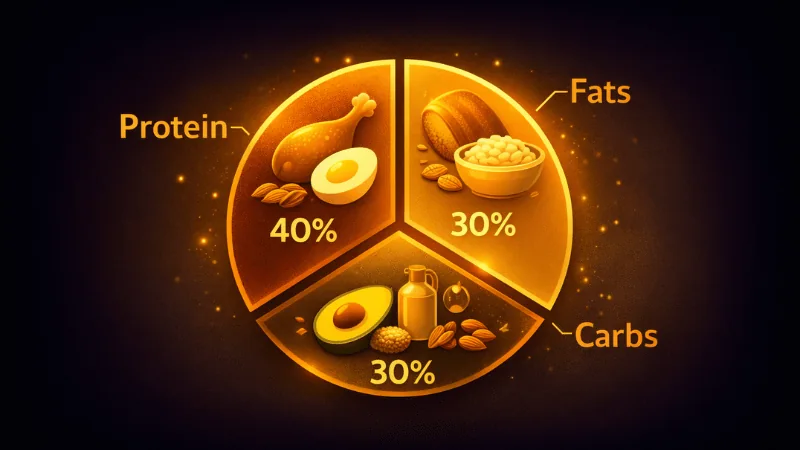
Start with your total daily calorie target (use our calorie calculator if you do not have one yet). Then divide those calories among the three macros. A common starting split looks like this:
- Protein: 25-35% of total calories
- Fat: 20-35% of total calories
- Carbohydrates: the remaining calories
For example, on a 2,000 calorie diet with a 30/25/45 split (protein/ fat/carbs), you would eat roughly 150g protein, 56g fat, and 225g carbs per day. Whether you should eat in a calorie deficit vs surplus depends on your primary goal.
Popular Macro-Based Approaches
- Balanced — roughly equal macro distribution, good for general health
- High protein — 35%+ protein, ideal for muscle building or cutting
- Low carb / keto — very high fat (60-75%), very low carb (5-10%), effective for some but not required for fat loss
- Flexible dieting (IIFYM) — hit your macro targets while choosing any foods you enjoy. No foods are off limits as long as you stay within your numbers.
Flexible Dieting: The Sustainable Approach
Flexible dieting means tracking your macros and filling them with foods you enjoy. There is no banned food list. If 80-90 percent of your diet comes from whole, nutrient-dense foods, the remaining portion can come from whatever you like and still produce results. This approach dramatically improves long-term adherence because it does not require you to eliminate entire food groups. Pair it with meal prep for fat loss to stay consistent throughout the week.
Get your personalized macro split in seconds
Based on your calories, goal, and preferences
Try the Macro CalculatorFrequently Asked Questions
Start by tracking just protein for one week — aim for a target in grams. Once that feels natural, add carbs and fat tracking. Apps like MyFitnessPal or Cronometer make logging easier. Begin with whole, unprocessed foods where macros are straightforward to calculate.
No. Aim for a weekly average rather than daily perfection. Being within 5-10g of each macro target is excellent. Consistency over weeks matters far more than precision on any single day. If you hit your protein target and stay near your calorie goal, you are doing great.
Kazi Habib
B.Pharm · MBA · PMP · Digital Marketing, York University
Kazi Habib is the founder of FitFixLife. With over 10 years in pharmaceutical and life sciences marketing, a Digital Marketing certification from York University (Toronto), and hands-on experience launching nutraceutical products at Beximco Pharmaceuticals — including science-backed meal replacers for weight management and diabetic nutrition — he brings regulated product development, clinical data analysis, and evidence-based content standards to every tool and article on this site.
Connect on LinkedIn →No spam. Unsubscribe anytime.
Related Articles
Calculate Your Maintenance Calories (3 Methods + Free Calculator)
Free TDEE calculator + 3 proven methods to find maintenance calories. Activity multipliers, tracking tips & 2-week adjustment protocol.
How Much Protein Do You Need? Complete Guide (With Calculator)
0.8g per kg or 1g per lb? The answer depends on your goal. Science-backed protein targets for fat loss, muscle gain & maintenance.
Try These Free Tools
Disclaimer: This article is for informational purposes only and does not constitute medical advice. Always consult a qualified healthcare professional before making changes to your diet, exercise, or supplement routine.