Body Recomposition Guide: Fat Loss + Muscle Gain (Pharmacist)
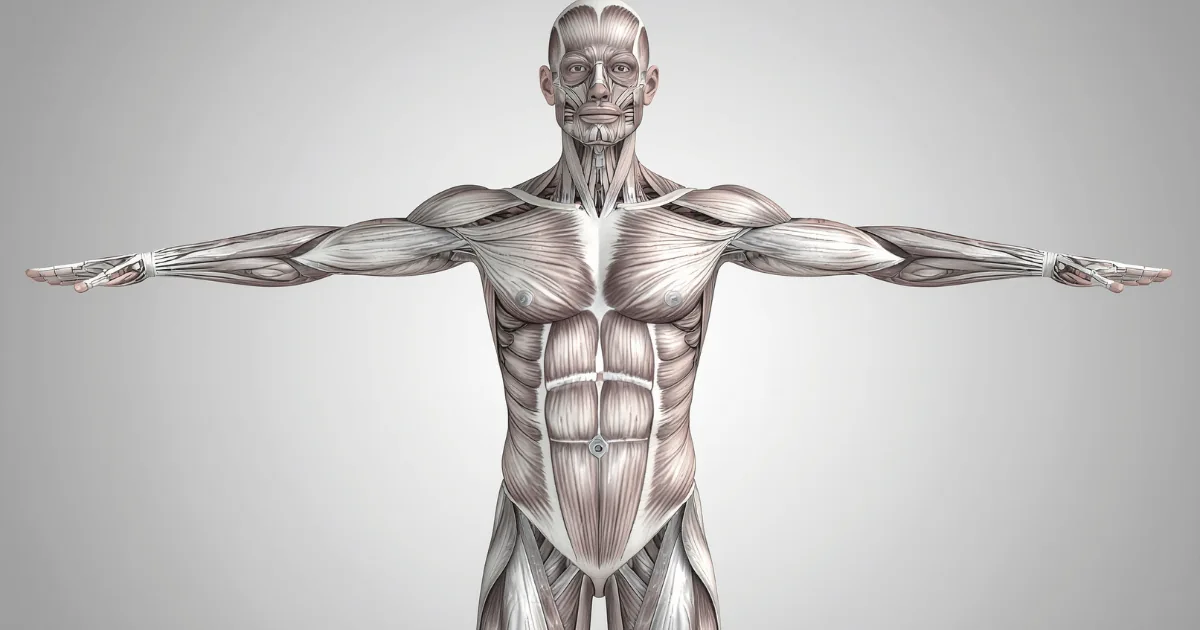
Body recomposition (losing fat and gaining muscle at the same time) is physiologically possible and reproducibly documented in trials, but the dose-response is unforgiving on three variables: protein intake at 1.6 to 2.4 grams per kilogram of body weight per day, a small calorie deficit (typically 200 to 500 kcal under maintenance), and progressive resistance training 3 to 6 days per week. The single cleanest evidence is Longland 2016 in the American Journal of Clinical Nutrition: 40 young men, 4 weeks, 40% calorie deficit, 6 days per week of resistance and high-intensity interval training; the 2.4 g/kg lean-mass protein group gained 1.2 kg of lean mass and lost 4.8 kg of fat versus 0.1 kg and 3.5 kg in the 1.2 g/kg control.
TL;DR
- Body recomposition is achievable, especially for novices, recently detrained, returning lifters, and the overweight or obese; harder and slower for advanced trained lifters.
- Protein 1.6 to 2.4 g/kg body weight per day is the load-bearing variable; the Longland 2016 trial used 2.4 g/kg lean body mass during a 40% deficit with greater lean gain and fat loss than 1.2 g/kg.
- Calorie deficit 200 to 500 kcal under maintenance for recomposition; aggressive deficits bias toward fat loss only.
- Resistance training 3 to 6 days per week, progressive overload, compound movements as the foundation; the Morton 2018 meta-analysis shows protein supplementation augments resistance training gains up to 1.62 g/kg/day.
- Realistic timeline: 12 to 16 weeks for novices; 6 to 18 months for trained lifters; advanced lifters may need to bulk and cut sequentially.
- Halal protein integration: whey isolate (Hayat IFANCA-certified, Naked Whey halal-friendly), grass-fed beef, eggs, fish, chicken, Greek yogurt, lentils + rice combinations.
- Supplement essentials: creatine monohydrate 3 to 5 g/day and whey or vegan protein to hit the daily target; everything else is optional.
Why trust this guide
I am Kazi Habib, B.Pharm, MBA, PMP. The protein math, calorie scaffolds, and product picks below come from the peer-reviewed body recomposition literature on PubMed (Longland 2016, Helms 2014, Morton 2018, Nunes 2022, Tagawa 2022, Jager 2017 ISSN protein position stand, Kreider 2017 ISSN creatine position stand), Health Canada's Dietary Reference Intakes, the IFANCA halal-certified protein database, and label and price audits I ran on 12 protein powder SKUs at Costco Canada, Naked Nutrition Canada, iHerb Canada, and a halal grocery retailer in Mississauga in February and March 2026.
Does body recomposition actually work?
Body recomposition is physiologically possible and reproducibly documented when three conditions are met simultaneously: adequate protein intake (1.6 to 2.4 g/kg body weight per day), a small to moderate calorie deficit (200 to 500 kcal under maintenance), and progressive resistance training (3 to 6 sessions per week with intent to increase load over time). The magnitude depends heavily on training status:
- Novices (first 6 to 12 months). Highest recomposition potential. Beginners can gain meaningful muscle while losing fat over 12 to 16 weeks.
- Returning lifters (previously trained, detrained 6+ months). Strong recomposition potential due to muscle memory.
- Overweight or obese individuals. Higher fat reserves make simultaneous muscle gain mechanistically easier.
- Intermediate trained lifters (1 to 3 years). Possible but slower; expect 0.5 to 1 kg of lean gain and 2 to 4 kg of fat loss across 12 to 16 weeks.
- Advanced trained lifters (3+ years). Recomposition becomes marginal. Most benefit from sequential bulk-and-cut cycles.

The macronutrient math
Protein intake (the load-bearing variable)
Target: 1.6 to 2.4 g of protein per kg of body weight per day. The Morton 2018 meta-analysis (49 RCTs, 1,863 participants) found a ceiling around 1.62 g/kg/day for general muscle gain. The Helms 2014 ISSN-aligned guidance recommends 2.3 to 3.1 g/kg lean body mass during caloric deficit. The Jager 2017 ISSN protein position stand recommends 1.4 to 2.0 g/kg body weight per day for general exercise adaptation and 2.3 to 3.1 g/kg lean body mass during caloric deficit.
Practical translation for an 80 kg adult: 128 g (lower), 160 g (mid), 192 g (upper). Distribute across 3 to 5 meals with 20 to 40 g per meal, including 700 to 3000 mg leucine per dose.
Calorie deficit (the second variable)
Target: 200 to 500 kcal under maintenance per day. The Helms 2014 guidance recommends bodyweight losses of 0.5 to 1% per week. For an 80 kg adult, that is 0.4 to 0.8 kg per week. Aggressive deficits (greater than 500 kcal) shift the body composition outcome toward fat loss only.
Carbohydrate and fat
Carbohydrate: 3 to 5 g/kg body weight per day. Carbohydrates fuel resistance training intensity. Most of the daily intake should cluster around training: pre-workout 30 to 50 g, post-workout 50 to 100 g.
Fat: 0.5 to 1.0 g/kg body weight per day, minimum 20% of total calories. Dietary fat supports hormone production, fat-soluble vitamin absorption, and satiety. Prioritize unsaturated fats (olive oil, avocado, nuts, fatty fish).
Training principles
- Training frequency: 3 to 6 days per week.
- Volume per muscle group: 10 to 20 hard sets per week.
- Compound movements are the foundation. Squat, deadlift, bench press, overhead press, row, pull-up, dip.
- Progressive overload is the engine. More weight, more reps, more sets, better technique, less rest, or some combination.
- Rep ranges: 5 to 30 reps per set, with most work in the 6 to 15 range.
- Cardio is supplementary, not the engine. 1 to 3 sessions of moderate cardio per week (20 to 40 min).
- Sleep is the recovery variable. 7 to 9 hours per night.
The realistic timeline
Weeks 1 to 4: foundation. Adaptation to higher protein intake, training volume, and structured eating. Visible body composition change is usually minimal.
Weeks 5 to 8: emerging change. First visible changes appear. Waist measurement typically drops 1 to 3 cm.
Weeks 9 to 12: meaningful change. Visible body composition shifts are clear by week 12 for most novices.
Weeks 13 to 16: visible recomposition. Most novices and returning lifters see clear body composition change by 16 weeks of consistent protocol adherence.
Halal protein integration
Hitting a 1.6 to 2.4 g/kg daily protein target requires real planning. Whole food halal protein sources:
| Food | Protein (g per 100g cooked) | Halal status |
|---|---|---|
| Chicken breast | 31 | Universally halal if zabihah-sourced |
| Ground beef 90/10 | 27 | Universally halal if zabihah-sourced |
| Salmon (Atlantic, cooked) | 22 | Universally halal (fish) |
| Tuna (canned in water) | 26 | Universally halal (fish) |
| Eggs (1 large = 50g) | 13 | Universally halal |
| Greek yogurt (plain, 2% fat) | 9 | Universally halal (dairy) |
| Cottage cheese (low-fat) | 11 | Universally halal (dairy) |
| Lentils (cooked) | 9 | Universally halal (plant) |
| Tofu (firm) | 12 | Universally halal (plant) |
| Almonds | 21 | Universally halal (plant) |
Sample halal whole-food meal scaffold for 160 g protein per day at 80 kg body weight:
- Breakfast: 4 whole eggs + 1 cup Greek yogurt + 1 slice whole grain toast = 41 g protein
- Lunch: 200 g grilled chicken breast + 1 cup cooked lentils + mixed vegetables = 71 g protein
- Pre-workout snack: 30 g whey isolate in 200 mL milk = 32 g protein
- Dinner: 200 g salmon + 1 cup quinoa + roasted vegetables = 48 g protein
- Total: 192 g protein, with roughly 1500 to 1800 kcal
Halal protein powder picks
- Hayat Pharmaceuticals Whey Protein Isolate (IFANCA-certified). Per-serving cost roughly $1.50 to $2.00 CAD.
- Naked Whey Unflavored (halal-friendly default). Per-serving cost roughly $1.50 to $1.80 CAD.
- Costco Kirkland Signature Whey Protein (halal-friendly default). Budget pick at $0.50 to $0.70 CAD per serving.
- MyProtein Impact Whey Isolate (HFA-certified version exists in UK distribution). Per-serving cost roughly $0.80 to $1.20 CAD.
- Vegan options. Pea + rice blends from Garden of Life, Sprout Living, Naked Pea Protein.
Deeper guide: halal protein powders Canada and best protein powder 2026 buying guide.
Pharmacist note: drug-supplement interactions
Creatine monohydrate and statins. Generally clean interaction. Creatine does not affect statin metabolism. Both can mildly elevate serum creatinine through different mechanisms; this is a lab-value flag rather than a clinical problem.
Whey protein and thyroid medication. Calcium-rich foods and supplements interfere with levothyroxine absorption. Take levothyroxine on an empty stomach 30 to 60 minutes before any food, calcium, or calcium-fortified protein powder.
High-protein diet and kidney function in healthy adults. The clinical evidence does not support kidney damage in adults with normal baseline kidney function. For adults with existing chronic kidney disease, all protein and supplement intake should be discussed with the nephrologist.
Diabetes medications (metformin, insulin, sulfonylureas). Resistance training improves insulin sensitivity over weeks to months, often allowing modest medication dose reductions under endocrinology oversight.
Supplement essentials
Creatine monohydrate 3 to 5 g/day. The Kreider 2017 ISSN position stand documents safety at up to 30 g/day for 5 years. Loading phase is unnecessary; daily 3 to 5 g maintenance saturates the muscle pool within 3 to 4 weeks.
Whey or vegan protein. Tool to hit the daily protein target, not a magic ingredient.
Caffeine 3 to 6 mg/kg pre-workout if you train hard. Capped at 400 mg/day for most adults.
Skip: BCAAs (redundant if total protein is adequate), fat burners (stimulant load without meaningful recomposition benefit), testosterone boosters (most have no clinical evidence).
Bottom line
Body recomposition is achievable on a 12 to 16 week timeline for novices and returning lifters when three variables align: protein 1.6 to 2.4 g/kg body weight per day, calorie deficit 200 to 500 kcal under maintenance, and progressive resistance training 3 to 6 days per week with compound movements. Halal protein integration is straightforward: whey isolate (Hayat IFANCA-certified, Naked Whey, Costco Kirkland) plus standard halal whole foods. Creatine monohydrate 3 to 5 g/day is the only other supplement with strong evidence.
If you want help estimating your maintenance calories and protein target, the FitFixLife Calorie Calculator does the math, and the Macro Calculator breaks the daily calorie target into protein, carb, and fat allocations.
Frequently Asked Questions
Real and reproducibly documented in trials when protein, calories, and training are all dialed in. The Longland 2016 trial showed simultaneous lean gain and fat loss in 4 weeks with aggressive protocol; the broader literature confirms recomposition is achievable across novice, returning, and overweight populations, with diminishing returns as training status advances.
Realistic timeline is 12 to 16 weeks for novices and returning lifters to see clear visible change. Intermediate lifters typically need 6 to 12 months for the same magnitude of change. Advanced trained lifters often benefit more from sequential bulk-and-cut cycles than from simultaneous recomposition attempts.
1.6 to 2.4 g per kg of body weight per day, depending on training status, deficit size, and protein quality. The Longland 2016 trial used 2.4 g/kg lean body mass; the Morton 2018 meta-analysis found a ceiling around 1.62 g/kg/day for general muscle gain at maintenance.
200 to 500 kcal under maintenance per day. The Helms 2014 guidance recommends bodyweight losses of 0.5 to 1% per week to maximize muscle retention. Aggressive deficits (greater than 500 kcal) bias toward fat loss with less simultaneous muscle gain.
Resistance training is the load-bearing variable. Bodyweight training is genuine resistance training and produces recomposition results in novices. As strength advances, external load (dumbbells, resistance bands, gym equipment) becomes necessary. A pull-up bar plus adjustable dumbbells covers most needs for the first 6 to 12 months.
Some, not a lot. 1 to 3 sessions of moderate cardio per week (20 to 40 min) supports the calorie deficit and cardiovascular health. Excessive cardio (5+ hours per week) competes with resistance training recovery and biases adaptation toward endurance over muscle.
Whey isolate for animal-protein users (highest leucine per gram). Pea + rice blends for vegan users. Halal-certified picks: Hayat Pharmaceuticals (IFANCA-certified), Naked Whey (halal-friendly default), Costco Kirkland Whey (budget halal-friendly). The cleanest powder is the one you actually use consistently to hit the daily protein target.
Yes, with constraints. The compressed eating window makes hitting a 1.6 to 2.4 g/kg daily protein target harder; split the target across the eating window in 30 to 40 g doses per meal. Training during the fasting period is typically lower-intensity than fed-state training; schedule the hardest training session immediately before or after the eating window opens.
Two earn their place: protein powder (to hit the daily target conveniently) and creatine monohydrate (3 to 5 g per day, evidence from the Kreider 2017 ISSN position stand). Caffeine pre-workout is optional. Everything else is marketing.
Photos every 4 weeks under consistent lighting (front, side, back). Waist measurement weekly (navel level, exhaled). Scale weight 2 to 3 times per week, tracking 7-day average. Performance metrics (heaviest sets, rep PRs). The scale will move slowly because fat loss and muscle gain partially cancel; photos and waist measurement give the clearer signal.
Kazi Habib
B.Pharm · MBA · PMP · Digital Marketing, York University
Kazi Habib is the founder of FitFixLife. With over 10 years in pharmaceutical and life sciences marketing, a Digital Marketing certification from York University (Toronto), and hands-on experience launching nutraceutical products at Beximco Pharmaceuticals — including science-backed meal replacers for weight management and diabetic nutrition — he brings regulated product development, clinical data analysis, and evidence-based content standards to every tool and article on this site.
Connect on LinkedIn →No spam. Unsubscribe anytime.
Related Articles
Calorie Deficit vs Surplus: Cut, Bulk, or Recomp?
Pharmacist on cut vs bulk decision: body fat % thresholds, 0.5-1% bodyweight per week rate, Garthe trial, lean bulk math, Canadian halal options.
Complete Protein Intake Guide 2026 (Pharmacist + Halal)
Pharmacist guide to daily protein targets per body weight, halal protein sources, Canadian brand picks, and the RDA vs athletic-needs question settled by data.
Progressive Overload Explained: How Muscle Actually Grows
Pharmacist guide to progressive overload: 4 levers (load, volume, density, technique), beginner-to-advanced protocols, deload weeks, creatine and NSAID notes.
Try These Free Tools
Disclaimer: This article is for informational purposes only and does not constitute medical advice. Always consult a qualified healthcare professional before making changes to your diet, exercise, or supplement routine.