How Much Water Should You Drink Per Day? (Science-Based Answer)
You have probably heard you should drink eight glasses of water a day. It is one of the most repeated health recommendations in existence, yet there is no solid scientific study behind that specific number. So how much water do you actually need? The answer depends on your body, your activity level, and your environment. For athletes and active individuals, understanding electrolytes and hydration is just as important as water volume alone.
Debunking the 8 Glasses Myth
The eight-glasses-a-day guideline (about 2 liters) dates back decades and was likely derived from a misinterpretation of a 1945 recommendation that included water from food. In reality, about 20 percent of your daily water intake comes from the food you eat. There is no one-size-fits-all number because hydration needs vary dramatically from person to person based on body size, activity, diet, and climate.
A Better Formula: Body Weight Method
A more practical starting point is to drink roughly 30 to 40 milliliters of water per kilogram of body weight per day. For a 75 kg (165 lb) person, that works out to about 2.25 to 3 liters daily. This baseline accounts for body size, which the 8-glass rule ignores entirely. Keep in mind this is a starting point that should be adjusted based on several factors.
Adjustments You Should Make
- Exercise — Add 500 to 1000 ml for every hour of moderate to intense exercise. Heavy sweaters may need more. Weigh yourself before and after a workout to estimate sweat loss.
- Hot or humid climate — Heat increases sweat rate significantly. If you live in or are visiting a hot climate, add 500 ml or more to your baseline.
- Altitude — Higher elevation increases water loss through respiration. If you are above 2,500 meters, increase intake accordingly.
- High-protein diet — Your kidneys need more water to process increased protein intake. If you are eating above 2 g/kg protein, bump water intake up. You can also browse our electrolyte supplements compared to find a product that supports both hydration and mineral balance.
- Caffeine and alcohol — Both have mild diuretic effects. They do not dehydrate you as much as popular belief suggests, but adding an extra glass of water for every caffeinated or alcoholic drink is sensible.
Signs of Dehydration
Your body gives clear signals when it needs more water. Learning to recognize them is more practical than obsessing over exact ounces:
- Urine color — Pale yellow means you are well-hydrated. Dark yellow or amber means drink more. Clear means you may be overdoing it.
- Thirst — If you are thirsty, you are already mildly dehydrated. Do not wait for thirst to drink.
- Fatigue and headaches — Often the first symptoms of mild dehydration, frequently mistaken for hunger or lack of sleep.
- Dry mouth and skin — Persistent dry mouth or unusually dry skin can indicate chronic under-hydration.
Practical Tips for Staying Hydrated
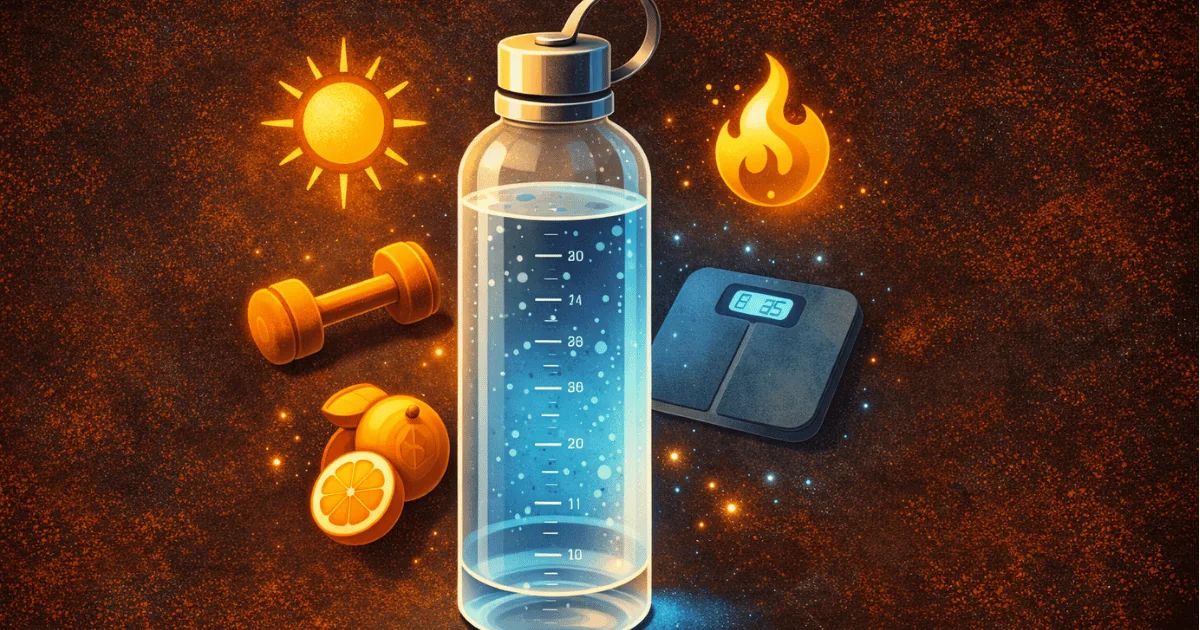
Carry a water bottle with marked measurements so you can track intake passively. Drink a full glass first thing in the morning. Have water with every meal. Set reminders on your phone if you tend to forget. And remember that herbal teas, sparkling water, and water-rich foods like cucumbers, watermelon, and oranges all count toward your daily total. If you are fasting during Ramadan, our hydration during Ramadan guide has specific strategies for staying hydrated with a limited drinking window.
Get a personalized daily water target
Based on your body weight, activity level, and climate
Try the Water CalculatorKazi Habib
B.Pharm · MBA · PMP · Digital Marketing, York University
Kazi Habib is the founder of FitFixLife. With over 10 years in pharmaceutical and life sciences marketing, a Digital Marketing certification from York University (Toronto), and hands-on experience launching nutraceutical products at Beximco Pharmaceuticals — including science-backed meal replacers for weight management and diabetic nutrition — he brings regulated product development, clinical data analysis, and evidence-based content standards to every tool and article on this site.
Connect on LinkedIn →No spam. Unsubscribe anytime.
Related Articles
Calculate Your Maintenance Calories (3 Methods + Free Calculator)
Free TDEE calculator + 3 proven methods to find maintenance calories. Activity multipliers, tracking tips & 2-week adjustment protocol.
Macros Explained: Beginner's Guide to Protein, Carbs & Fat
What are macros and why do they matter? Simple breakdown of how to calculate protein, carbs & fat for your body and goals.
Try These Free Tools
Disclaimer: This article is for informational purposes only and does not constitute medical advice. Always consult a qualified healthcare professional before making changes to your diet, exercise, or supplement routine.