How Much Water Should You Drink? The Science-Based Answer (2026)
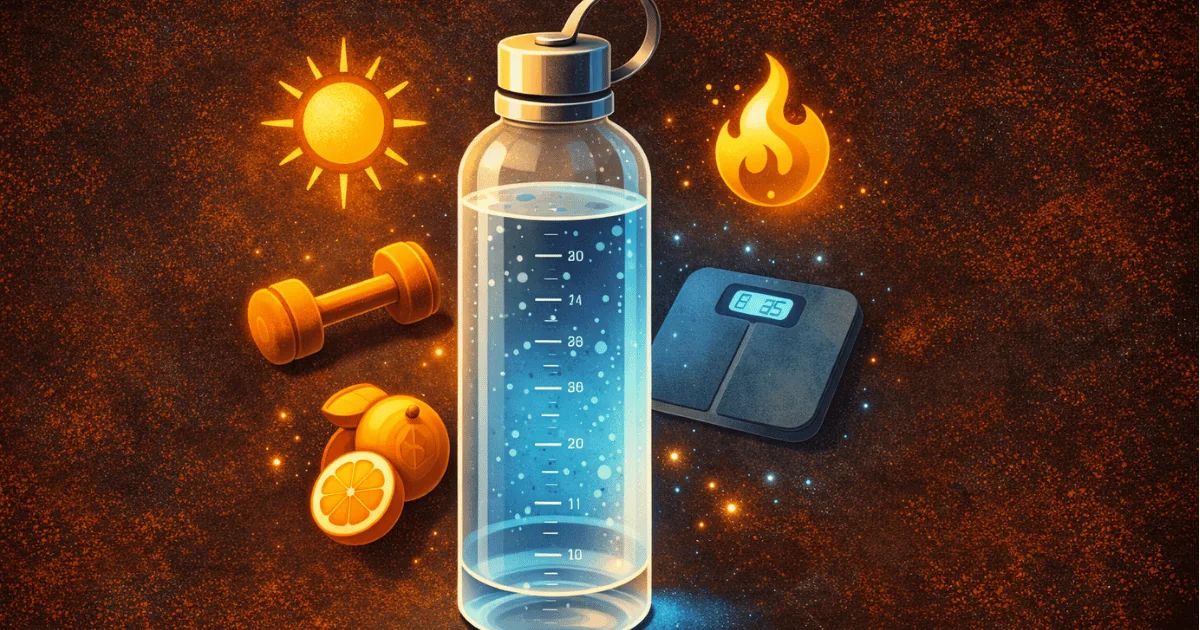
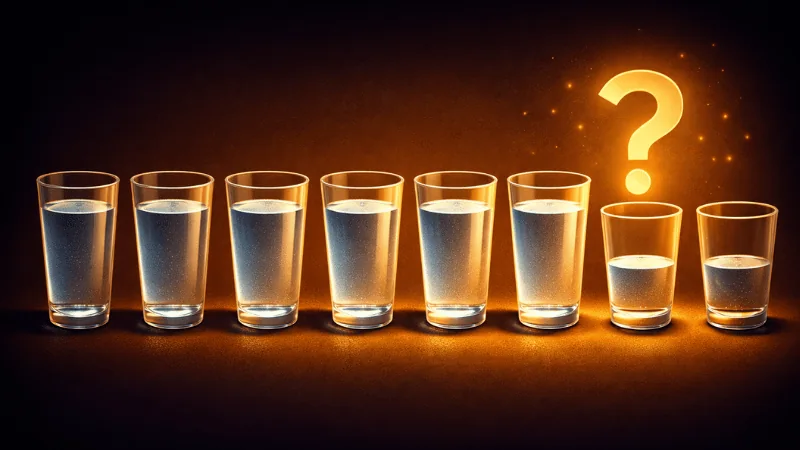
The 8x8 rule (eight 8-ounce glasses per day) is a memorable approximation, not a science-based recommendation. The Valtin 2002 paper in Am J Physiol traced the 8x8 claim and found no original scientific source supporting it. The per-kg formula (30-40 mL per kg body weight per day) is more accurate and adjusts for the variables 8x8 ignores: body size, activity, climate, altitude, medications, and physiology. A 70 kg adult lands in the 2.1-2.8 L per day range; a 90 kg adult in the 2.7-3.6 L range.
TL;DR
- Baseline formula: 30-40 mL per kg body weight per day.
- Add 500-1,000 mL per hour of moderate or intense exercise.
- Add 250-500 mL for hot weather, dry Canadian winters, high altitude, high protein/fibre, alcohol.
- Coffee, tea, milk, water-rich foods all count toward the total.
- Urine colour (pale yellow) is the most practical signal.
- Over-drinking is real in prolonged endurance contexts (EAH), rare otherwise.
Why trust this guide
I am Kazi Habib, B.Pharm, MBA, PMP, 10+ years across pharmaceutical sciences and life-sciences marketing, founder of FitFixLife and PharmoniQ. The recommendations below come from peer-reviewed hydration physiology plus the Canadian winter context (dry indoor heating, low humidity) most US-focused hydration content ignores.
The per-kg baseline formula
The European Food Safety Authority recommends total water intake of 2.5 L/day for men and 2.0 L/day for women, including all sources (drinks plus food). The Jequier & Constant 2010 review in Eur J Clin Nutr lays out the physiological basis. The per-kg formula (30-40 mL/kg) lets you adjust for body size, which is the main variable the 8x8 rule ignores.
Variables that shift the baseline
- Exercise. Add 500-1,000 mL per hour of moderate or intense training. The ACSM position stand sets the framework. Add sodium for sessions over 60-90 minutes.
- Climate. Hot or humid weather adds 500 mL. Cold dry Canadian winters with indoor heating also raise needs by 250-500 mL (low humidity drives insensible water loss).
- Altitude. Above 2,500 m, breathing rate and urine output increase; add 1-1.5 L per day.
- High protein, high fibre. Both increase water demand for digestion and waste elimination.
- Alcohol. Diuretic; add ~250 mL per standard drink.
- Medications. Diuretics (furosemide, hydrochlorothiazide) increase loss. SGLT2 inhibitors (empagliflozin) increase urine output. Lithium needs careful sodium and water balance.
Cognitive and performance effects of mild dehydration
The Ganio 2011 trial in Br J Nutr documented impaired cognitive performance and mood with mild dehydration (1.5% body mass loss) in healthy young men. The Adan 2012 review in J Am Coll Nutr confirmed the cognitive-dehydration link across populations. The headache, fatigue, and concentration drop you blame on stress at 3pm is often dehydration.
Ramadan and fasting hydration
For Muslim readers during Ramadan, the eating window compresses hydration to dawn-to-dusk evening hours. The practical pattern: 500-750 mL at iftar (slowly, not chugged), 500-1,000 mL during the evening eating window, 500-750 mL at suhoor. Avoid high-sodium meals at suhoor (sodium drives daytime thirst). Avoid concentrated sugary drinks at iftar (glucose spike then crash). Plain water plus dates is the cleaner traditional approach.
The over-drinking risk (exercise-associated hyponatremia)
EAH occurs when excessive fluid intake during prolonged exercise dilutes serum sodium below 135 mmol/L. The Hew-Butler 2015 consensus in Clin J Sport Med sets the prevention framework. Severe EAH (sodium under 125 mmol/L) produces seizures, coma, cerebral edema, and has killed marathon runners, ultra-runners, and military recruits. Prevention: drink to thirst during long endurance events, include sodium during exercise over 60-90 minutes (see the best electrolyte drinks 2026 guide). For everyday hydration at the per-kg baseline, EAH risk is essentially zero.
The pharmacist take on tracking
Most adults do not need to count millilitres daily. Phase 1: calibrate (log one week of beverage intake, compare against per-kg baseline). Phase 2: build the structural pattern (500 mL on waking, water at each meal, desk bottle, exercise top-up). Phase 3: monitor urine colour (pale yellow). Consult a clinician if urine is consistently dark despite high intake, or clear and frequent with weakness, fatigue, or headache.
Bottom line
The 8x8 rule is a memorable approximation, not a recommendation. Per-kg formula is more accurate. Add for exercise, climate, altitude, and certain medications. Coffee counts. Urine colour is the practical signal. For Canadian readers in 2026, the structural pattern (morning glass, mealtime water, desk bottle, exercise replacement) plus an extra 500 mL through winter handles 95% of adults.
Run the per-kg math at the FitFixLife water calculator. For electrolytes during exercise, see electrolytes and hydration for athletes.
Frequently Asked Questions
Not completely; it lands in the ballpark for a 60-70 kg sedentary adult. For lighter or heavier bodies, more or less active people, or extreme climates, 8x8 misses meaningfully in either direction. The per-kg formula is more accurate.
Yes. The mild diuretic effect of caffeine at habitual intakes does not exceed the fluid volume in the drink itself. A 250 mL coffee delivers about 240 mL net positive hydration. The coffee dehydrates you myth has been rebutted in the hydration literature for over a decade.
Any of the above. The folk concern that water with meals dilutes stomach acid is not supported by the evidence. Drink water whenever it is convenient.
Urine colour is the easiest practical signal. Pale yellow is hydrated; dark yellow indicates mild dehydration; amber indicates moderate dehydration. Other signals include dry mouth, headache, fatigue, dizziness. The thirst signal is a lagging indicator.
Yes. Exercise-associated hyponatremia from over-drinking during long endurance events is a documented medical emergency. For daily hydration at the per-kg baseline, the risk is essentially zero. For ultra-endurance contexts, work with a sports dietitian on an individualised plan.
Modestly. Pre-meal water consumption can reduce calorie intake at the meal by 75-90 kcal in some trials. Water replaces caloric beverages directly. None of these effects rival a calorie deficit as the primary driver of fat loss.
Yes. Sparkling water is just water with dissolved carbon dioxide; net hydration is equivalent.
Marketing categories without consistent evidence of benefit beyond plain water. The kidney and lung manage acid-base balance within tight ranges regardless of the pH of the water you drink. Save the money.
Pregnancy adds about 300 mL per day to baseline per Institute of Medicine reference intakes. Breastfeeding adds 500-700 mL per day. Individual needs vary; the obstetric clinician sets the target.
Kazi Habib
B.Pharm · MBA · PMP · Digital Marketing, York University
Kazi Habib is the founder of FitFixLife. With over 10 years in pharmaceutical and life sciences marketing, a Digital Marketing certification from York University (Toronto), and hands-on experience launching nutraceutical products at Beximco Pharmaceuticals — including science-backed meal replacers for weight management and diabetic nutrition — he brings regulated product development, clinical data analysis, and evidence-based content standards to every tool and article on this site.
Connect on LinkedIn →No spam. Unsubscribe anytime.
Related Articles
How to Calculate Maintenance Calories (TDEE, Done Right)
Pharmacist guide to maintenance calories: Mifflin-St Jeor, Katch-McArdle, activity multipliers, NEAT, and the 14-day adjustment loop most calculators skip.
Understanding Macros for Beginners: Protein, Carbs, Fat (2026)
The beginner-friendly macro guide: what protein, carbs, and fat actually do, how to set targets by goal, and the simple Canadian halal sourcing plan.
Try These Free Tools
Disclaimer: This article is for informational purposes only and does not constitute medical advice. Always consult a qualified healthcare professional before making changes to your diet, exercise, or supplement routine.