Ozempic & Muscle Loss: Why Protein Matters More on GLP-1s
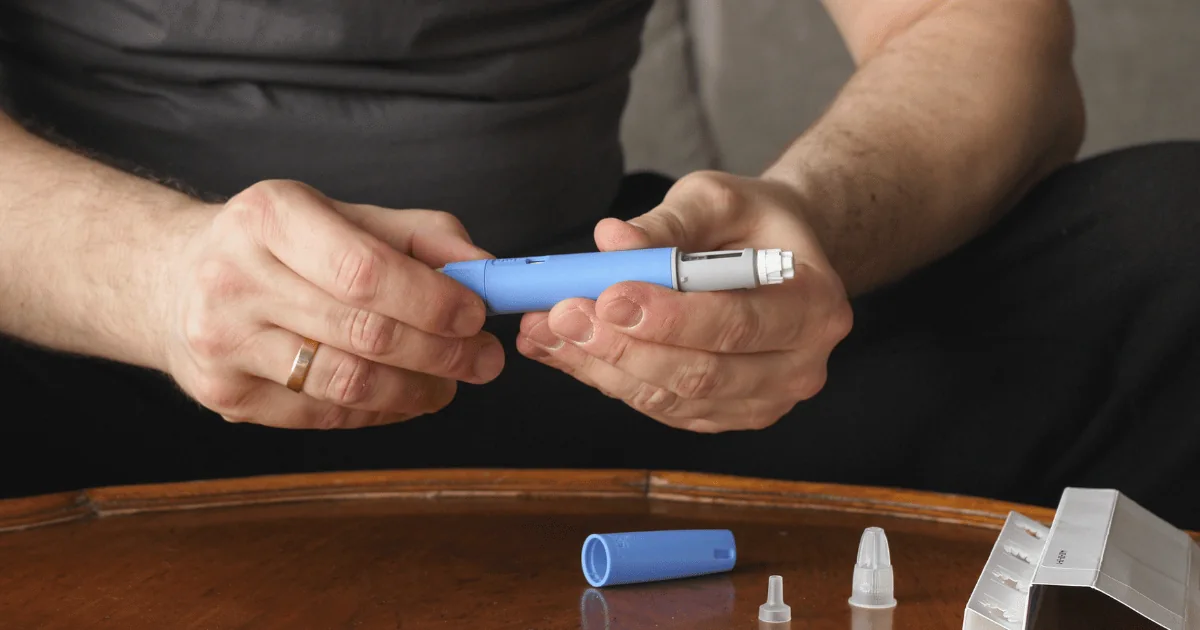
GLP-1 receptor agonists like semaglutide (Ozempic, Wegovy) and tirzepatide (Mounjaro) have become the biggest health story of the decade. Millions of prescriptions have been written, celebrity transformations dominate social media, and the weight loss results are undeniable. These drugs work. But there is a significant trade-off that most people are not talking about until it is too late: muscle loss.
If you are on a GLP-1 medication or considering one, this guide will explain exactly why muscle loss happens, how much of it you can expect, and the specific nutritional and training strategies that protect your lean mass while you lose fat.
The Muscle Loss Problem Nobody Warned You About
When you lose weight through any method, some of that weight comes from muscle. This is normal. The concern with GLP-1 medications is the proportion of muscle loss compared to fat loss. Clinical trial data from the STEP trials (semaglutide) and SURMOUNT trials (tirzepatide) show that roughly 25 to 40 percent of total weight lost on these medications comes from lean body mass rather than fat. In a typical scenario where someone loses 30 pounds on Ozempic, 8 to 12 of those pounds may be muscle, not fat.
This matters more than most people realize. Muscle is metabolically active tissue. Every pound of muscle burns roughly 6 to 7 calories per day at rest, compared to about 2 calories per pound of fat. Losing significant muscle mass means your resting metabolic rate drops, making it harder to maintain your new weight if you ever stop the medication. Beyond metabolism, muscle loss affects daily function, strength, bone density, balance, and long-term health outcomes, especially in adults over 40.
There is also the cosmetic side. Rapid weight loss with disproportionate muscle loss creates what is often called a "skinny fat" appearance: the scale shows a healthy number, but body composition tells a different story. You lose the shape and tone that comes from adequate muscle mass, and excess skin becomes more prominent without underlying muscle to fill it out.
Why GLP-1 Medications Cause So Much Muscle Loss
The mechanism is straightforward once you understand how these drugs work. GLP-1 agonists powerfully suppress appetite. Many patients report losing interest in food entirely, eating dramatically less without conscious effort. This is how the weight loss happens, but it creates a cascading problem for muscle preservation.
- Total calorie intake drops sharply — Many GLP-1 users end up eating 500 to 1,000 calories per day less than before, often without realizing it. Severe calorie deficits of this magnitude are inherently catabolic, meaning the body breaks down muscle for energy.
- Protein intake drops alongside everything else — When appetite disappears, people eat fewer meals and smaller portions. Protein-rich foods like chicken, steak, and eggs are often the first to be skipped because they are filling and require effort to prepare. The result is protein intake that falls well below the threshold needed to maintain muscle.
- Reduced physical activity — Some GLP-1 users experience fatigue, nausea, or general low energy, particularly in the first weeks. This can reduce exercise frequency and intensity. Without the stimulus of resistance training, the body has no reason to prioritize keeping muscle.
- Rapid weight loss speed — Faster weight loss always results in a higher proportion of muscle loss compared to slower, controlled fat loss. GLP-1 medications can produce weight loss rates of 2 to 4 pounds per week in the early months, well above the 0.5 to 1 percent of body weight per week that research suggests is optimal for muscle retention.
The Protein Fix: Your Most Important Defense
Protein is the single most important nutritional factor for preserving muscle mass during weight loss, and this is even more critical when you are on a GLP-1 medication. Research consistently shows that higher protein intake during calorie restriction significantly reduces lean mass loss.
Here are the evidence-based protein targets for GLP-1 users:
- Minimum: 1.2 to 1.6 grams per kilogram of body weight daily — This is the baseline for anyone in a calorie deficit. For a 180- pound (82 kg) person, that is roughly 98 to 131 grams of protein per day. Below this level, muscle loss accelerates significantly.
- Optimal: 1.6 to 2.2 grams per kilogram of body weight daily — This is the range supported by research for maximizing muscle retention during aggressive calorie deficits. For that same 180- pound person, that is 131 to 180 grams per day. This higher range is particularly important for GLP-1 users because the calorie deficit is often deeper than planned.
Distribution matters as much as total intake. Aim for at least 30 grams of protein per meal across 3 to 4 meals per day. This 30-gram threshold is not arbitrary. Research on muscle protein synthesis shows that approximately 25 to 30 grams of high-quality protein per meal is needed to maximally stimulate muscle building. Eating 90 grams of protein in a single meal is far less effective for muscle preservation than spreading it across three 30-gram servings.
How much protein do you actually need?
Use our calculator to find your personal protein target based on your weight, activity level, and goals.
Calculate Your Protein TargetBest Protein Sources When Your Appetite Is Gone
This is where GLP-1 users face a unique challenge. When you have almost no appetite and the thought of eating a chicken breast feels impossible, you need protein sources that are easy to consume in small volumes and do not trigger nausea. Liquid and semi-solid protein sources become essential.
- Ready-to-drink protein shakes — Products like Fairlife Core Power (🇺🇸) | 🇨🇦 (26g protein per bottle) and Premier Protein (🇺🇸) | 🇨🇦 (30g protein per shake) are popular among GLP-1 users because they require zero preparation and go down easily even when appetite is minimal. Sip one between meals to hit your protein targets without forcing yourself to eat.
- Greek yogurt — A single cup of nonfat Greek yogurt delivers 15 to 20 grams of protein in a smooth, easy-to-eat format. Mix in some berries or a drizzle of honey. Many GLP-1 users find cold, creamy foods easier to tolerate than hot, heavy meals.
- Eggs — Two large eggs provide about 12 grams of protein with a complete amino acid profile. Scrambled eggs are one of the most tolerable protein sources for people experiencing GLP-1 side effects. Quick to prepare and easy on the stomach.
- Protein powder mixed into foods — A scoop of Optimum Nutrition Gold Standard Whey (🇺🇸) | 🇨🇦 (24g protein) can be blended into a smoothie, stirred into oatmeal, or mixed into Greek yogurt. This is an efficient way to boost the protein content of whatever small amount of food you are already eating.
- Cottage cheese — Half a cup provides about 14 grams of protein. Rich in casein, which digests slowly and provides a sustained release of amino acids. Especially useful as an evening snack to support overnight muscle protein synthesis.
- Lean deli meat or canned tuna — When cooking feels like too much effort, these options require no preparation and provide 15 to 25 grams of protein per serving. Keep them stocked for days when you have zero motivation to cook.
The key principle: prioritize protein density. When you can only eat a small amount of food, every bite needs to count. Protein should be the first thing on your plate (or in your glass) at every meal.
Strength Training Is Non-Negotiable
Protein intake alone is not enough. Without resistance training, your body has no strong signal to keep muscle tissue. You need to give your muscles a reason to stay. This is the other half of the muscle preservation equation, and it is just as important as protein.
Here is the minimum effective dose for GLP-1 users:
- Frequency: 2 to 3 sessions per week — You do not need to live in the gym. Two to three well- structured resistance training sessions per week is enough to send the muscle-preserving signal your body needs. Full-body sessions work best at this frequency because each muscle group gets trained multiple times per week.
- Focus on compound movements — Squats, deadlifts, bench press, overhead press, rows, and pull-ups. These exercises work multiple muscle groups simultaneously and provide the most muscle-preserving stimulus per minute of training. If you only have 30 to 40 minutes, four to five compound exercises will cover your entire body.
- Progressive overload — Gradually increase the weight, reps, or sets over time. Even small increases matter. If you squatted 95 pounds for 8 reps last week, try 95 pounds for 9 reps this week. This progressive challenge tells your body that muscle is essential and should not be broken down for energy.
- Even light resistance counts — If you are new to exercise or dealing with significant fatigue from the medication, even bodyweight exercises, resistance bands, or light dumbbells provide a meaningful stimulus. Research shows that any form of resistance training during a calorie deficit preserves more muscle than no resistance training at all. Start where you are and build from there.
A common mistake among GLP-1 users is focusing exclusively on cardio (walking, running, cycling). While cardio is beneficial for heart health and overall fitness, it does almost nothing to preserve muscle mass during a deficit. Resistance training is the stimulus that tells your body to keep its muscle tissue. Cardio does not send that same signal.
Supplement Stack for GLP-1 Users
Supplements are not magic, but a small number of them are genuinely useful for GLP-1 users dealing with suppressed appetite and rapid weight loss. Here is what the evidence supports:
- Protein powder (whey or plant-based) — This is supplement number one for a reason. When appetite is suppressed, getting enough protein from whole food alone becomes extremely difficult. One to two scoops per day can add 25 to 50 grams of protein to your intake with minimal volume and effort. Whey protein is the gold standard for muscle protein synthesis due to its high leucine content, but plant-based blends (pea + rice protein) are a solid alternative for those who cannot tolerate dairy.
- Creatine monohydrate (3-5g daily) — Creatine is not just for bodybuilders. It helps maintain strength, supports muscle cell hydration, and may help preserve lean mass during a calorie deficit. It is the most researched supplement in sports nutrition with an excellent safety profile. For GLP-1 users, the muscle-preserving benefits become even more relevant. Take 3 to 5 grams daily with any meal.
- Electrolytes (sodium, potassium, magnesium) — Electrolyte deficiency is one of the most common issues reported by GLP-1 users. Eating less food means consuming fewer naturally occurring electrolytes. Symptoms include muscle cramps, dizziness, headaches, and fatigue. An electrolyte supplement or simply adding salt to water and eating potassium- rich foods can make a significant difference in how you feel day to day.
- Vitamin D (if deficient) — Many people are already vitamin D deficient, and eating less food can make it worse. Vitamin D plays a role in muscle function and bone health. Get your levels tested and supplement if needed, typically 1,000 to 2,000 IU daily.
Why creatine matters on GLP-1s
Preserve strength and lean mass during weight loss
Compare Creatine ProductsWarning Signs You Are Losing Too Much Muscle
How do you know if muscle loss is becoming a problem? Watch for these signs:
- Strength is declining in the gym — If weights you used to handle easily are becoming difficult, or you are losing reps on exercises you previously mastered, your body is breaking down muscle for energy. Some strength loss during a deficit is normal, but a rapid, consistent decline is a red flag.
- Persistent fatigue and low energy — Beyond the initial adjustment period for GLP-1 medications, ongoing deep fatigue can signal that your body does not have enough protein or calories to maintain basic functions. Muscle breakdown accelerates when the body is in a state of chronic energy and protein deficiency.
- Loose skin without underlying firmness — Some loose skin is expected with significant weight loss. But if the area under your skin feels soft and flat rather than having some muscle tone underneath, the muscle layer is thinning. This is especially noticeable in the upper arms, thighs, and abdomen.
- Reduced grip strength — Grip strength is a reliable proxy for overall body strength and is one of the first things to decline when muscle mass drops. If you notice difficulty opening jars, carrying groceries, or holding onto things you previously handled without thinking, pay attention.
- Feeling cold more often — Muscle tissue generates heat. As you lose muscle mass, your body becomes less efficient at thermoregulation. If you notice you are always cold when you were not before, muscle loss may be a contributing factor alongside overall weight loss.
If you notice several of these signs, it is time to reassess your protein intake and training program. Track your protein for a week and compare it to the targets above. Most people who experience significant muscle loss on GLP-1 medications are eating far less protein than they think.
Dial in your macros for your GLP-1 journey
Our macro calculator sets protein, carbs, and fat targets optimized for muscle retention during weight loss.
Calculate Your MacrosPutting It All Together: Your GLP-1 Muscle Preservation Plan
Here is the practical framework. These five habits, done consistently, will dramatically improve your body composition outcomes on GLP-1 medications compared to medication alone:
- 1Hit your protein target every single day — Aim for 1.6 to 2.2 grams per kilogram of body weight. Use our protein calculator to find your personal number. This is the single highest-impact habit on this list.
- 2Spread protein across 3 to 4 meals — Minimum 30 grams per meal. Use shakes and high-protein snacks to fill gaps. Protein before bed (cottage cheese, casein shake) supports overnight muscle protein synthesis.
- 3Strength train 2 to 3 times per week — Compound movements, progressive overload, 30 to 45 minutes per session. This is non-negotiable if you care about keeping your muscle.
- 4Take creatine and electrolytes daily — 3 to 5 grams of creatine monohydrate and an electrolyte supplement to support muscle function and prevent the cramps, headaches, and fatigue that commonly plague GLP-1 users.
- 5Monitor your progress beyond the scale — Track your lifts in the gym, take progress photos, measure your waist and limbs, and pay attention to how your clothes fit. The scale does not distinguish between fat loss and muscle loss. These other metrics do.
⚕️ Medical Disclaimer
This article is for informational purposes only and does not constitute medical advice. The content is not intended to diagnose, treat, cure, or prevent any disease. Always consult a qualified healthcare provider before starting or changing any medications or treatments. Individual results may vary. See our full disclaimer for more information.
Get our GLP-1 friendly meal framework
High-protein meal plans designed for suppressed appetites. Easy to follow, easy to prep.
Get the Meal Plan BundleKazi Habib
B.Pharm · MBA · PMP · Digital Marketing, York University
Kazi Habib is the founder of FitFixLife. With over 10 years in pharmaceutical and life sciences marketing, a Digital Marketing certification from York University (Toronto), and hands-on experience launching nutraceutical products at Beximco Pharmaceuticals — including science-backed meal replacers for weight management and diabetic nutrition — he brings regulated product development, clinical data analysis, and evidence-based content standards to every tool and article on this site.
Connect on LinkedIn →No spam. Unsubscribe anytime.
Related Articles
How Much Protein Do You Need? Complete Guide (With Calculator)
0.8g per kg or 1g per lb? The answer depends on your goal. Science-backed protein targets for fat loss, muscle gain & maintenance.
Creatine 101: Dosing, Timing, Loading & Side Effects Explained
3g or 5g? Loading or not? Before or after workout? Every creatine question answered with actual study references.
Best Protein Powder in 2026: An Honest Buying Guide
We compared dozens of protein powders on ingredients, taste, value, and third-party testing. Here are our top picks for every goal and budget.
Try These Free Tools
Disclaimer: This article is for informational purposes only and does not constitute medical advice. Always consult a qualified healthcare professional before making changes to your diet, exercise, or supplement routine.