Running for Beginners: The Couch to 5K Guide (2026)
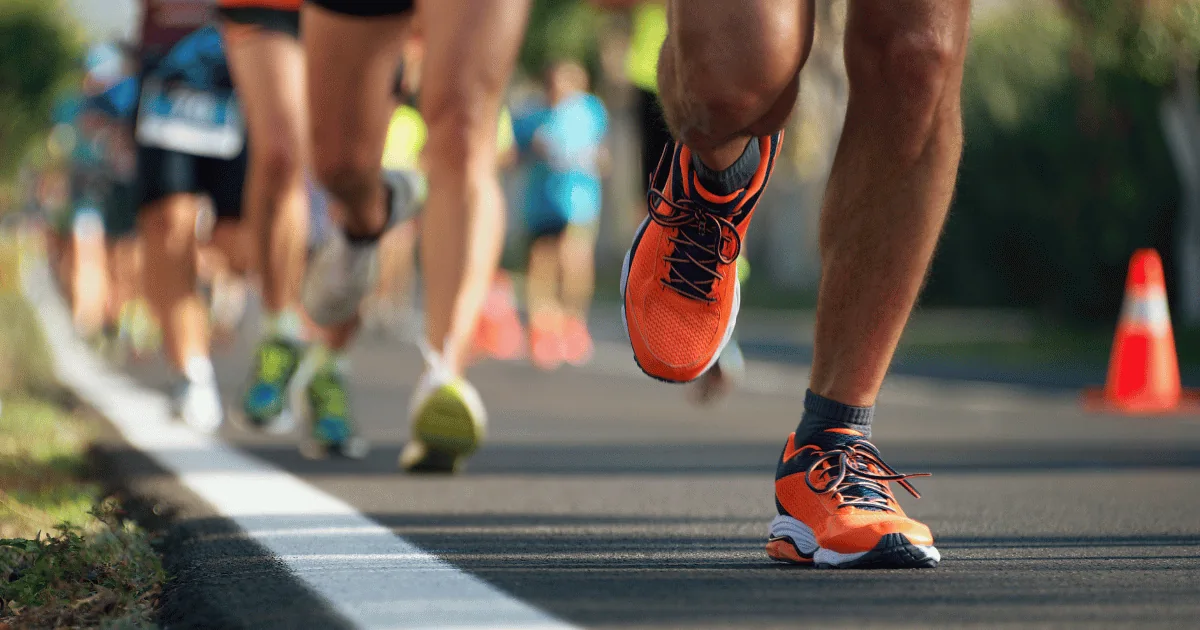
Couch to 5K (C25K) works because it solves the injury problem most self-devised running plans cause. The Linton & Valentin 2018 survey of 1,145 UK runners in Journal of Science and Medicine in Sport found that novice runners on a self-devised training program had higher injury rates than novices using a structured program like C25K. The mechanism is graduated loading: bones, tendons, and ligaments adapt slower than cardiovascular fitness, and most beginner injuries (shin splints, IT band syndrome, plantar fasciitis, Achilles tendinopathy) come from running too far or too fast in weeks 2-4 before the connective tissue is ready.
TL;DR
- Couch to 5K is 9 weeks, 3 sessions per week, walk-run intervals that gradually shift to continuous running.
- Structured programs reduce injury risk per Linton & Valentin 2018.
- Shoes: spend $120-180 CAD on a decent neutral running shoe (Brooks Ghost, Saucony Ride, Asics Gel-Nimbus, New Balance Fresh Foam) at Running Room or Sport Chek.
- Canadian winter requires indoor backup (treadmill, walking pad), reflective gear, layered cold-weather clothing.
- Pharmacist supplements: vitamin D October-April (mandatory for most Canadians), magnesium glycinate for sleep, electrolytes only for runs over 60 minutes.
- The week 4-5 hump is where most quits happen. Plan for the bored-but-not-yet-strong phase; survive it and the back half is easier.
Why trust this guide
I am Kazi Habib, B.Pharm, MBA, PMP, 10+ years across pharmaceutical sciences and life-sciences marketing, founder of FitFixLife and PharmoniQ. I have personally run C25K twice (2018, restart after injury in 2022), completed two 5Ks at 27:30 and 25:45 pace, and currently run 3 days per week at 5-7K distance maintained. The recommendations below come from peer-reviewed sports medicine plus 5+ years of personal running and 4 Canadian winters of treadmill-and-outdoor adaptation.
Why Couch to 5K beats just running
Most beginners think running is just "start running, build up". The data says otherwise. Cardiovascular fitness improves fast (2-4 weeks for the heart and lungs). Bones, tendons, and ligaments adapt slowly (weeks-to-months). Running impact forces (2-3x bodyweight per stride, 1,500-2,000 strides per kilometer) accumulate microtrauma the connective tissue is not yet prepared to absorb. The result: the common beginner overuse injuries.
C25K solves this with 9 weeks of structured walk-run intervals. Week 1 is 60 seconds running, 90 seconds walking, repeated for 20 minutes. By week 9, you run 30 minutes continuously. The progression rate is slow enough that connective tissue can adapt; fast enough that motivation stays intact.
The 9-week C25K protocol
| Week | Session structure (3x/week) |
|---|---|
| 1 | 60s run / 90s walk x 8 (20 min) |
| 2 | 90s run / 120s walk x 6 (21 min) |
| 3 | 90s run, 90s walk, 3 min run, 3 min walk x 2 (24 min) |
| 4 | 3 min run, 90s walk, 5 min run, 2.5 min walk, 3 min run, 90s walk, 5 min run (28 min) |
| 5 | Progresses to 20 min continuous run by session 3 |
| 6 | 22-25 min continuous, building |
| 7 | All three sessions: 25 min continuous |
| 8 | All three sessions: 28 min continuous |
| 9 | All three sessions: 30 min continuous (~5K) |
During C25K, ignore pace entirely. The goal is completion of the intervals, not speed. A "running pace" for a beginner can be 4-5 mph (6.5-8 km/h), which feels slow and is correct. Trying to run faster than the protocol calls for is the most common reason people get injured in weeks 4-6.

The week 4-5 hump (where most quits happen)
Weeks 1-3 are exciting; the novelty carries you. Weeks 4-5 are boring; the novelty has worn off but fitness has not yet installed. Most quits happen here. The fix is structural: lock in your three weekly days, run a fixed 3-5 km loop to remove decision fatigue, solve the cold and dark with an indoor backup (treadmill, walking pad to 6-7 km/h), build a post-run reward (coffee, podcast, specific song), and track each session in Strava (free). The Ma 2023 meta-analysis on habit formation confirms reward-paired routines build automaticity faster.
Beginner running gear that actually matters
Beginner running shoes should be neutral, cushioned, and the right size. Avoid minimalist (Vibram FiveFingers) and maximalist (most Hoka models) as a beginner; both create unusual loading patterns. Brooks Ghost 16 ($180 CAD), Saucony Ride 17 ($170), Asics Gel-Nimbus 25 ($200), New Balance Fresh Foam 1080 v13 ($190), or Brooks Adrenaline GTS (stability version, $170) are the safe defaults at Running Room or Sport Chek. Running Room offers free gait analysis when you buy. Size up 0.5-1 full size from your everyday shoe; the foot swells during running. Replace at 600-800 km regardless of upper condition.
Socks: merino wool or technical synthetic (Smartwool, Wright Sock, Balega), $15-25 CAD per pair. Sports bra for women runners: high-impact from MEC, Lululemon, or Nike, worth spending. Bone-conduction headphones (Shokz OpenRun, ~$170 CAD) for outdoor situational awareness. Canadian winter gear adds $200-400 CAD: merino base layer, light fleece, wind shell, thermal tights, headwear, gloves, reflective vest.
Injury prevention rules that matter
- Rule 1: The 10% rule. Increase weekly running volume by no more than 10% per week.
- Rule 2: One rest day between runs in weeks 1-6. Bone remodeling needs 48 hours; tendon adaptation needs 24-48 hours.
- Rule 3: Pain is information. Mild post-run soreness is normal. Sharp pain during a run, joint pain that persists into the next day, or pain that gets worse mid-run requires rest and assessment.
Common beginner injuries: shin splints (reduce volume, ice), runner's knee (hip/quad strengthening, shorter stride), IT band syndrome (glute strengthening, gradual mileage), plantar fasciitis (calf stretching, replace shoes), Achilles tendinopathy (eccentric calf raises, rest). For persistence beyond 7-10 days, see a sports physiotherapist; most Canadian provinces have direct-access physio.
The pharmacist take on supplements for runners
Vitamin D (mandatory for most Canadians). Above the 35th parallel, UVB radiation is insufficient for skin synthesis October-April. The de la Puente Yagüe 2020 review in Nutrients confirmed widespread vitamin D deficiency in athletes. 1,000-2,000 IU vitamin D3 daily October-April. Test 25(OH)D levels through your family doctor; target 75-125 nmol/L. Halal-certified at Costco Canada (Webber Naturals, ~$15 CAD/200 capsules).
Magnesium glycinate (sleep and recovery). 200-400 mg elemental, evening. The cramp claim is marketing; the evidence is for sleep quality. Avoid magnesium oxide (4% bioavailability).
Electrolytes. Only matter for runs over 60 minutes in heat, or heavy sweaters. Most C25K sessions (20-30 min) do not require electrolyte replacement; water is sufficient. For longer runs, sodium 300-700 mg per hour is the published athletic range. Skip BCAAs, beta-alanine, pre-workouts, and recovery drinks at C25K intensity.
Ramadan and running
Reduce weekly mileage 30-40% during Ramadan. Shift sessions to pre-iftar (last 30-45 min before sunset) or post-iftar (1-2 hours after breaking fast). Accept maintenance, not progression. The Aloui 2019 review in Tunisie Medicale (PMID 31691936) found intentional nutrition planning preserved body composition through Ramadan. The pre-iftar run finishing right at iftar time pairs the workout with immediate post-run hydration and protein as part of breaking the fast.
Bottom line
Most quits happen at week 4-5. If you survive weeks 4-5, the back half is meaningfully easier and the 5K finish at week 9-10 produces an identity shift that sustains running long-term. Three sessions per week, rest days between, conversational pace, properly fitted shoes. That is the whole game.
For supporting frameworks, see how to stay consistent with fitness and how to track your fitness progress. Calculate your maintenance calories at the FitFixLife calorie calculator.
Frequently Asked Questions
9 weeks if you do all three sessions per week without skipping. 10-12 weeks more realistic for most people accounting for one missed week from illness, travel, or weather. Do not skip sessions to compress the timeline; the progression is calibrated.
No. Take a rest day between running sessions in weeks 1-6. After week 6, every other day with one back-to-back per week is fine; after C25K completion, consecutive days are acceptable as connective tissue has adapted.
Conversational pace. If you cannot speak in full sentences while running, you are too fast. For most beginners, this is 5-7 km/h (3-4.5 mph). Pace is the wrong focus; completion of intervals is the right focus.
You need a properly fitted neutral running shoe. $120-180 CAD is the practical range. Get fitted at Running Room (free gait analysis when you buy).
For a missed session: continue the program at the same week, do not try to catch up. For a missed week: drop back one week and repeat before continuing. For 2+ missed weeks: restart from week 1 with reduced volume.
Vitamin D October-April for most Canadians (1,000-2,000 IU daily). Magnesium glycinate evening if sleep needs support. Most other supplements are unnecessary for beginner-level training.
Soreness fades within 24-48 hours and improves with movement. Injury pain persists more than 48 hours, gets worse with running, or limps you. Any sharp pain during a run is a stop signal.
Yes with gear ($200-400 CAD additional for cold-weather layers) or with an indoor backup (treadmill, walking pad with running speeds). The all-outdoor January plan is unrealistic for most beginners; the indoor option is more sustainable.
Kazi Habib
B.Pharm · MBA · PMP · Digital Marketing, York University
Kazi Habib is the founder of FitFixLife. With over 10 years in pharmaceutical and life sciences marketing, a Digital Marketing certification from York University (Toronto), and hands-on experience launching nutraceutical products at Beximco Pharmaceuticals — including science-backed meal replacers for weight management and diabetic nutrition — he brings regulated product development, clinical data analysis, and evidence-based content standards to every tool and article on this site.
Connect on LinkedIn →No spam. Unsubscribe anytime.
Related Articles
How to Build a Workout Plan: 3-Day and 5-Day Templates
Pharmacist guide to building a workout plan: frequency, volume, intensity, real 3-day and 5-day templates, deload weeks, halal protein integration, supplement notes.
Electrolytes and Hydration for Athletes: Beyond Just Water (2026)
Water alone is not enough for athletes. Sodium, potassium, magnesium, calcium: when to replace, how much, halal picks, and the LMNT-style brand audit.
Try These Free Tools
Disclaimer: This article is for informational purposes only and does not constitute medical advice. Always consult a qualified healthcare professional before making changes to your diet, exercise, or supplement routine.