How to Start Strength Training (Complete Beginner's Guide)
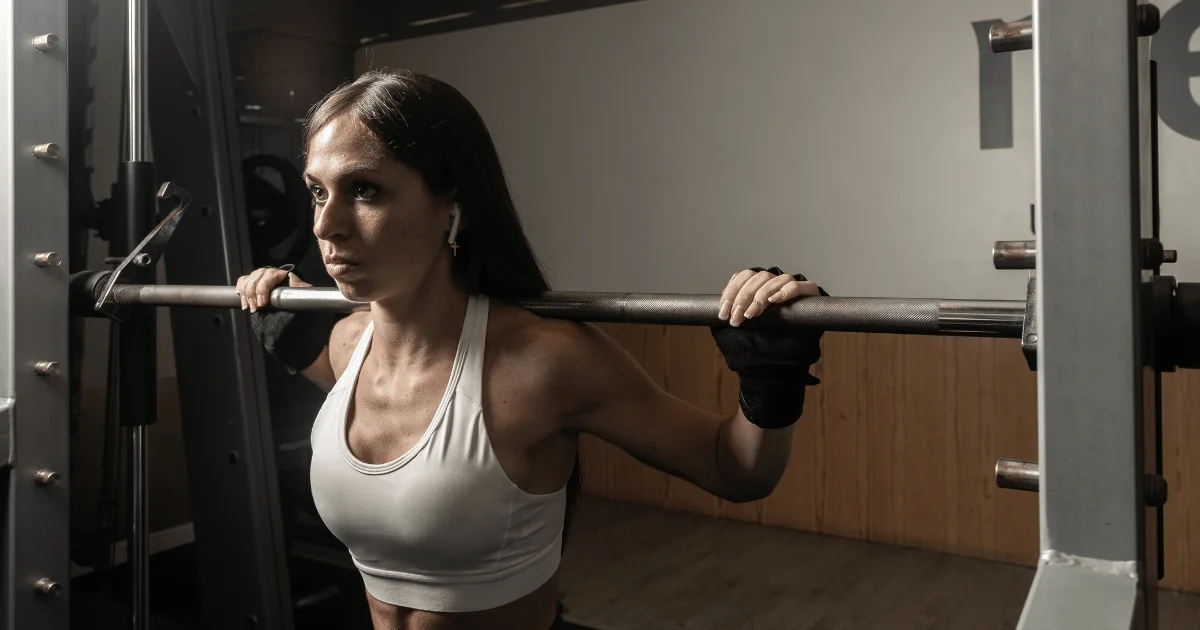
Strength training is the single most effective thing you can do for your body. It builds muscle, strengthens bones, boosts metabolism, improves posture, and reduces your risk of injury in everyday life. Yet most people never start because the gym feels intimidating, the information online is contradictory, and nobody wants to look foolish on the weight floor. This guide strips away the confusion and gives you everything you need to walk into any gym — or set up at home — and start lifting with confidence.
Why Strength Training Matters
Resistance training is not just for bodybuilders or athletes. Research consistently shows that people who strength train at least twice a week have lower rates of cardiovascular disease, type 2 diabetes, and all-cause mortality compared to those who do not. Beyond the health markers, here is what you can expect in the first few months of consistent training:
- Increased strength — Beginners often double their working weights on major lifts within three to six months due to rapid neural adaptations.
- Improved body composition — You will gain lean muscle and lose body fat, even if the scale does not move dramatically. This is especially true for beginners eating adequate protein.
- Better joint health — Controlled resistance training strengthens tendons and ligaments, reducing injury risk in sports and daily activities.
- Mental health benefits — Lifting weights reduces symptoms of anxiety and depression. The sense of progression and accomplishment provides a psychological boost that cardio alone rarely matches.
- Higher resting metabolic rate — Muscle tissue burns more calories at rest than fat tissue. Over time, building muscle makes it easier to maintain a healthy body weight without extreme dieting.
Equipment You Actually Need
You do not need a fully equipped commercial gym to start strength training, though having access to one is helpful. Here is the minimum viable setup for different environments:
Commercial Gym
Most gyms provide everything you need: barbells, dumbbells, a squat rack or power cage, a flat bench, and cable machines. Look for a gym with at least one squat rack and a set of dumbbells ranging from 5 to 50 lbs. Avoid gyms that only have machines and no free weights, as free weights are far superior for building functional strength and coordination.
Home Gym (Budget Setup)
A pair of adjustable dumbbells (5-50 lbs) and a flat bench is enough for a complete beginner program. As you advance, adding a pull-up bar and resistance bands will expand your exercise options significantly. If space and budget allow, a barbell with plates and a squat stand transforms a home setup into a near-commercial experience.
Bodyweight Only
You can build a solid foundation with zero equipment. Push-ups, squats, lunges, glute bridges, and planks are effective for the first several weeks. However, bodyweight training has a ceiling — you will eventually need external resistance to keep progressing. A set of resistance bands is an affordable bridge between bodyweight and free weights.
The Essential Exercises
As a beginner, you should build your program around compound movements. These exercises work multiple muscle groups at once, give you the most results per minute of training, and teach your body to move as a coordinated unit. Here are the foundational movements every beginner should learn:
Lower Body
- Goblet squat — Hold a dumbbell at chest height and squat to parallel or below. This teaches proper squat mechanics with a natural upright torso position. Keep your weight on your mid-foot, push your knees out over your toes, and sit between your hips.
- Romanian deadlift (RDL) — Hold dumbbells or a barbell and hinge at the hips, pushing your hips back while keeping a flat back. Lower until you feel a stretch in your hamstrings, then drive your hips forward to stand. This builds the entire posterior chain: hamstrings, glutes, and lower back.
- Walking lunges — Step forward and lower your back knee toward the floor. Alternate legs with each step. This builds single-leg strength, balance, and coordination.
Upper Body Push
- Dumbbell bench press — Lie on a flat bench with a dumbbell in each hand. Press them up until your arms are extended, then lower with control until your upper arms are roughly parallel to the floor. This builds your chest, shoulders, and triceps.
- Overhead press — Press dumbbells from shoulder height straight overhead. Brace your core and avoid arching your lower back. This targets the shoulders and triceps while demanding core stability.
Upper Body Pull
- Dumbbell row — Hinge at the hips, brace one hand on a bench, and row a dumbbell to your hip. Squeeze your shoulder blade at the top. This builds your back, rear delts, and biceps.
- Lat pulldown or assisted pull-up — If you cannot do a bodyweight pull-up yet, use the lat pulldown machine or an assisted pull-up machine. Pull the bar to your upper chest, initiating the movement by driving your elbows down and back.
Core
- Plank — Hold a straight-body position on your forearms and toes. Keep your hips level and brace your abs as if bracing for a punch. Start with 20−30 second holds and build up.
- Dead bug — Lie on your back with arms extended toward the ceiling and knees bent at 90 degrees. Slowly extend one arm overhead while extending the opposite leg, keeping your lower back pressed into the floor. This teaches anti-extension core stability.
Your First 3-Day Beginner Program
This full-body program trains every major muscle group three times per week. Perform each workout with at least one rest day between sessions (for example: Monday, Wednesday, Friday). Rest 60−90 seconds between sets. Start with a weight you can control for all prescribed reps with good form.
Day A — Full Body
- Goblet Squat: 3 × 10
- Dumbbell Bench Press: 3 × 10
- Dumbbell Row: 3 × 10 (each side)
- Romanian Deadlift: 3 × 10
- Plank: 3 × 30 seconds
Day B — Full Body
- Walking Lunges: 3 × 10 (each leg)
- Overhead Press: 3 × 10
- Lat Pulldown: 3 × 10
- Glute Bridge: 3 × 12
- Dead Bug: 3 × 8 (each side)
Alternate between Day A and Day B. Week 1 would be A-B-A, week 2 would be B-A-B, and so on. When you can complete all sets and reps with perfect form, increase the weight by the smallest increment available (usually 5 lbs for dumbbells or 5−10 lbs for barbell movements). This is called progressive overload, and it is the engine behind all strength gains.
Form Cues That Actually Matter
Perfect form is a moving target, and obsessing over it can be counterproductive. Instead, focus on these universal cues that apply to nearly every exercise:
- Brace your core — Take a deep breath into your belly, tighten your abs as if someone is about to poke you, and maintain that tension throughout the rep. This protects your spine and transfers force efficiently.
- Control the eccentric — The lowering phase of every exercise should take at least 2 seconds. If you are dropping the weight, it is too heavy or you are rushing. Controlled negatives are where a large portion of muscle growth happens.
- Use a full range of motion — Half reps produce half results. Squat to at least parallel, touch the bar to your chest on bench press, and fully extend your arms on overhead press. Partial reps have their place, but beginners should prioritize full range.
- Keep a neutral spine — Your back should maintain its natural curve during deadlifts, rows, and squats. Rounding your lower back under load is the most common cause of training-related back injuries.
Common Beginner Mistakes
- Starting too heavy — Your first weeks should feel easy. You are learning movement patterns, not testing your limits. Start with a weight that lets you complete every rep with perfect form and 2−3 reps left in the tank.
- Program hopping — Switching routines every week is the fastest way to make zero progress. Pick one program and follow it for at least 8−12 weeks before evaluating. Consistency beats novelty every time.
- Skipping warm-ups — Five minutes of light cardio followed by warm-up sets with lighter weight prepares your joints, muscles, and nervous system. A proper warm-up reduces injury risk and actually improves performance on your working sets.
- Neglecting nutrition — You cannot out-train a bad diet. Aim for at least 0.7 to 1.0 grams of protein per pound of body weight per day to support muscle growth and recovery. Use our protein calculator to find your ideal intake. If you struggle to hit your protein target through food alone, a quality protein powder can help — see our protein powder comparison for recommendations.
- Ignoring recovery — Muscles grow during rest, not during training. Get 7−9 hours of sleep, manage stress, and take rest days seriously. More is not always better.
Supplements that support strength training
Compare creatine and protein powders to find the best options for beginners
Compare Creatine SupplementsHow to Progress Over Time
As a beginner, you have a unique window of opportunity called “newbie gains.” During your first 6−12 months of training, you can add weight to the bar nearly every session. Take advantage of this by following the double progression method: work within a rep range (for example, 8−12 reps), and only increase the weight when you can hit the top of the range for all sets. If your program says 3 × 8−12 on goblet squats, start at 8 reps. Each session, try to add a rep. Once you can do 3 × 12, increase the weight by the smallest increment and drop back down to 8 reps.
Track every workout in a notebook or app. Write down the exercise, weight, sets, and reps. If you are not tracking, you are guessing, and guessing leads to stalled progress. Your training log is your most important tool for long-term gains.
When to Move Beyond a Beginner Program
You are ready to transition from a beginner program when you can no longer add weight every session despite adequate sleep, nutrition, and recovery. This typically happens after 3−6 months of consistent training. At that point, you can move to an intermediate program that uses weekly or bi-weekly progression, adds more volume per muscle group, and introduces exercise variety. Our workout plan guide covers how to structure an intermediate program.
Estimate your strength levels with the 1RM calculator
Track your estimated max and program your training percentages
Frequently Asked Questions
Will lifting weights make me bulky?
No. Building significant muscle mass requires years of dedicated training, a sustained calorie surplus, and (for many people) genetic predisposition. You will not accidentally become bulky. What you will get is a leaner, more defined, and more athletic-looking physique. Women in particular do not produce enough testosterone to build large amounts of muscle without extremely specific programming and nutrition over many years.
How long should my workouts be?
As a beginner, 45−60 minutes including warm-up is plenty. If you are spending more than 75 minutes in the gym, you are either resting too long between sets or doing too many exercises. Quality beats quantity. Get in, train hard with focus, and get out.
Should I do cardio too?
Yes, but do not let it interfere with your strength training. Two to three sessions of moderate cardio per week (walking, cycling, or swimming for 20−30 minutes) is plenty for cardiovascular health. If fat loss is a priority, focus on your diet first and use cardio as a supplement, not the main driver. Excessive cardio can impair muscle recovery, especially if you are in a calorie deficit.
Do I need supplements to start?
No supplements are required. Focus on whole foods first: lean meats, fish, eggs, dairy, legumes, fruits, vegetables, and whole grains. If you struggle to hit your protein target through food alone, a quality protein powder can help fill the gap. Creatine monohydrate is the only other supplement with strong enough evidence to be worth considering from day one. Creatine monohydrate is one of the most researched and effective supplements for strength gains — our creatine comparison guide breaks down the best options.
Find the right protein powder for your goals
Whey, plant-based, or casein — see how they compare for muscle building
Compare Protein PowdersStarting strength training is one of the best decisions you can make for your health, your physique, and your quality of life. The key is to start simple, stay consistent, and focus on gradual progress rather than perfection. Every strong person started exactly where you are right now — with an empty bar and the willingness to learn.
Kazi Habib
B.Pharm · MBA · PMP · Digital Marketing, York University
Kazi Habib is the founder of FitFixLife. With over 10 years in pharmaceutical and life sciences marketing, a Digital Marketing certification from York University (Toronto), and hands-on experience launching nutraceutical products at Beximco Pharmaceuticals — including science-backed meal replacers for weight management and diabetic nutrition — he brings regulated product development, clinical data analysis, and evidence-based content standards to every tool and article on this site.
Connect on LinkedIn →No spam. Unsubscribe anytime.
Related Articles
Progressive Overload Explained: The Key Principle Behind Muscle Growth
Progressive overload is the foundation of all training progress. Learn what it means, how to apply it, and the most effective methods for long-term muscle and strength gains.
How to Build a Workout Plan That Actually Works
Learn how to structure a weekly workout plan around your goals. Covers training splits, exercise selection, volume, frequency, and progression for beginners and intermediates.
One-Rep Max Guide: How to Estimate and Use Your 1RM
Your one-rep max is the foundation of smart programming. Learn how to estimate it safely, which formulas to use, and how to plan your training around it.
Try These Free Tools
Disclaimer: This article is for informational purposes only and does not constitute medical advice. Always consult a qualified healthcare professional before making changes to your diet, exercise, or supplement routine.